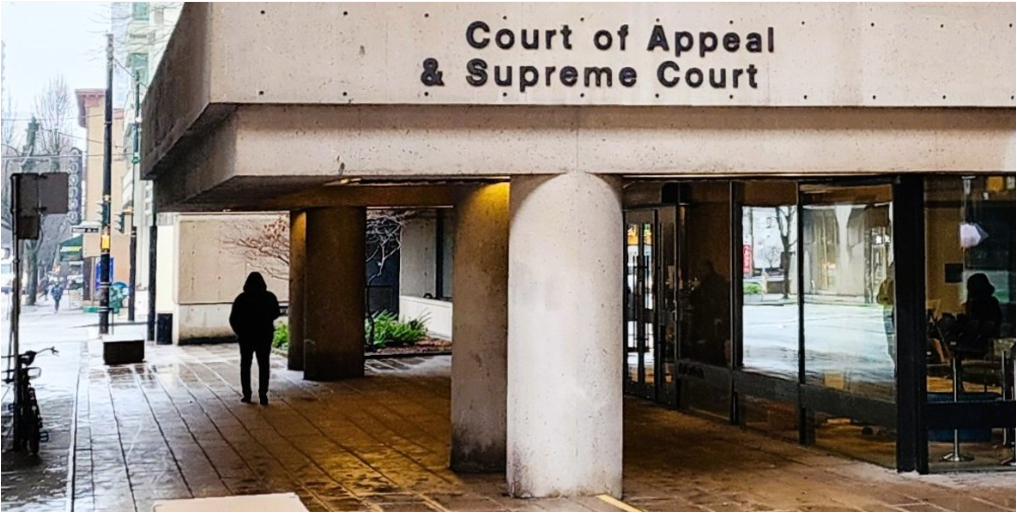
VANCOUVER (CCN) — A $30-million settlement over alleged historical abuse at two Vancouver-area Catholic schools has been approved by the B.C. Supreme Court, but the deal could unravel after the judge gave 12 former students permission to leave the class action and pursue their own lawsuits.
Justice Simon Coval acknowledged the issue of the former students opting out of the class action was “particularly thorny” because it could allow the three settling defendants — Vancouver College, St. Thomas More Collegiate and the Roman Catholic Archbishop of Vancouver — to cancel the settlement.
However, in the ruling released July 30, Coval said he had “no hesitation” approving the settlement as fair, reasonable and in the best interests of class members, saying it would provide compensation more quickly through an individualized, confidential and trauma-informed process while sparing survivors a lengthy trial.
The agreement, signed Feb. 4 by the plaintiffs and the three settling defendants, does not constitute an admission of liability or wrongdoing and is not proof of the allegations.
It also allows the three settling defendants to withdraw from the agreement because of the late opt-outs, in which case the approval order will be set aside and the class action against them will go to trial.
Seven former students had opted out by the original Nov. 28, 2024, deadline. The court has now allowed another 12 former students to opt out within 30 days of the order.
Most of the 12 had already started their own individual lawsuits alleging abuse outside the class action. Coval found that the class action settlement could have prevented them from proceeding against the schools and archdiocese, something he said they could not reasonably have foreseen when the original opt-out deadline passed.
The three settling defendants opposed the late applications while the plaintiffs and CFM Lawyers, which represents the class action, supported them.
History
The class action covers former students who allege they were physically, sexually or psychologically abused by current or former members of the Christian Brothers while attending Vancouver College, between 1976 and 2013, or St. Thomas More Collegiate, between 1976 and 1989.
More than 200 people whom Coval described as “credible Class Members” have identified themselves confidentially to CFM Lawyers. Their allegations are directed mainly at defendants Edward English, Kevin Short, Douglas Kenny and Joseph Burke.
The claims have their origins in the physical and sexual abuse of children at the Mount Cashel orphanage in St. John’s, Newfoundland, from the 1950s through the 1970s.
In the late 1970s and early 1980s, before the Mount Cashel abuse became publicly known, six Christian Brothers were transferred from the orphanage to Vancouver College and St. Thomas More Collegiate, then operated by the Christian Brothers.
The lawsuit alleges that senior Christian Brothers with leadership roles at the schools arranged the transfers despite knowing what had occurred at Mount Cashel. It alleges that the transferred brothers and other Christian Brothers subsequently abused students at the two schools.
Four of the six transferred brothers were later criminally convicted.
Lawsuit
The lawsuit was filed in 2021, alleging negligence and breach of fiduciary duty. Lead plaintiff Darren Liptrot alleges he was sexually abused while attending Vancouver College from 1980 to 1985. The B.C. Supreme Court certified the case as a class action on March 8, 2023.
If the settlement takes effect, former students will be able to seek compensation through a “trauma-sensitive, non-adversarial” claims process.
A simplified Tier 1 process will provide compensation of up to $30,000 for less severe or shorter-term harm. Tier 2 will involve more detailed assessment for those reporting moderate to severe effects, with compensation for lost income and earning capacity capped at $1 million. Compensation for pain and suffering and other damages will not be capped.
Coval said a trial would be likely lengthy and difficult, particularly for survivors required to testify. Without a settlement the first stage of the trial might not be decided until late 2026 or 2027, followed by possible appeals and individual proceedings on damages, he said.
The judge also cited uncertainty over insurance coverage as a factor supporting settlement.
Coval wrote that the two schools had pointed to public statements expressing concern and sympathy for victims as well as a desire for a restorative-justice process and public apology.
He also wrote that statements filed in evidence by the archbishop of Vancouver expressed “outrage and discouragement from the failure of church leaders to prevent this abuse, covering it up by moving abusers around, lack of care and concern for the victims, and a commitment to supporting victims on the path to healing.”
When the proposed agreement was announced in March, the Archdiocese of Vancouver said it extended “heartfelt sympathy to all survivors of abuse” and hoped attention to the case would encourage other survivors to seek healing and support.
Vancouver College said it hoped the settlement would be “an important step forward” and reaffirmed its commitment to a trauma-informed reconciliation process. St. Thomas More Collegiate said it was committed to “working with — and walking alongside — survivors.”
The settlement does not resolve claims against non-settling defendants, including the Roman Catholic Episcopal Corporation of St. John’s and individuals named in the lawsuit. Those portions of the litigation will continue regardless of whether the settlement survives.