VANCOUVER (CCN) — Cautionary tales from the frontlines of Canada’s permissive euthanasia system helped fuel British politicians’ successful campaign to defeat a bill that would have legalized doctor-assisted suicide in England and Wales, says a leading British anti-euthanasia advocate.
The Sept. 11 vote saw MPs reject the measure 286-270.
Gordon Macdonald, chief executive of Care Not Killing, told Canadian Catholic News that Canada’s 10-year experience with Medical Assistance in Dying (MAiD) created “an awareness of how badly wrong [legal assisted-death] could go.”
Although Canada was not mentioned in the debate immediately preceding the vote, the country’s experience was cited in previous parliamentary exchanges.

Speaking in 2024 against an earlier assisted-suicide bill, Conservative MP Saqib Bhatti used Canada as an example of how even a narrowly defined law can expand over time.
“On [the subject of] slippery slopes,” he said, “someone [in Canada] does not even have to have a terminal or fatal illness now; mental illness will be an acceptable reason for assisted suicide in 2027.”
“Pandora’s box has clearly been opened,” he said, “and we risk embarking on that route today.”
Canada is set to expand eligibility for euthanasia next March to those whose sole underlying medical condition is a mental illness. The country recorded a world-leading 16,499 MAiD deaths in 2024, with some patients qualifying although they were not dying.
Macdonald said British pro-euthanasia advocates originally hailed Canada’s 2016 legalization of MAiD but went “awfully quiet” when stories of abuses became public.
One of them came from Christine Gauthier, a Canadian Armed Forces veteran and former Paralympian who said in 2022 that an official, whom she did not identify, offered her access to MAiD in response to her request for assistance related to her disability.
“I have a letter saying that if you’re so desperate, madam, we can offer you MAiD, medical assistance in dying,” Gauthier said.
Macdonald said, “Whatever the story is, these stories are helpful because we can point to examples of how (a euthanasia law) fails in practice.”
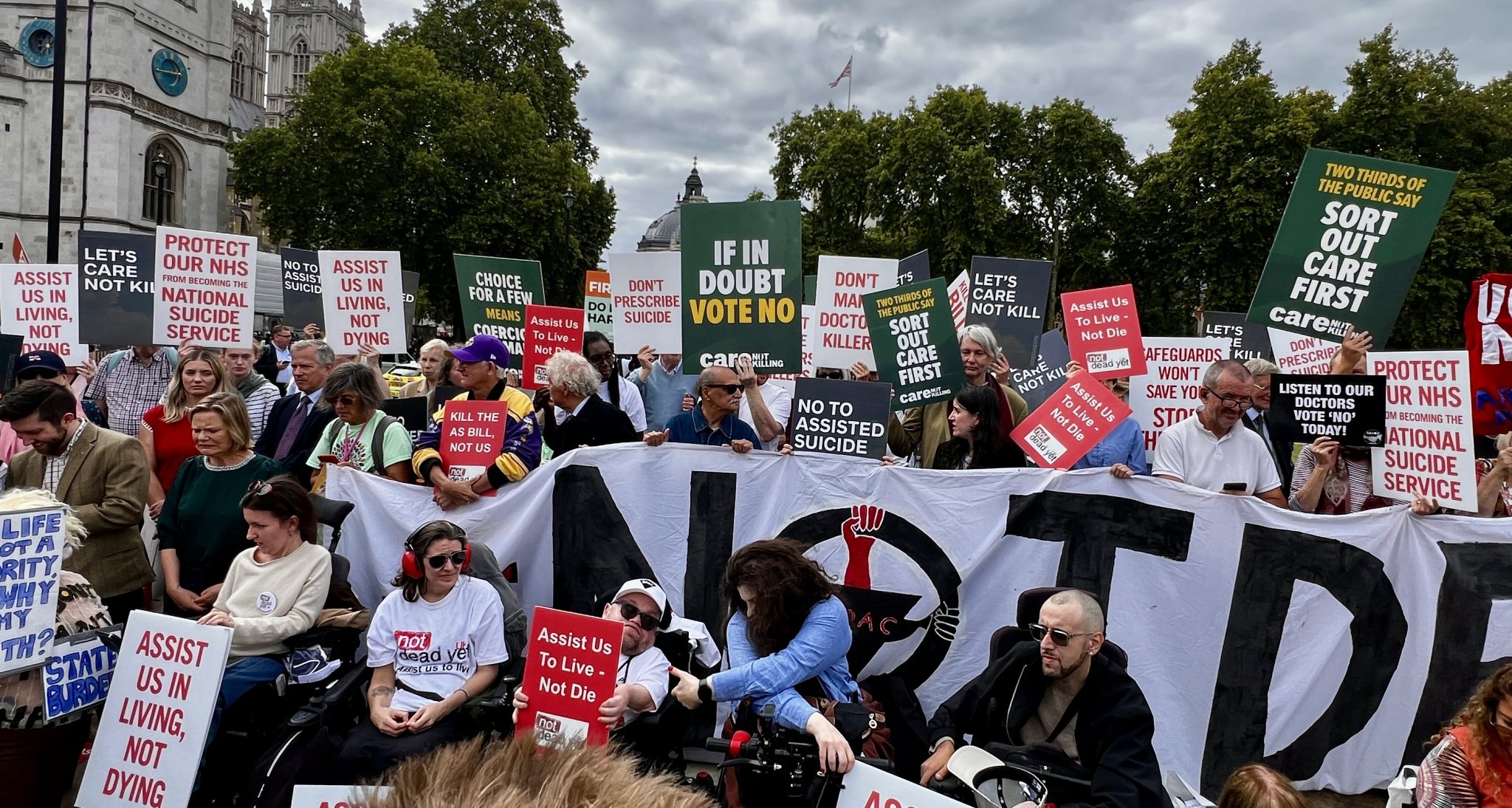
Canadian anti-MAiD activist Angelina Ireland, executive director of the Delta Hospice Society, spoke at a demonstration in London prior to the British MPs’ vote on the bill.
“I sat in the gallery and watched the vote, and celebrated after,” said Ireland, who is attempting to establish a MAiD-free hospice in B.C.
In an email interview she said, “Ultimately, the result in the UK is so important for our fight here because it shows that we have international support for our struggle to restore and preserve authentic hospice and palliative care in Canada.”
The Canadian Conference of Catholic Bishops’ Standing Committee for Family and Life issued a statement in June for the 10th anniversary of the legalization of euthanasia. The bishops reiterated Catholic opposition to MAiD and expressed “grave” concern about proposed expansion of eligibility, including MAiD for those suffering only mental illness.
The bishops urged Catholic faithful and all people of goodwill to “voice renewed concern about ‘MAiD,’ to remain steadfast in opposing euthanasia and assisted suicide, to pray for the conversion of hearts and minds away from this practice, and to be present to persons who are sick and vulnerable.”