ABBOTSFORD, B.C. (CCN) — Tributes to the soldiers who died or were injured in a fire at CFB Wainwright in Denwood, Alberta, last month overshadowed the debate about military chaplains’ prayers at Remembrance Day ceremonies this year.
On Nov. 11, the names of the four soldiers who died in the Oct. 17 fire during a training exercise were added to rolls of honour in cities across Canada: Sgt. Morgan Wong, Pte. Shaun Farrell, Pte. Aidan Goulding, and Pte. Hayden Lykkemark. A fifth soldier, Pte. William Douglas Dal Bianco, died on Nov. 13 from injuries sustained in the fire.
In the weeks leading up to Nov. 11, questions were being asked about an instruction issued in July by the Department of National Defence, which said chaplains must offer a spiritual reflection when prayer is requested at an official event where military personnel are expected or required to attend. The instruction excludes references to God from those reflections and specifically mentions Remembrance Day.
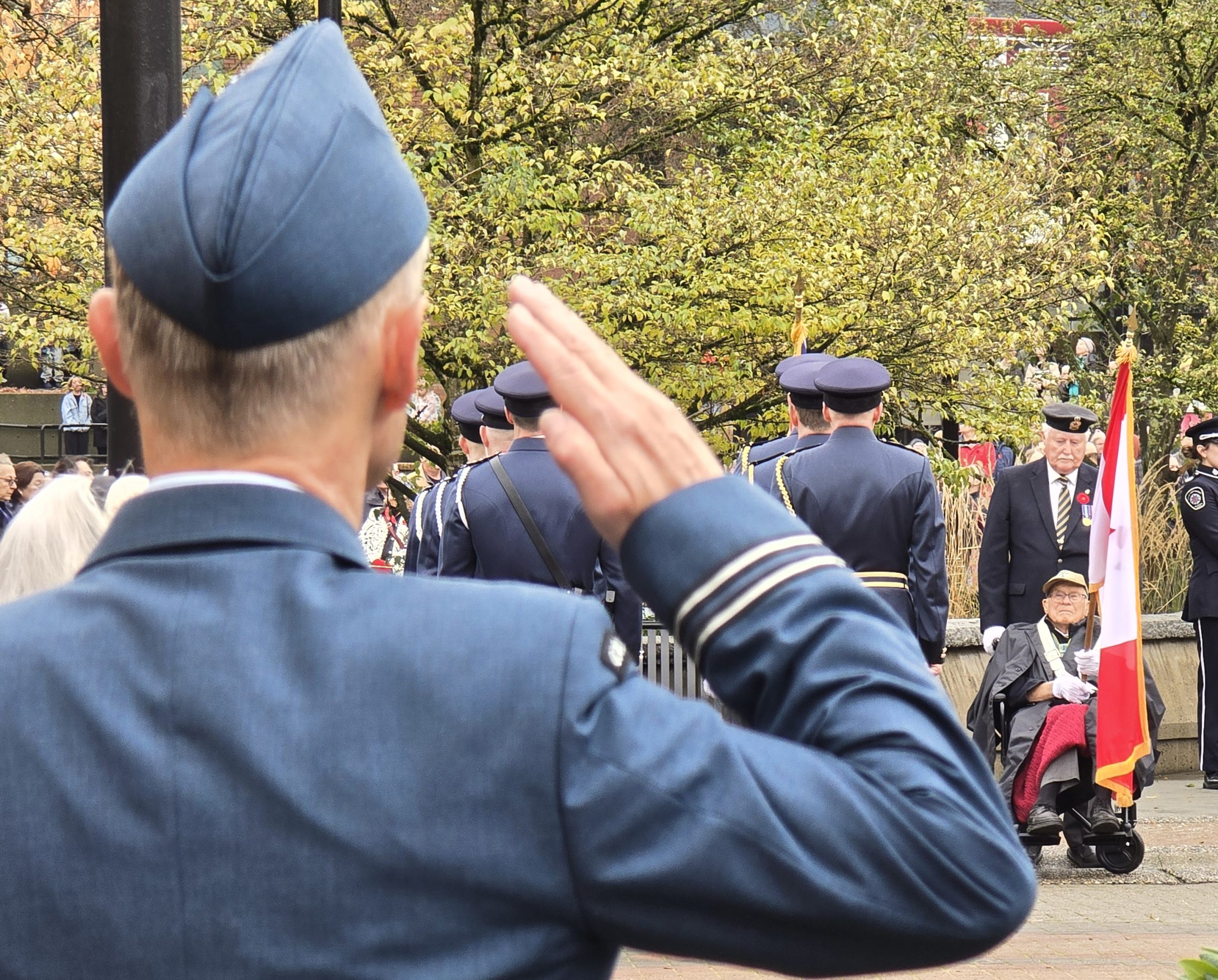
However, at ceremonies from coast to coast, the emphasis was on paying tribute to the soldiers who died and the dozens of others injured in the fire.
In St. Albert, Alberta, about 300 members of Princess Patricia’s Canadian Light Infantry marched from the Royal Canadian Legion to the cenotaph. Two Royal Canadian Air Force Griffon helicopters flew overhead, and the family of Pte. Shaun Farrell, one of the soldiers killed at Wainwright, laid a wreath in his honour.
But God was not absent on Remembrance Day, as prayers and remarks referenced religious belief.
In an interview with CBC, Lt.-Cmdr. Matthew Squires, an Anglican priest and military chaplain based at CFB Edmonton, spoke of how chaplains had accompanied command teams sent to notify families after the Wainwright fire, sat beside injured soldiers in hospital, and listened to their loved ones.
Squires described the work as “sacred,” challenging, and heavy.
“You enter into the pain that is experienced by the family,” Squires said. “And you just simply remain.”
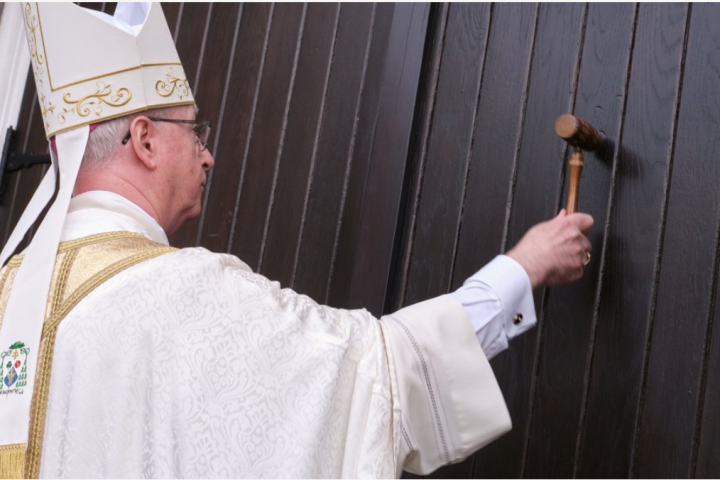
In Ottawa, service members, veterans and their families attended the Catholic Military Ordinariate’s annual Mass for the Fallen at Notre-Dame Cathedral Basilica before the national ceremony.
Bishop Scott McCaig of the Military Ordinariate of Canada honoured the soldiers who died at CFB Wainwright for their service, saying, “we commend them into the hands of our merciful God,” and praying for the recovery of the injured.
In his homily, he spoke of St. Edith Stein, who died in the gas chambers of Auschwitz, and her description of war as the unleashing of hell on earth. Citing U.S. President Dwight Eisenhower, he said the world’s spending on arms claims not only financial resources but also “the sweat of its labourers, the genius of its scientists, the hopes of its children.”
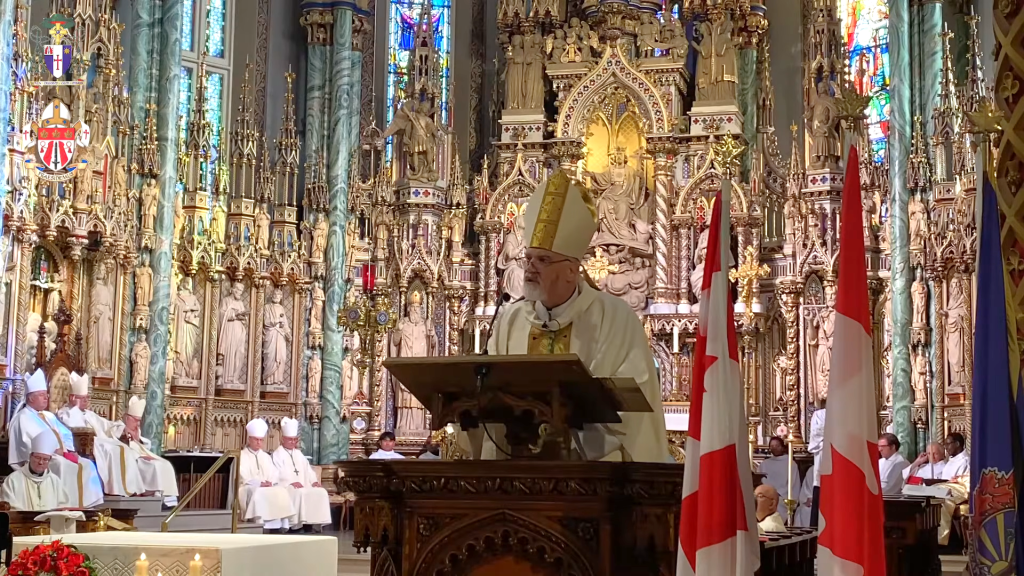
McCaig spoke of his grandfather and three uncles, who were so traumatized by war that they still could not speak about their experiences a lifetime later.
He also honoured those in military service, which Pope Leo XIV described as a vocation that includes defending the weak, responding to disasters, and preserving peace.
The prayers of the faithful included intentions for military and civilian defence staff and all who have given their lives in service to Canada.
Those present were also invited to venerate a first-class relic of St. Martin of Tours, patron of the Roman Catholic Military Ordinariate of Canada.
At the national ceremony at Ottawa’s National War Memorial, Col. Lisa Pacarynuk, chaplain general of the Canadian Armed Forces, remembered the soldiers killed and injured at Wainwright and acknowledged the different faiths and beliefs represented at the ceremony.
“We are mindful of the recent tragedy in Wainwright, carrying in our hearts those who lost their lives, those recovering from injury, and all who mourn their loss,” she said.
Her invocation made no direct appeal to God. She urged Canadians to choose compassion over indifference, understanding over division, and hope over despair.
After the laying of wreaths, Rabbi Idan Scher, the Royal Canadian Legion’s Dominion honorary chaplain, twice called on God in his benediction.
“May God protect those who stand on guard for Canada, at home and around the world,” he prayed.
He then asked that God grant Canadians “the courage to live with even a measure of the selflessness with which they chose to serve.”
Scher drew attention to how Canadians who had never worn the uniform honoured the soldiers killed at Wainwright by lining up to donate blood, preparing meals for emergency crews, opening their homes, and caring for the injured.
“Gratitude cannot end with remembrance,” he said. “They chose to serve us. We must choose to serve one another.”
At Vancouver’s Victory Square, Capt. the Rev. Carla Wilks, chaplain of the Seaforth Highlanders of Canada, was introduced to offer the “traditional military prayer of remembrance.”
Reflecting on those who died or were injured in the Wainwright fire, she said, “May all who are grieving find comfort and support. May all who are healing have strength for the days ahead.”