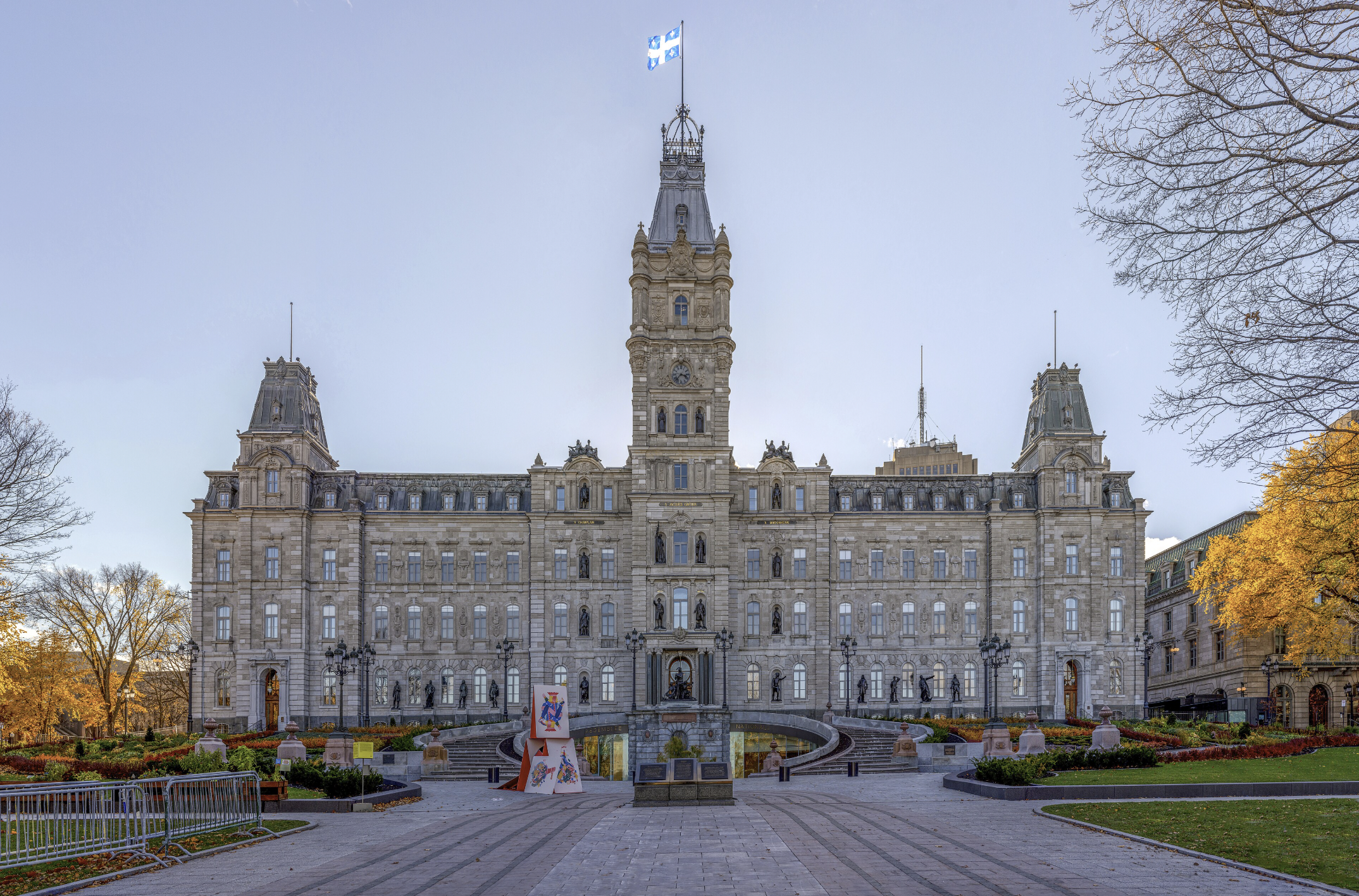
MONTREAL (CCN) — In the early hours of Election Day, Oct. 5, the Anglican bishop of Quebec asked God to guide “the people of Quebec in the election of members of the National Assembly.”
Archbishop Bruce Myers wrote on social media that he hoped the newly elected representatives would, “through their faithful governance and wise laws,” ensure the protection of “the rights of every person.” However, he did not comment publicly in the wake of the election of the minority government.
Shortly after the election results were announced, the Canadian Muslim Forum (CMF) was quick to congratulate the newly elected representatives and to thank “all the candidates, the volunteers and the citizens who took part in the democratic process.”
The CMF said it hoped the new government would avoid “policies or rhetoric likely to exacerbate divisions or marginalize certain communities.”
“The elections are over, but the work of building Québec continues,” the CMF statement said. “We encourage our elected representatives to listen to the communities and to focus on the priorities that affect the daily lives of Quebecers, particularly the economy, education, affordability and opportunities for all.”
The Centre for Jewish and Israeli Affairs (CIJA-Quebec) “warmly congratulated” Quebec’s new premier, Parti Québécois leader Paul St-Pierre Plamondon, and thanked “the outgoing government for its defence of Quebec’s shared values and its fight against antisemitism.”
“We look forward to working with the newly elected government, as well as with the opposition parties, on the shared priorities of our community and the people of Quebec. These are well known: tackling insecurity, defending our values and combating hatred,” CIJA-Quebec stated on its social media channels.
Corentin Messina, director of communications and public relations for the Réseau évangélique du Québec, Quebec’s network of Evangelical churches, stated that “our prayers are with both the newly elected and outgoing representatives.” This coalition of evangelical churches congratulated the new premier and the Parti Québécois on their victory and said it was ready “to engage in dialogue and work” with the new government.
Messina said his church network wishes to play a part in the fight against homelessness, an issue raised by all political parties during the election campaign. “Our churches come into daily contact with homeless people” and practise “hospitality towards them,” he said.
Third anniversary of Oct. 7
“Three years ago, at dawn, the terrorist organisation Hamas carried out the worst attack against the Jewish people since the Holocaust,” said Prime Minister Mark Carney Oct. 7.
“In Israel, nearly 1,200 people were killed: grandmothers and grandfathers, mothers and fathers, children. Hundreds more were injured, and over 200 others were taken hostage.”
The Prime Minister also lamented that, since this attack, Jewish communities in Canada “have faced a devastating resurgence of anti-Semitism.”
“Every Canadian of the Jewish faith has the right to express their identity openly in public life — visibly, unambiguously and joyfully — whether at school, at work, on the street, in synagogues or anywhere else they belong, because they are at home in Canada,” he said.
On the same day, Canada’s minister of foreign affairs stated that “Hamas must completely disarm and play no role in the future governance of Palestine.”
Minister Anita Anand gave her assurance that “Canada will continue to work with its international partners to establish a just and lasting peace, in which Israelis and Palestinians can live side by side in security and dignity.” She said she was committed to “advancing the two-state solution and carrying out the diplomatic work necessary to ensure its long-term viability.”
This article was originally published in French by Présence-Info. It was translated by CCN and reprinted with permission of the author.