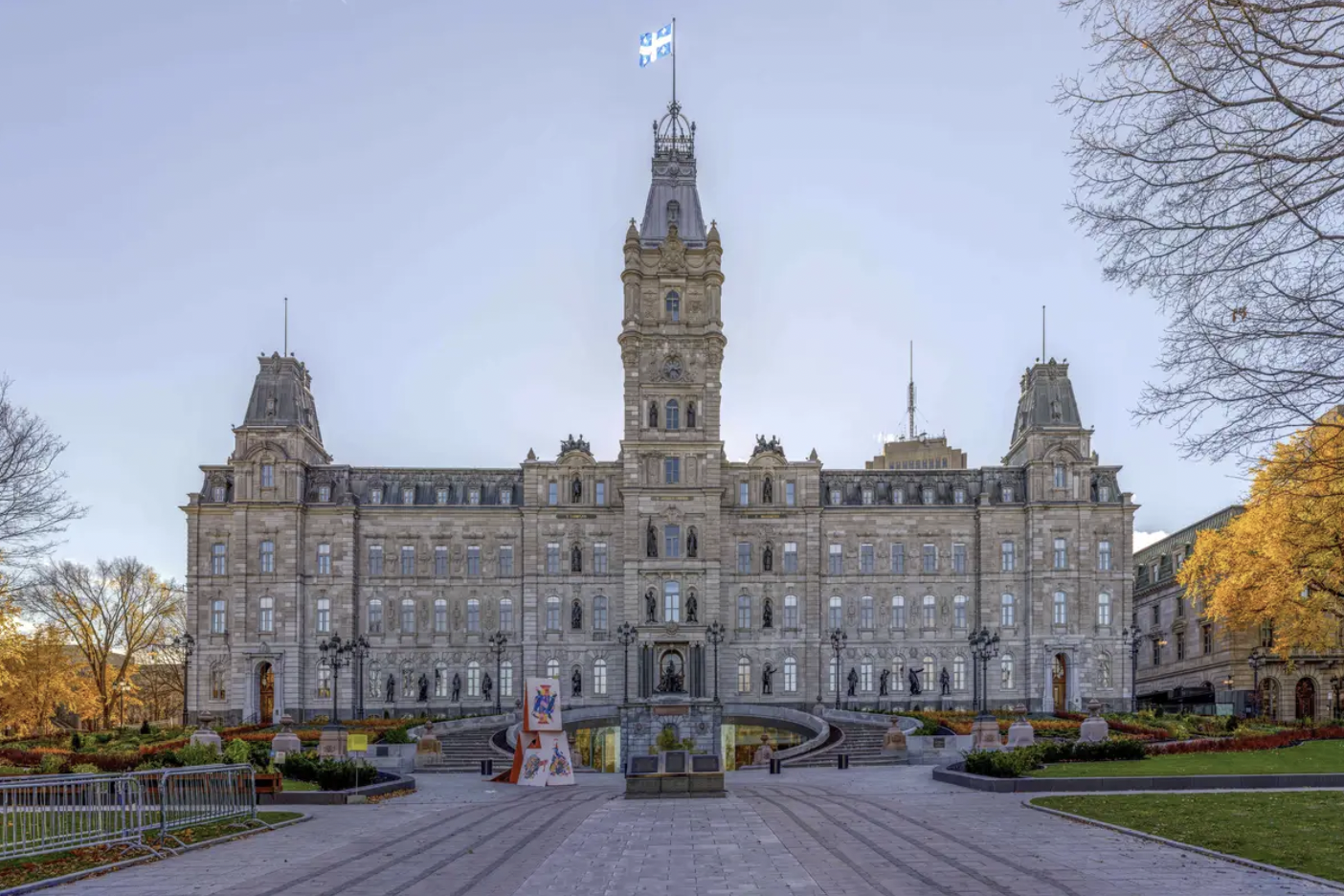
(CCN) — As Quebecers head into the Oct. 5 provincial election, the longstanding issue of secularism, or “laïcité,” looms on several fronts, with Catholic organizations and the province’s bishops offering voters guidance on a range of issues, including religious freedom, through the lens of Catholic social teaching.
The election pits the governing Coalition Avenir Québec (CAQ) against the Parti Québécois, Quebec Liberal Party, Conservative Party of Quebec, and Québec solidaire, after nearly eight years under former premier François Legault, whose government repeatedly expanded Quebec’s secularism framework. Those policies have continued under Premier Christine Fréchette, who succeeded Legault on April 15.
A Synopsis-La Presse poll conducted Sept. 24-27 had the PQ leading at 30 per cent, followed by the Liberals at 22 per cent, with the CAQ and Conservatives at 17 per cent each and Québec solidaire at 13 per cent.
Quebec’s secularism laws have become a growing source of controversy, with civil-liberties organizations and the Quebec bishops regularly expressing concern over successive measures restricting religious expression in public institutions and other settings.
Secularism was in the headlines again earlier this month when Montreal’s Loyola High School announced Sept. 4 that it will give up its provincial subsidy rather than alter its Jesuit and Catholic mission to comply with Quebec’s new secularism law, formerly Bill 9.
The school said it receives $5.2 million a year, about 28 per cent of its annual revenue, in government subsidy. The loss of the subsidy, along with the cost of replacing the government pension plan, would create a structural gap of about $7,500 per student and could eventually send total fees from $12,530 to about $20,000-$21,000, the school announced.
So far, Loyola appears to be the only school to decided to give up its subsidy because of the new provisions.
Julie Ravenda, communications director for the Fédération des établissements d’enseignement privés, said other schools are assessing what the law will mean for their educational programs, but Loyola is the only federation member known to have publicly announced it will relinquish its funding.
When the relevant provisions of the secularism law take effect in April 2029, subsidized private schools will no longer qualify for government funding if their educational services are based on religious norms, transmit religious beliefs through teaching or select students or staff on religious grounds. The impact will vary considerably from one school to another, Ravenda said in a statement to Canadian Catholic News.
The federation raised concerns during the legislative process about the law’s effect on school autonomy and educational diversity, as well as accessibility for families if schools lose their subsidies.
“Loyola’s decision illustrates that these provisions can have very concrete consequences when religious formation is not simply part of an institution’s history, but remains an integral part of its educational mission,” Ravenda said.
Quebec’s Catholic bishops have criticized the law as an infringement on rights and freedoms. During parliamentary hearings on Bill 9 in February, the bishops called for public funding of private religious schools to be maintained.
“They still hold the same view,” said Eliane Thibault, communications director for the Assembly of Catholic Bishops of Quebec.
The assembly has not been contacted by Catholic schools in the wake of Loyola’s announcement, nor has any political party or candidate approached the bishops about the school funding issue.
“These schools are an expression of the pluralism that has characterized, and that still characterizes, Quebec society,” Thibault said.
Parents have the right to choose a school grounded in beliefs and values they want for their children, she said, while school teachers and employees should retain the right to wear religious symbols.
“The state should be truly neutral in religious matters, which means that it should not promote a specific religion over others, nor the absence of religion over religiosity,” Thibault said.
It’s within that framework that Catholic Conscience, Campagne Québec-Vie, and the Quebec bishops have all issued material for Catholic voters. Although the resources range across health care, poverty, housing, family policy and other concerns, secularism and religious freedom are recurring themes.
After Quebec bishops’ recommendations for amendments were rejected, they called on March 30 for the legislation to be withdrawn entirely. Laliberté said believers would see fundamental rights restricted “without compelling justification.”
After the law passed April 2, Archbishop Christian Lépine of Montreal said the government had an obligation to maintain a “fair balance” between secularism and fundamental rights and freedoms.
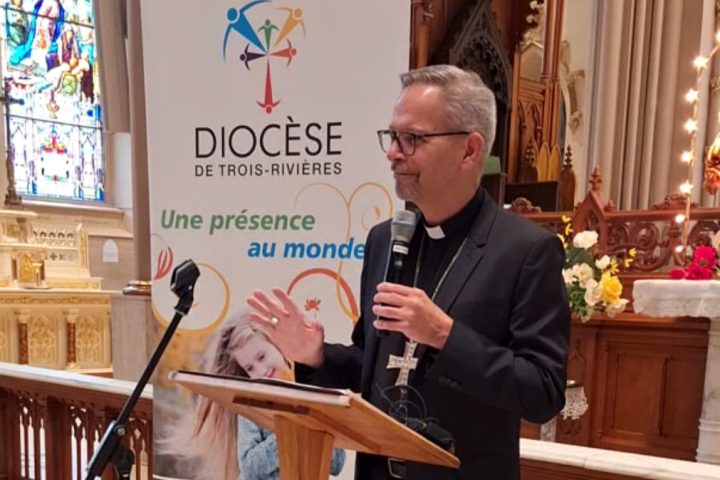
In a statement for the election, the Quebec bishops included freedom of religion among the freedoms Quebecers enjoy, urging Catholics to reflect on party platforms in light of the Gospel, human dignity, the common good and concerns such as poverty, health care, housing and violence. Bishop Martin Laliberté, president of the Assembly of Catholic Bishops of Quebec, said voting is itself “a way of loving our neighbour.”
The voters guide from Campagne Québec-Vie focuses on issues of life, family and religious freedom, with Bill 9 and religious freedom receiving top billing.
The guide describes restrictions on religious practice and the threat to funding for religious schools and asks candidates whether they will commit to repealing the Bill 9 restrictions.
The guide also addresses public funding of abortion, support for women after abortion, family and child care funding that follows the child, medical assistance in dying (MAiD), and parental rights over mandatory school content.
Catholic Conscience takes a broader approach, examining issues ranging from abortion and euthanasia through health care, poverty, housing, families, education, immigration, Indigenous reconciliation, the environment, workers and the economy. Its introduction says voters should consider the good of the unborn, the elderly, young people, families, people forgotten by society, workers, farmers, business owners and future generations.
In a Facebook post, Archbishop Paul-André Durocher of Gatineau described the guide as “well done” and “a wealth of information,” saying his archdiocese would share it in both languages.
Quebec’s five major parties all support a secularization, but they differ significantly over existing “laïcité” laws.
The CAQ says it would maintain and renew notwithstanding-clause protections for the province’s secularism legislation. The Parti Québécois has also pledged to protect Quebec’s existing secularism model.
The Liberals favour a narrower model of secularism and have not committed to repealing existing laws but say they would not renew notwithstanding-clause protection for Bill 21, Quebec’s 2019 secularism law restricting religious symbols for some public employees, including teachers, when it expires in 2029.
Québec solidaire says it would repeal what it calls rights-restricting provisions of current laws while maintaining the religious neutrality of public institutions. The Conservative Party has said it would maintain the existing secularism laws and favours continued use of the notwithstanding clause.
This article was updated on Sept. 29 with additional interviews and summaries of voters guides.