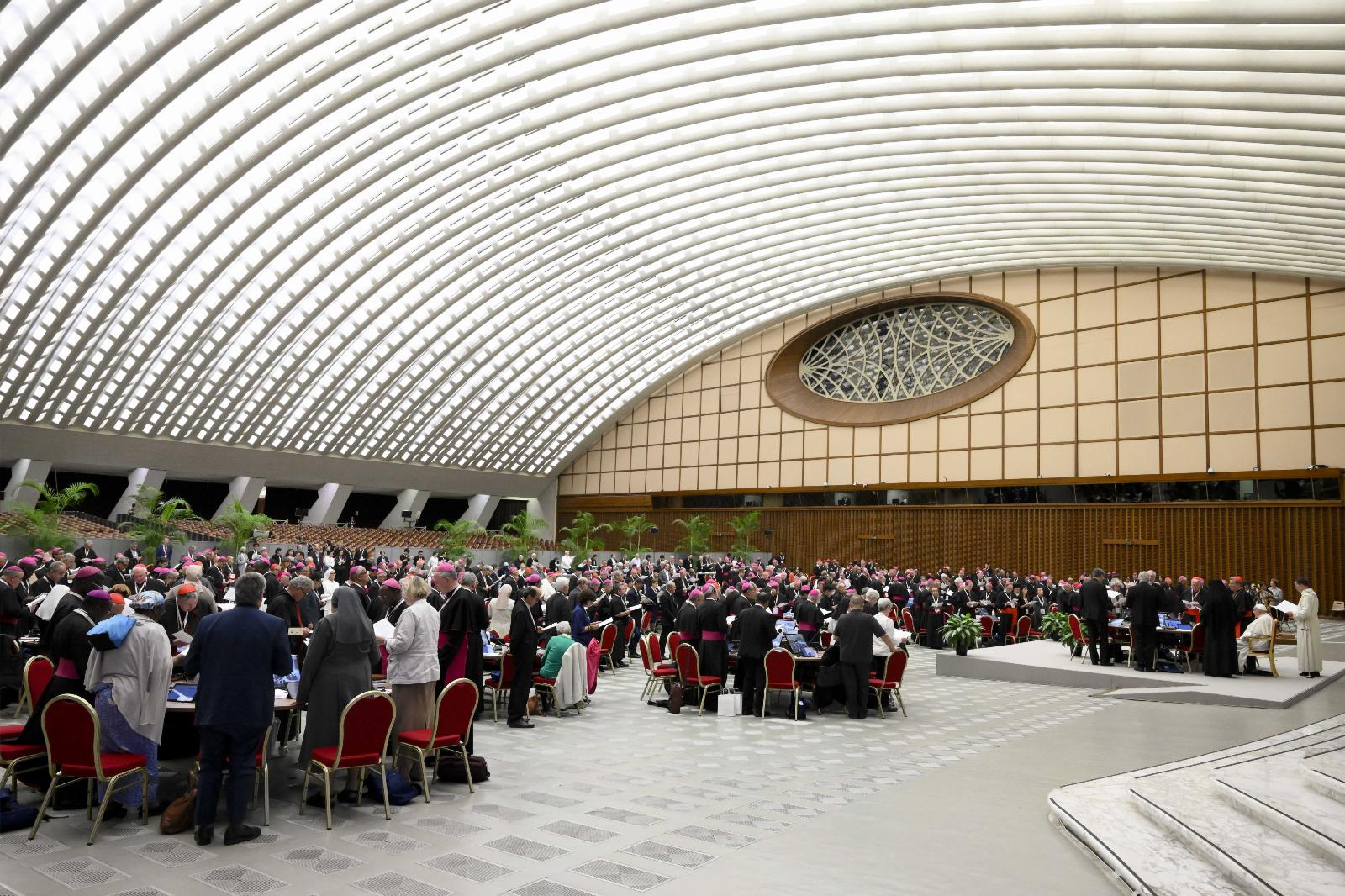
The Synod on Synodality has generated no shortage of official documents, theological commentaries, and opinion pieces. Few, however, place this historic gathering within the Church’s 60-year reception of the Second Vatican Council while simultaneously capturing its lived experience.
“A Synod Diary: Sixty Days That Shook the Church,” by Michael W. Higgins, published by Paulist Press (2026), succeeds in doing both — not as a systematic theological study or official history, but as an eyewitness account by one of Canada’s most accomplished Catholic journalists and educators.
The result is a lively, deeply personal narrative that illuminates dimensions of the synodal process inaccessible through official reports alone.
Higgins, former president of St. Jerome’s University in Waterloo, Ontario, and St. Thomas University in Fredericton, brings an unusual combination of historical perspective and literary sensibility to the task. Having covered the Extraordinary Synod of 1985, he places Pope Francis’ synod within a broader historical trajectory, arguing that the present synodal process represents both continuity with and significant development beyond earlier episcopal assemblies.
The book’s structure reflects Higgins’s stated purpose. A substantial prelude recounts his experience covering the 1985 synod, introducing readers to the evolution of synodal practice and, perhaps more importantly, to the often-frustrated relationship between the Vatican and the media.
The diary entries that follow — covering the first session in 2023, the intervening months, and the second session in 2024 — capture the daily texture of life in Rome. Higgins concludes with a thoughtful epilogue and postlude reflecting on what these 60 days may mean for the Church’s future.
The diary format proves remarkably effective. Higgins possesses an experienced reporter’s eye for memorable personalities and revealing moments. Cardinals, bishops, theologians, journalists and lay participants emerge not as abstractions but as recognizable human beings. Brief conversations over lunch, impromptu press conferences, and chance encounters become occasions for exploring larger ecclesial questions. Particularly engaging are Higgins’s portraits of figures such as Cardinal Joseph Tobin, archbishop of Newark, New Jersey, Archbishop Shane Mackinlay of Brisbane, Australia, and numerous lesser-known participants whose contributions rarely receive sustained public attention.
Throughout the volume Higgins returns repeatedly to themes of listening, dialogue, transparency, trust and communication. As a lifelong journalist, he remains especially attentive to the way information is shared — or withheld — and to the relationship between ecclesial authority and public accountability. His critique of institutional opacity is one of the book’s most consistent threads, informed by decades of observing Vatican communications from the inside.
Equally impressive is Higgins’s prose. His diary is enriched by references to literature, history, philosophy and contemporary journalism. These allusions never feel gratuitous; rather, they reflect an author whose intellectual curiosity extends well beyond ecclesiastical affairs. The writing frequently rises above reportage into reflective essay, inviting readers to consider not simply what occurred during the synod but why those events matter.
Yet the very qualities that make “A Synod Diary” engaging also point to its principal limitation. Higgins openly acknowledges that he is writing as a participant-observer rather than as a detached historian or systematic theologian. Readers should take him at his word.
At times, his careful observations give way rather quickly to evaluative judgments. His evident sympathy for Pope Francis’ vision of synodality occasionally leads him to assess participants less by the theological substance of their arguments than by their apparent openness to the synodal process itself.
Readers seeking sustained theological engagement with the synod’s more contested questions will therefore need to supplement this volume with other works. Higgins is more interested in portraying the lived experience of the synod than in systematically analyzing its theological foundations or implications. That is not a defect so much as a recognition of the book’s chosen genre.
Perhaps the greatest contribution of “A Synod Diary” is that it reminds readers that synods are ultimately about people before they are about documents. Beneath debates over governance, ministry, authority and reform are Christians striving — sometimes successfully, sometimes imperfectly — to discern together the movement of the Holy Spirit. Higgins captures that human drama with warmth, wit and considerable narrative skill.
Whether readers ultimately agree with all his conclusions is, in some respects, secondary. They will come away with a richer appreciation of the complexity, humanity and hope that accompanied one of the most significant ecclesial events of Pope Francis’ pontificate.
For anyone seeking to understand not only what happened at the Synod on Synodality but what it felt like to be there, “A Synod Diary” is a rewarding and worthwhile companion.