The challenge of communication in a polarized age found cinematic expression at the Catholic Media Conference in Altantic City, June 16-19, in the debut of a documentary exploring the legacy of St. Junipero Serra, the Spanish missionary whose evangelization of California remains intertwined with the history of Spanish colonization.
Serra became a polarizing figure in 2020 after the George Floyd protests, with critics portraying him as a colonizer while defenders pointed to his role in spreading Christianity in California and his historical significance to the Church.
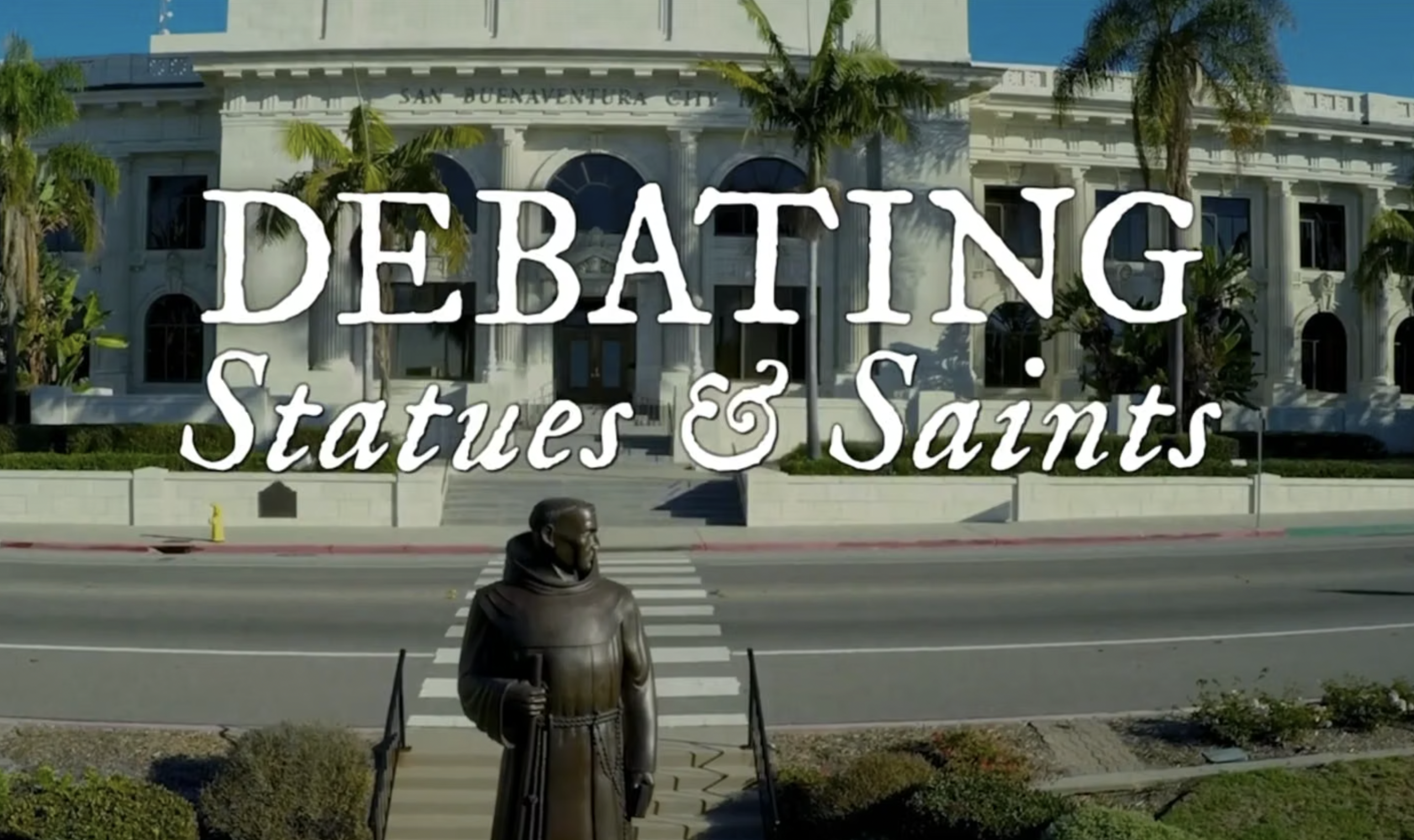
“Debating Statues and Saints: The Legacy of St. Junipero Serra,” a documentary by Paulist Productions, explores efforts in Ventura, California, to remove Serra’s statue from the front of city hall, where it had overlooked the city for decades.
Before the screening, Paulist Father Tom Gibbons, president of Paulist Productions, said the goal was to present the perspectives on both sides of a debate involving historical trauma, reconciliation and the role of public symbols.
The Paulists have been exploring ways to address social polarization, and the filmmakers worked to present a balanced account from faith, cultural and historical perspectives.
“We thought this would be a good way to kind of bridge the gap and bring people together,” Gibbons said.
A former pastor in Toronto, Gibbons said his own views evolved several times during the six years it took to complete the film.
Initially, he focused on Serra’s contributions while acknowledging Indigenous grievances. One participant in the film argued that “if a statue is getting in the way of us reconciling, then it’s the statue that needs to go, because our call is to reconcile as Christians.”
At the same time, Gibbons said he became more sympathetic to those who valued the religious significance of the statue and what it represented. The filmmakers also confronted anti-Catholic sentiment that formed part of the controversy.
“We realized … we Catholics are dealing with our own cultural trauma, too,” he said.
Gibbons acknowledged he still does not know the “right answer” to the debate, and said that complexity is what led the filmmakers to spend six years trying to present both sides fairly.
Asked by Canadian Catholic News whether there were parallels with the division that followed the Kamloops residential school discoveries and their aftermath in Canada, Gibbons said the filmmakers at one point considered including Pope Francis’ visit to Canada as part of a reconciliation scene near the end of the film.
Like other material that scene was ultimately cut. “It didn’t exactly line up” with the story being told, he said. Nevertheless, the Canadian experience shares many similarities, particularly in the debate over the cultural assimilation of Indigenous peoples, he added.
Audience members said the film succeeded in encouraging dialogue across divisions.
“I think it is important for us to stand up for ourselves,” Gibbons said, while always supporting “the people who are trying to build bridges.”