

VANCOUVER (CCN) — The failure of provincial health authorities to enforce MAiD safeguards has led a leading critic of assisted suicide to call for an independent national watchdog with broad powers to investigate euthanasia irregularities and even pause MAiD deaths in some cases.
Dr. Ramona Coelho, a family physician in London, Ontario, and a senior fellow at the Macdonald-Laurier Institute, is speaking out, after a July 20 National Post story based on Canadian Catholic News reporting about the thousands of errors identified in managing MAiD cases in B.C. in 2024.
Coelho is calling for a national oversight body with investigative and disciplinary authority and the power to temporarily halt a MAiD death if a family or clinician reports a concern.
“There should be an independent review before the death, rather than a paperwork review afterward,” she said.
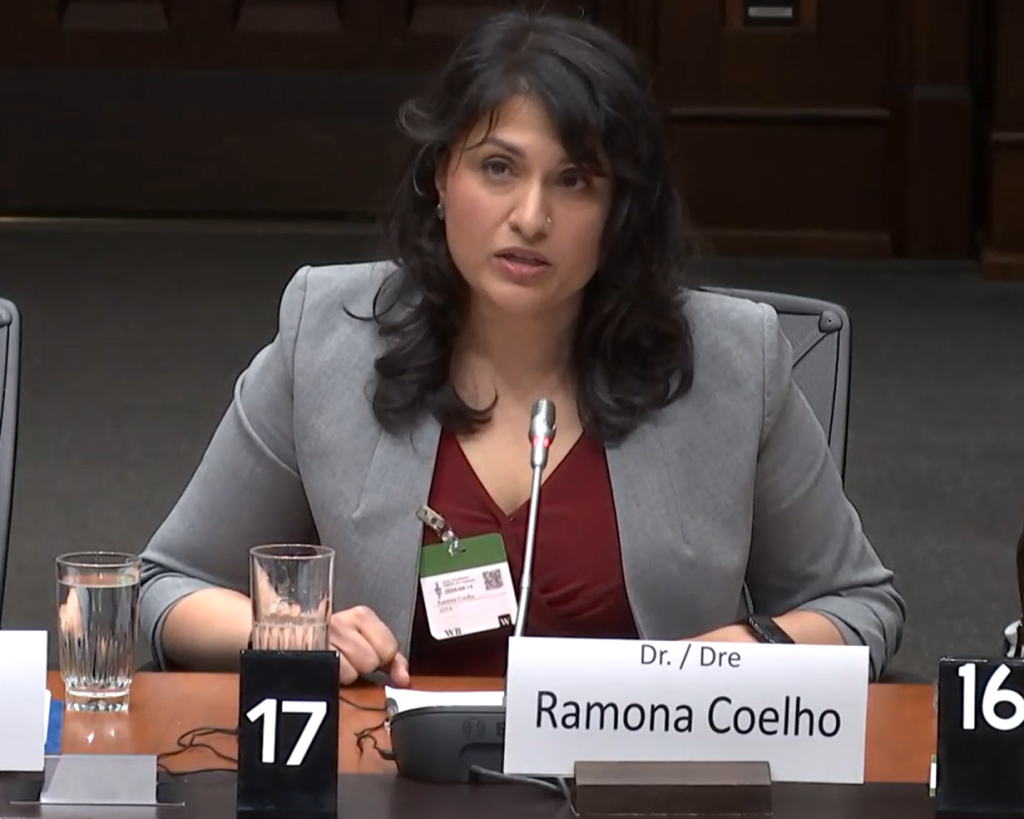
The national watchdog must also be independent of Health Canada because the department “funds and shapes MAiD practice nationally and, given its track record, cannot credibly police it,” Coelho said.
In its story, The National Post referenced CCN reporting that exposed an internal B.C. government document authored by the province’s opaque Medical Assistance in Dying Oversight Unit. The document showed that 51.9% of B.C.’s reported MAiD case outcomes in 2024 required government follow-up, with the oversight unit recording 2,807 errors, including 353 that required practitioners or pharmacists to be educated about MAiD’s legal requirements and professional standards.
The findings showed virtually no change from 2023, when the unit recorded 2,833 errors among 3,808 MAiD cases.
Coelho has previously criticized provincial MAiD regulation, saying “no one in Canada is doing enough” to keep MAiD providers in line. She said Ontario’s MAiD Death Review Committee does not report incidents of suspected wrongdoing to police, and malpractice cases are not being prosecuted.
A 2025 B.C. Catholic examination of seven years’ worth of public disciplinary records from the College of Pharmacists of B.C., the College of Physicians and Surgeons of B.C., and the B.C. College of Nurses and Midwives found no record of disciplinary action related to MAiD. It found that two cases had been referred to police — in 2019 and 2021 — but no resulting charges were recorded publicly.
Coelho said B.C.’s oversight unit does not investigate MAiD deaths but only reviews forms submitted by practitioners. Even so, “it found errors requiring follow-up in more than half of the cases — 353 of them serious enough to require formal education of practitioners on the criminal law governing MAiD.”
The oversight unit did not respond to CCN’s request for comment about the report, which was obtained through a freedom-of-information application.
When contacted by The National Post, the B.C. Ministry of Health said serious deviations from proper practice are rare.
“Only 0.2% of reported MAiD cases (since 2018) involve serious compliance concerns which may have significant impact on the integrity of the MAiD process, appropriateness of care and/or public safety,” the ministry said.
Those numbers, however, represent real people, said the B.C. Conservative Party’s health critic, Dr. Anna Kindy. “We are talking about 34 human beings who were possibly euthanized inappropriately.”
Kindy, a family physician and MLA for North Island, has been calling for B.C. to establish an independent, transparent and accountable oversight body.
“This is all about protecting vulnerable British Columbians,” she told CCN.
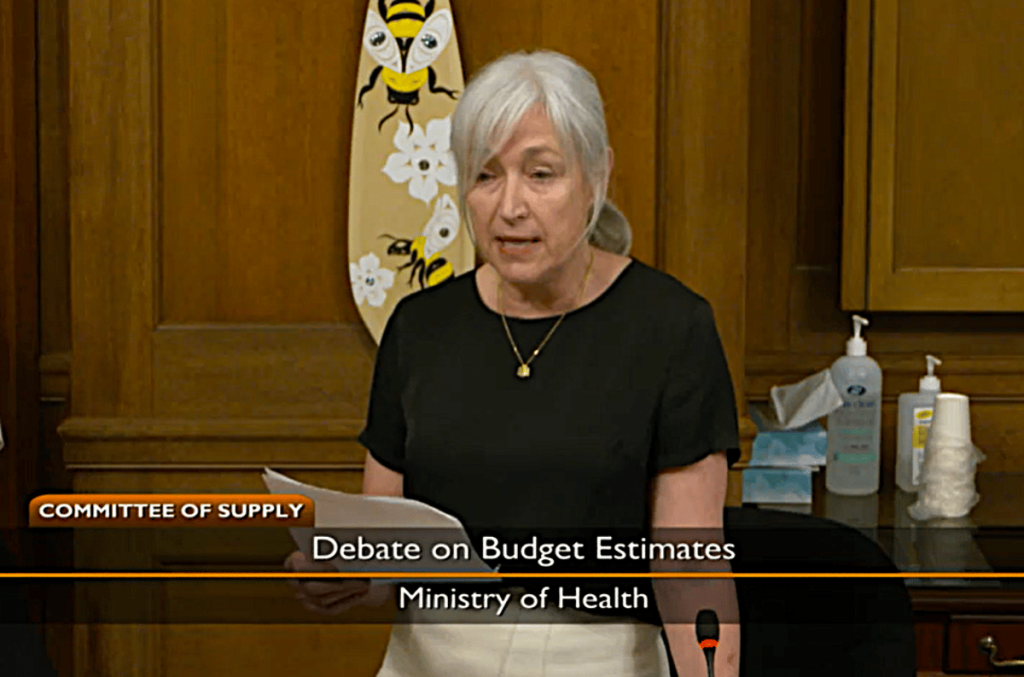
Kindy asked B.C. Health Minister Josie Osborne about MAiD compliance concerns earlier this year in the B.C. Legislature. Osborne said she would provide written responses to Kindy’s questions, but Kindy said she is still waiting.
“So the next question to this minister should be, ‘How many more controversial MAiD cases picked up by media will it take before this minister acts?’”
CCN reached out to the B.C. and federal health ministers for comment about MAiD oversight but received no reply.
However, a Health Canada spokesperson said provinces and territories are responsible for ensuring that MAID services comply with applicable legal and regulatory requirements. The spokesperson said provincial and territorial regulatory bodies have a mandate to protect the public with respect to medical services, “and MAID is no exception.”
Catholic media have been documenting reports of unlawful assisted deaths for years. In 2023, The B.C. Catholic reported on Donna Duncan of Maple Ridge, B.C., whose daughters accused local hospital staff of improperly approving their mother’s MAiD request in 2021.
After failing to persuade the RCMP to lay charges, Alicia and Christie Duncan mounted a petition campaign to change the law in memory of their mother.
The sisters continue to campaign and speak publicly about the MAiD system, and Alicia Duncan recently published a book about their concerns entitled, “The Other Side of the Straitjacket: A Daughter’s Story of Mental Illness and Assisted Dying.”
In Ontario last week, another family accused medical personnel of improperly euthanizing a loved one. In a Facebook post, the family said it wants the story of 83-year-old Brigitte Stegemann to serve “as a warning and an urgent call for greater clinical transparency, mandatory family inclusion for cognitively vulnerable patients, and strict legal accountability for facilities that operate outside the law.”
Granddaughter Brigitte Kranendonk told CCN her grandmother was given a MAiD death July 10, even though she was unable to answer competency questions.
Kranendonk, who had power of attorney over her grandmother’s affairs, said Stegemann had originally said she did not want MAiD, but that a medical team at an unnamed hospital persuaded her to request it while Kranendonk was on vacation.
Catholic media also have reported on patients having the topic of MAiD raised with them against their wishes. In April, The B.C. Catholic reported on a priest who was asked several times about MAiD while convalescing from hip surgery.
Last November, The B.C. Catholic reported that a Health Canada document urged health authorities and professional bodies to adopt “practice standards” that would compel doctors and nurse practitioners to raise the topic of MAiD with patients in some circumstances.
MAiD was made legal in 2016 for persons whose deaths were “reasonably foreseeable.” Amendments in 2021 created a second legally permitted route to MAiD, known as Track 2, by extending eligibility to persons experiencing a “grievous and irremediable medical condition.”
The Alberta government moved on its own in March to better regulate MAiD when it passed the Safeguards for Last Resort Termination of Life Act. The new law bans Track 2 MAiD and forbids doctors and nurses from initiating discussions of MAiD with patients.
The federal government planned to expand MAiD to people whose sole underlying condition is an irremediable mental health condition, but the expansion may not go ahead as scheduled in March 2027 after a parliamentary committee recommended against it.
Health Canada reported that 16,499 people were legally euthanized in Canada in 2024 — the highest number of any country and the second-highest rate as a proportion of all deaths, after the Netherlands.






Fantastic reporting!