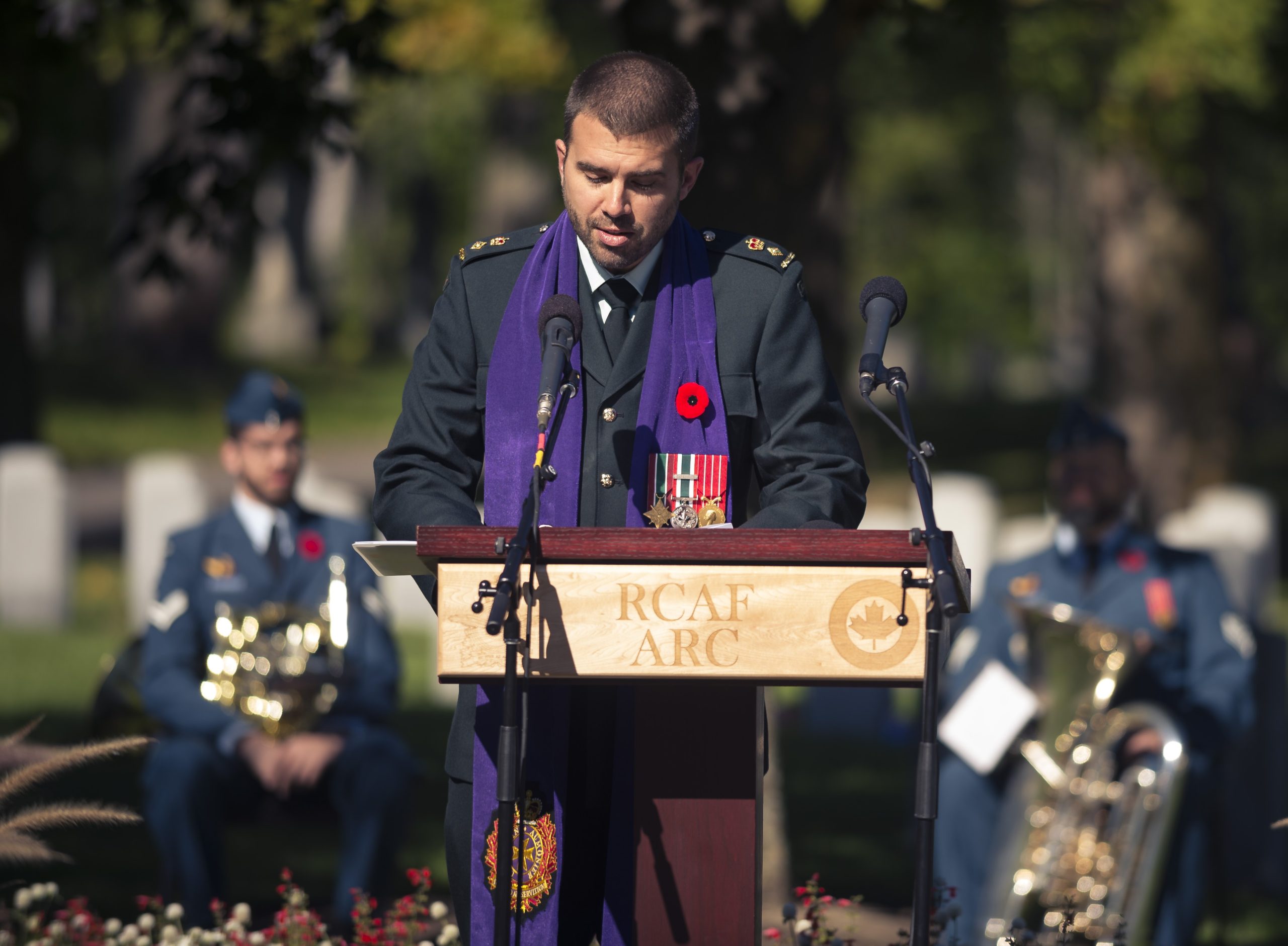
VANCOUVER (CCN) — Canadian military Bishop Scott McCaig says he wants the federal government to go “back to the drawing board” with its new policy on prayer in official settings by looking at international chaplaincy models that respect “open secularism” while accommodating diverse religious traditions.
McCaig told Canadian Catholic News that secular countries, such as France, offer examples of allowing military chaplains to bring prayer into official ceremonies, rather than restricting faith-specific language or references to God.
McCaig was commenting on a new Canadian Armed Forces (CAF) instruction restricting faith-specific prayer at official ceremonies. The July 29 instruction requires chaplains to replace requested prayers or religious observances at official events where attendance is expected or required with “spiritual reflections” that do not include faith-specific language or references to God.
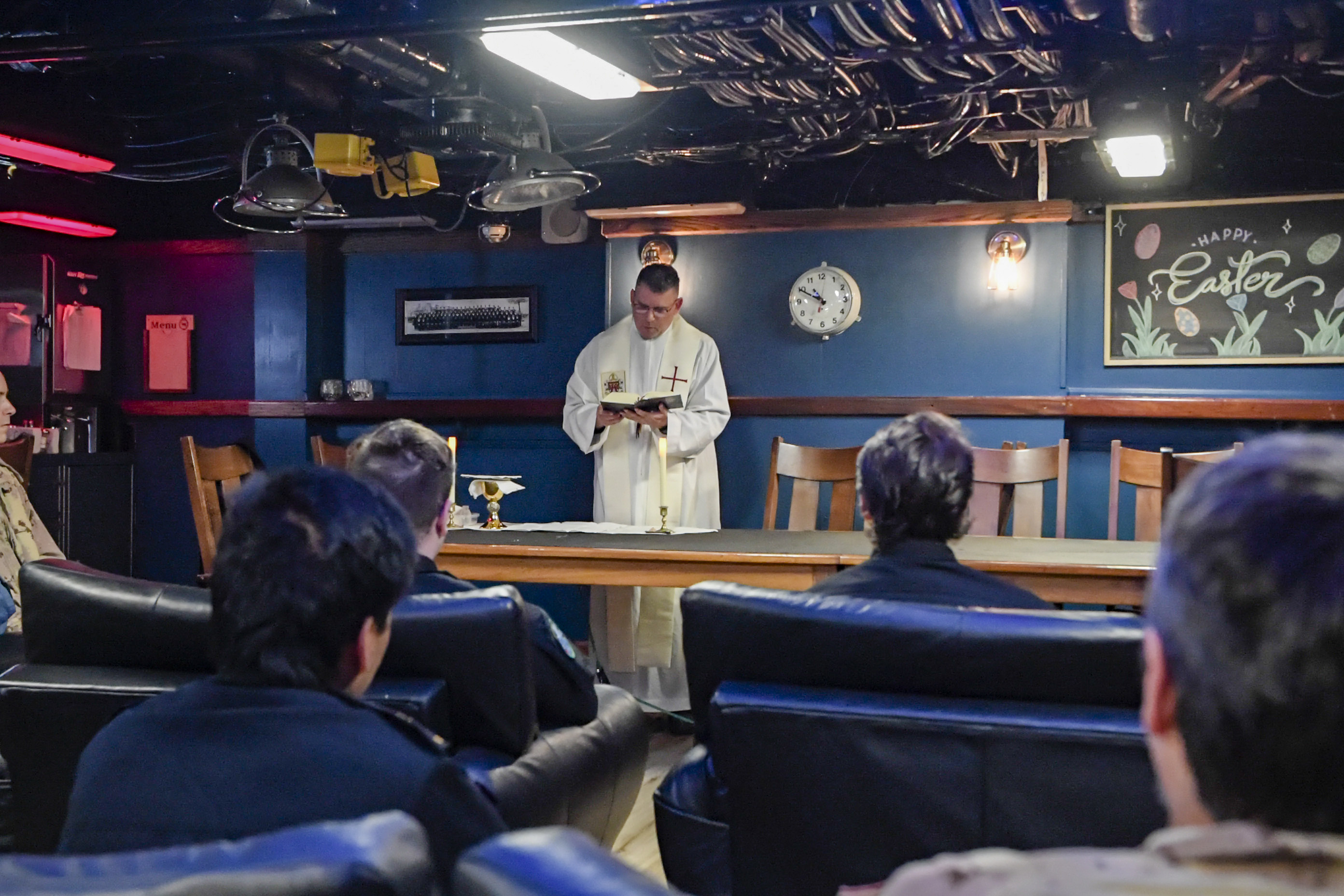
McCaig, reached Aug. 23 while travelling in Ontario to the episcopal ordination of Bishop-elect Roch Martin of Timmins the next day, described a ceremony in France that he attended.
“They’ll have a military exercise which will be purely secular in character,” ending with the singing of La Marseillaise. Military members, from Christians to secular humanists, are then dismissed to go to their respective places of worship or remembrance.
“Those of us who were Catholic went into the church behind us and celebrated Mass. The Protestant members went to another place of worship and had their own ceremony,” he said.
When the July 29 policy was announced, McCaig told CCN he was disappointed by the consultation process leading to it and the Interfaith Committee on Canadian Military Chaplaincy was considering a joint response.
A Defence Department spokesman told CCN Aug. 4, “Consultations were conducted with stakeholders internal and external to the CAF, including chaplains and the ICCMC,” but added that the committee “does not approve or endorse CAF policy instruments.”
On Sunday, McCaig confirmed that members of the interfaith committee are preparing a response for the defence minister and the chief of the defence staff, saying religious leaders and chaplains “wanted the opportunity to discuss more options, but we were never really given that opportunity.”
McCaig is not the only member of the interfaith committee speaking out. Bruce Clemenger, president emeritus of the Evangelical Fellowship of Canada, said in a July 31 statement the new policy “restricts the spiritual reflection of chaplains to a secularist and characteristically humanist expression.” He said the policy “goes beyond banning prayer and prohibits even the acknowledgment to those gathered that some may believe in the divine and others not.”
On Aug. 19, McCaig released a statement in which he offered “a few critical preliminary observations” about the instruction.
He said he was “saddened” that military and political officials “consistently refused to have a substantive dialogue with concerned religious and spiritual leaders,” that requests for meetings “were uniformly declined” for several years, and that the military diocese is meeting with the Canadian Conference of Catholic Bishops and military chaplaincy partners.
In the statement, McCaig addresses the purported purpose of the instruction — state neutrality — and says the policy shows a “fundamental misunderstanding” of the concept and the inclusivity the policy is meant to foster.
While the policy’s intention is sound, he said, the instruction is “out of sync with the legal rationale of state neutrality.”
The Defence Department instruction references the 2015 Supreme Court of Canada decision in Mouvement laïque québécois v. Saguenay, which said the state must be neutral on religion and beliefs and “must neither favour nor hinder any belief, and the same holds true for non-belief.”
The court said the Canadian and Quebec charters of rights require “a generous and expansive interpretation” of conscience and religion rights, which McCaig contrasted with the new policy, saying it “enforces a closed secularism which seeks to hinder and restrict public expressions of belief that some may find offensive.”
He said the Charter is meant to protect freedom of religion and non-religion, not provide “freedom from selective faith traditions that one disagrees with.”
The instruction states that individuals can be spiritual without being religious; McCaig agrees with this point. However, where the policy overreaches is in requiring chaplains and others to give spiritual reflections without religious references.
The separating of “meaning, purpose, and spiritual well-being” from God is contrary to the beliefs and conscience of many, he said. “Is this not precisely the kind of coercion that the Charter is meant to protect us from?,” he added
McCaig also challenged what he called the instruction’s “false premise” that an atheistic outlook is somehow neutral.
“Atheistic systems of belief require as much assent of intellect and will (faith) as any theistic system of belief,” he said, noting that the CAF recognizes secular humanists as one of its “spiritual faith traditions.”
Government adjudication between beliefs that are philosophical versus religious is “the opposite of state neutrality,” he said.
He closed his statement by appealing for “mature tolerance and dialogue” and an “open secularism” that allows free expression of diverse spiritual beliefs.
McCaig asked for prayers for a fair and reasonable resolution of the issue, along with prayers for political and military leaders and for “reconsideration of this instruction.”