

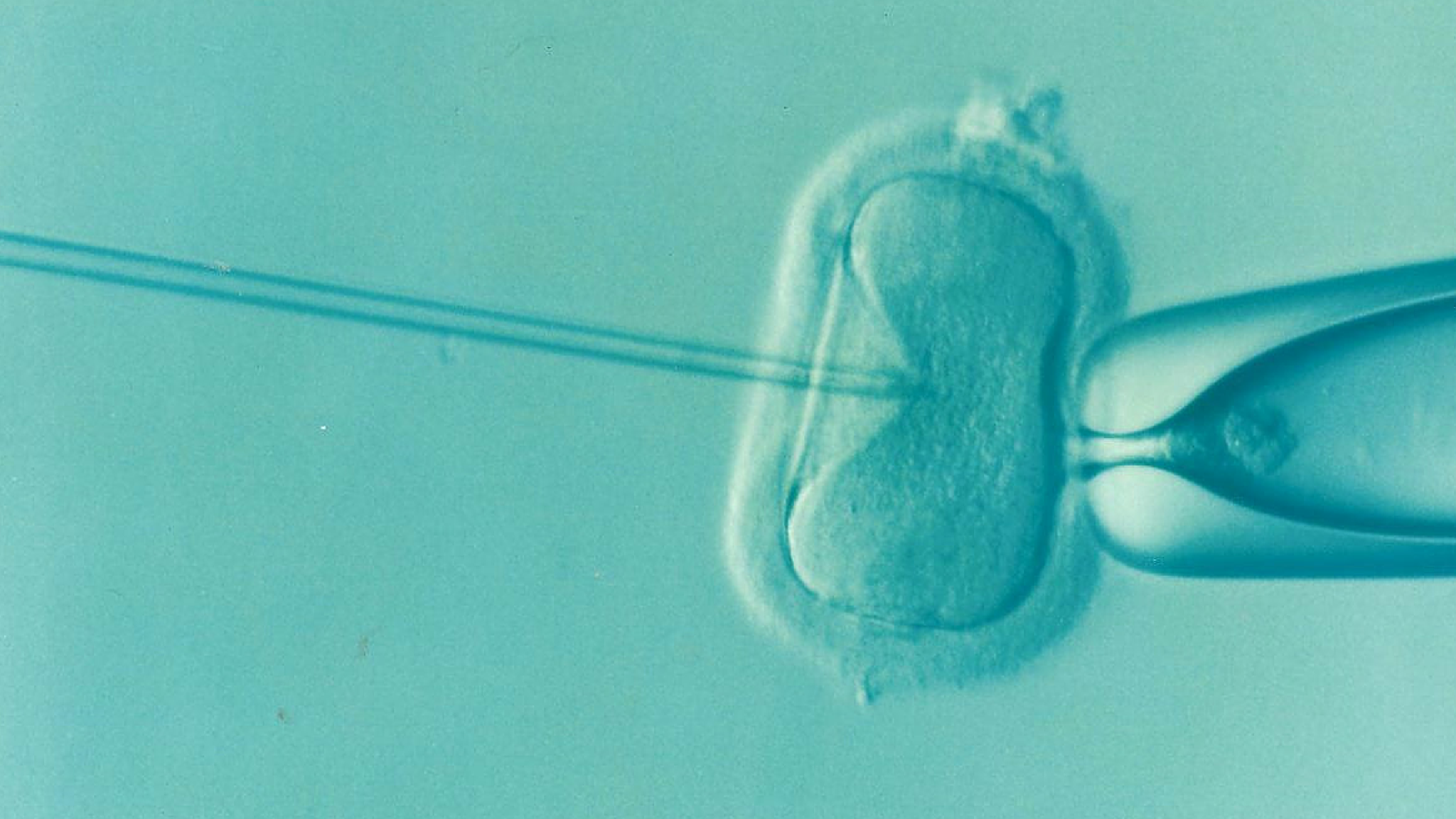
A crude understanding of what it means to be pro-life has created a new confusion. Many who rightly oppose abortion now reflexively champion in vitro fertilization (IVF), assuming that because IVF seeks the birth of a child, it must be consistent with a pro-life ethic. Yet this conclusion misunderstands what the Catholic Church means when it speaks of the dignity of human life.
To be pro-life in the fullest Catholic sense requires more than opposing the destruction of innocent life. It also requires affirming the manner in which human life ought to be welcomed into the world. Every child possesses an inviolable dignity regardless of the circumstances of his or her conception. The Church’s objection is therefore never directed toward children conceived through IVF, but toward a reproductive technology that misunderstands who children are and how they ought to come into being.
Three concerns help explain why. First, IVF separates procreation from the intimate union of husband and wife; second, it encourages a logic of manufacture that naturally tends toward eugenics; and third, it fractures the identity of the family.
The deepest concern is the first. Human beings are unlike every other product of human ingenuity. We build houses, manufacture cars and design computers because these things exist to serve our purposes. Children, by contrast, are not things we make but persons we receive. The marital act uniquely reflects this truth because husband and wife do not produce a child in the way an engineer produces a machine. Rather, through their bodily self-gift, they cooperate with God in welcoming a new human life.
IVF fundamentally alters this relationship. Conception is transferred from the mutual self-giving of husband and wife into a laboratory, where physicians and technicians assume responsibility for bringing new life into existence. This does not diminish the dignity of the child conceived through IVF. Every child remains infinitely worthy of love and protection. But it does change the character of procreation itself, replacing begetting with production and reception with manufacture.
Once this technological understanding of procreation is accepted, a second problem naturally follows. Human beings increasingly come to be viewed according to the standards by which manufactured goods are judged. Earlier this month, the National Post reported on an Ontario case in which a woman acting as a surrogate for a same-sex couple was sued after refusing their demand to abort a 22-week-old fetus diagnosed with a cleft lip and a possible heart defect.
This case does not involve gene editing, but it reveals the underlying logic. If children are obtained through a process of production, expectations about the quality of the product inevitably emerge. Should the child fail to meet those expectations, the temptation arises to reject him or her and begin again. The danger of IVF, therefore, is not merely that it can be accompanied by eugenic practices, but that it habituates us to thinking about human beings according to the logic of quality control. Once that logic has been accepted, the movement toward embryo selection or genetic engineering becomes one of degree rather than of kind.
A third concern is the fragmentation of family identity. Many instances of IVF involve sperm donors, egg donors, surrogates, or some combination thereof, intentionally separating biological, gestational and social parenthood. Although love certainly extends beyond biological relationships — as adoptive families beautifully demonstrate — it does not follow that biological origins are morally insignificant.
Every person has a natural relationship to the man and woman from whom he or she came. To divide parenthood into interchangeable roles is to treat motherhood and fatherhood as functions that may be assigned rather than realities grounded in human generation. Adoption seeks lovingly to heal an existing tragedy; third-party reproduction intentionally creates these divided relationships from the outset.
None of this should be understood as indifference toward the suffering of infertility. The longing for children is deeply good, and the inability to conceive naturally can be a profound cross. Couples experiencing infertility deserve compassion, support and every morally legitimate medical treatment available. The Church does not oppose medicine that assists the marital act in achieving its natural end. What it rejects are technologies that replace that act altogether.
Ultimately, the Catholic objection to IVF rests upon a simple conviction: children are gifts, not products. They are persons to be received with gratitude rather than objects to be obtained through technical mastery. To defend human dignity consistently therefore requires more than opposing abortion. It also requires preserving the truth that every child deserves to come into the world as the fruit of love rather than the product of manufacture.



Well done!
Another fine contribution.
Bravo!
Lucid and compelling.