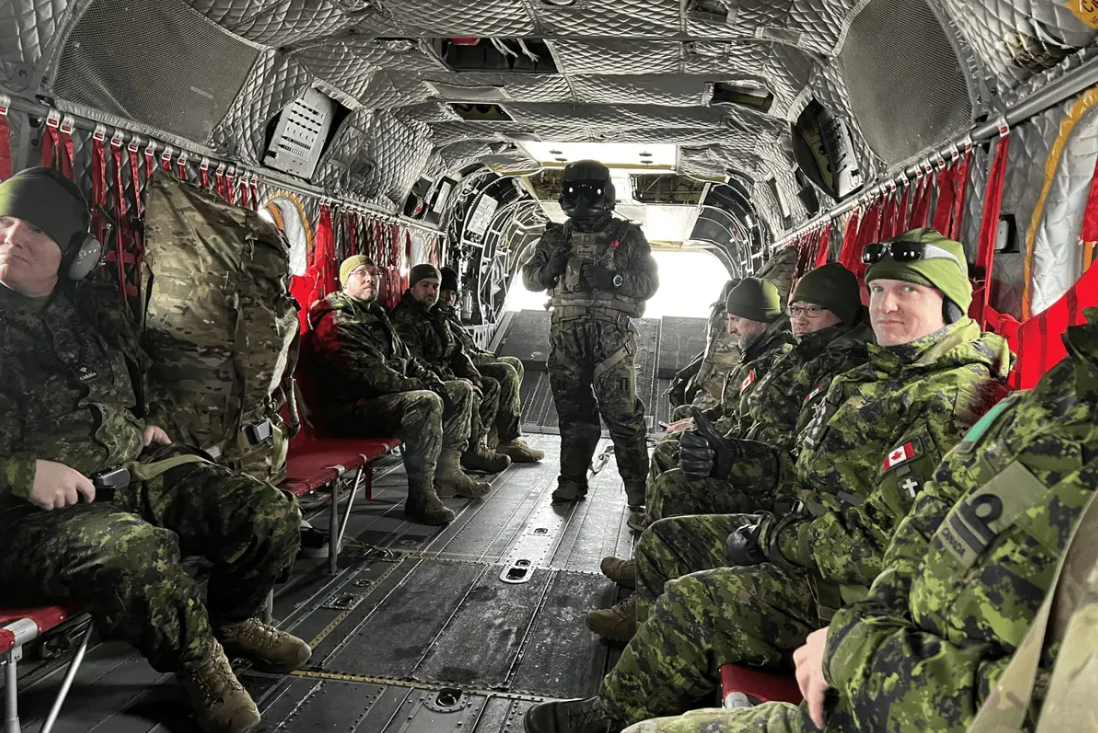
VANCOUVER (CCN) — A new Canadian Armed Forces policy that bars military chaplains from offering faith-specific prayers at official events with mandatory personnel attendance is drawing a response from military faith advisers as well as calls in Ottawa for its reversal.
The Canadian Armed Forces Military Personnel Instruction 03/26 – Spiritual Reflections in Military Settings, issued July 29, says chaplains “must instead offer a spiritual reflection” when prayers or religious observances are requested at official government events where CAF members are expected or required to attend.
The policy includes events such as graduation parades and change-of-command ceremonies, ship commissionings, honours ceremonies, mess dinners, and Remembrance Day commemorations.
In an initial response to CCN, the Department of National Defence (DND) said the instruction was issued “to support and elaborate on responsibilities” for commanders, chaplains and all CAF members “to better respond to the moral and spiritual needs of all members.”
It said the policy also was issued to adhere to Canadian Charter of Rights and Freedoms and the Supreme Court of Canada’s 2015 ruling in Mouvement laïque québécois v. Saguenay. The Saguenay case concerned a municipal council’s practice of opening public meetings with prayer and the state’s duty of religious neutrality.
DND said the instruction “does not limit a chaplain’s personal beliefs or ability to provide spiritual care, but “defines the appropriate language” during military ceremonies where attendance is expected or required and chaplains act as representatives of the Armed Forces rather than as representatives of their own faith traditions.
“The aim is for ceremonial moments to bring people together, regardless of belief,” DND said.
The Royal Canadian Chaplain Service continues to “offer prayer, support religious expression and care” in settings where participation is “voluntary, meaningful, and relevant to the individuals present,” the department said.
The new instruction broadens the 2023 policy beyond chaplains to all CAF members, who also must take steps to ensure the policy is respected by DND employees and others, including volunteers, who provide spiritual or religious services.
Bishop Scott McCaig of the Roman Catholic Military Ordinariate of Canada is working with members of the Interfaith Committee on Canadian Military Chaplaincy on a joint response, the ordinariate’s chancellor, Father Stéphane Sarazin, told Canadian Catholic News. The committee represents Canadian faith traditions on matters involving military chaplaincy. McCaig was travelling in the United States and unavailable for an interview before publication deadline.
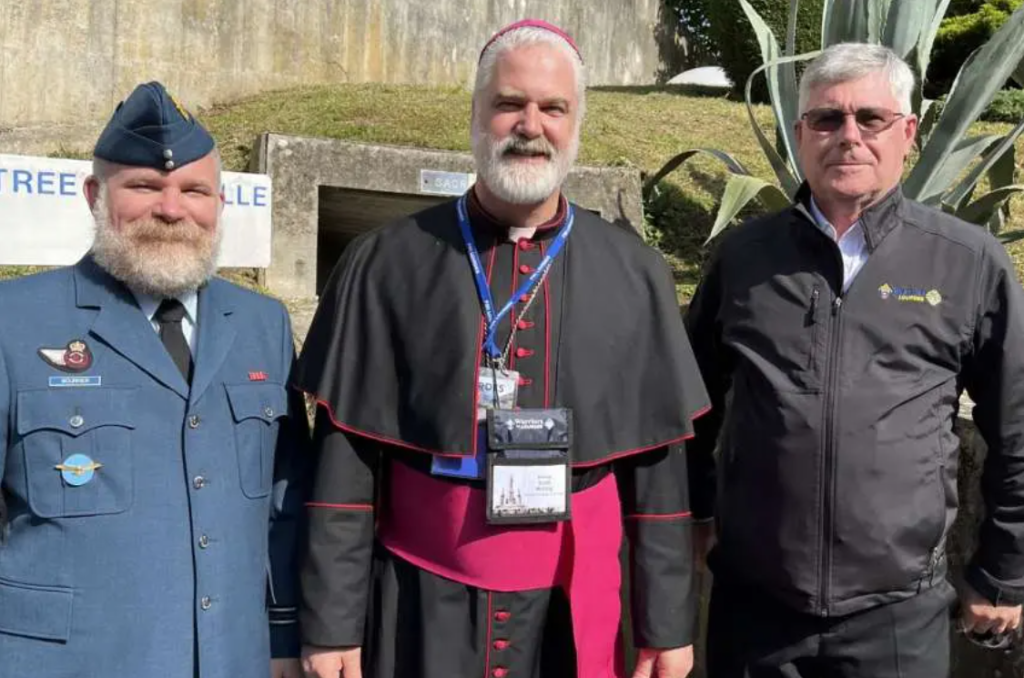
Sarazin said statements the bishop has issued concerning earlier restrictions “are still applicable” to the new policy.
The new instruction appears to be the first official update since a 2023 directive required chaplains to deliver inclusive spiritual reflections at public military functions where attendance is mandatory.
The directive said reflections have to be respectful of the religious and spiritual diversity of those attending and warns that non-compliance could result in administrative or disciplinary consequences.
In his response at the time, McCaig said Catholic chaplains reported “frustration, a sense of betrayal, and even vocational crisis.” He warned that restricting religious expression could reduce chaplains to “interchangeable generic counsellors or motivational speakers,” weaken their effectiveness, and undermine the morale and spiritual resilience of military personnel and their families.
McCaig proposed that mandatory military ceremonies be accompanied by voluntary religious components before or afterward.
In a 2023 Catholic Register column, retired military chaplain Father Timothy Nelligan argued the directive had “turned inclusion into exclusion.” He urged the Royal Canadian Legion to withdraw its invitation to the Royal Canadian Chaplain Service for the national Remembrance Day ceremony and have a Legion chaplain or retired military chaplain lead the prayers instead.
After the public outcry, Chaplain General Guy Bélisle granted chaplains temporary leeway for Remembrance Day ceremonies in 2023 while the directive was referred for further review.
In 2024, responding to questions before Remembrance Day, McCaig described the policy’s stated aim of preventing religious coercion as “good and praiseworthy,” but said it raised significant questions and inconsistencies and that prohibiting chaplains from invoking God could “give the impression that the government is preferring non-religion over religion.”
McCaig said requiring members to attend an event does not mean they have to participate in or assent to a prayer. He suggested rotating chaplains from different traditions at military events would reflect the Forces’ religious diversity without eliminating prayer.
Opposition has continued, with delegates to the Catholic Women’s League of Canada 2025 national convention passing a resolution calling on Ottawa to scrap the 2023 directive and strengthen military chaplaincy.
The new policy is drawing criticism from Conservative defence critic James Bezan, who called it “a disturbing departure from Canada’s longstanding commitment to religious expression” and urged the government to reverse it.
In a statement posted on X, Bezan said the directive prevents chaplains from expressing their faith while acting in their official roles.
Rather than promoting inclusion, he said, the directive excludes military members of faith, interferes with longstanding traditions, and infringes Charter-protected freedoms of religion and expression.
Bezan accused the government of using the Forces as “a testing ground for woke Liberal social experiments” and called on Ottawa to reverse what he described as an “unnecessary and regressive policy.”
The policy distinguishes between a chaplain acting as a representative of the Forces and representing a particular faith. At official events where personnel are “expected or mandated to attend” and a prayer or religious observance has been requested, chaplains must not use “words, actions, or symbols” specific to a spiritual or faith tradition on behalf of the government. They must instead offer a spiritual reflection.
The instruction exempts funerals, saying they are “not considered to be public military ceremonies for the purposes of this policy” and describing them as typically family-led ceremonies combining military ritual with the spiritual or religious traditions of the deceased and the family.
Chaplains may officiate, pray and conduct religious rites at funerals, and military personnel may participate while in uniform or otherwise acting in an official capacity.
The restrictions also do not apply to private counselling, pastoral care, faith-specific gatherings, weekly worship, religious rites or milestone ceremonies.
The instruction acknowledges that historic regimental prayers graces, and traditions involving patron saints have provided “comfort and purpose” and connected serving members with previous generations. However, it says they may be taught as part of a unit’s history in an educational setting, “not during a military ceremony.”
The directive takes a different approach to Indigenous practices. Although they may contain spiritual elements, they may be included “for cultural, historical, and educational purposes” when relevant to the occasion and “framed explicitly within an educational and cultural context.” Those attending cannot be required to participate in their spiritual elements.
DND cited the 2020 B.C. Supreme Court decision in Servatius v. Alberni School District No. 70, saying Indigenous spiritual practices, offered in a non-compulsory educational context, “do not breach the state’s duty of neutrality.”
Instead, the department said, they may “promote understanding, inclusion, and reconciliation” in keeping with the Truth and Reconciliation Commission’s Calls to Action and the federal government’s reconciliation framework.
The instruction says the spiritual and moral well-being of CAF personnel is “essential to sustaining operational effectiveness” and describes chaplains as specialist advisers on spiritual and religious matters. Primary responsibility, however, rests “first and foremost” with commanders.
The instruction does not address its apparent conflict with military regulations that say the Chaplain General is responsible for “leading public prayers at national events or at other appropriate events as determined by the Chaplain General.”
DND said it needed more time to answer CCN’s questions about who initiated and drafted the instruction, what consultations took place, and how the current policy differs from the 2023 direction it supersedes.