(CCN) — Saskatchewan’s introduction of new medical assistance in dying safeguards, followed by a series of government clarifications, has MAiD critics and supporters trying to determine how the proposed restrictions would fit with the province’s stated intention to allow advance requests under pending federal legislation.
The confusion began on Nov. 9 when Saskatchewan introduced Bill 73, the Medical Assistance in Dying Additional Safeguards Act, saying the legislation would prohibit MAiD for people who lack the capacity to make their own health care decisions.
On Nov. 12, the province’s Health Ministry sent out a clarification to reporters saying it intended to develop policies to implement advance requests. The statement raised questions about Bill 73’s purpose.
Saskatchewan’s announcement came as Ottawa moves ahead with federal Bill C-41, which would allow people diagnosed with certain incurable illnesses to request MAiD before losing the capacity to consent, with the procedure carried out later under specified conditions.
Advance requests are not the same as what is currently allowed under federal law — a limited waiver of final consent in certain circumstances before the procedure.
Currently, a person whose natural death is reasonably foreseeable, and who has been assessed and approved for MAiD, can make a written arrangement for the procedure to go ahead on a specified date if they lose capacity before then. Another provision covers loss of capacity after an unsuccessful attempt to self-administer MAiD.
The advance-request system proposed in Bill C-41 would go further, allowing people diagnosed with a serious and incurable illness that is expected to cause an irreversible loss of decision-making capacity to request MAiD before they otherwise qualify for it. The legislation would permit advance requests only in provinces that enact the necessary legal framework.
Quebec introduced a provincial advance-request system in October 2024, while Alberta earlier this year passed legislation barring advance requests.
Saskatchewan’s legislation says MAiD would be prohibited for anyone under 18 or whose sole underlying medical condition is a mental illness. Both restrictions are already reflected in existing federal law, although the mental illness exclusion is scheduled to expire in March 2027 unless Parliament acts, which is why the Liberals say they are moving quickly to pass Bill C-41.
Critics have objected to the federal government’s decision to combine advance requests with a separate measure that excludes from MAiD eligibility anyone whose sole underlying medical condition is mental illness.
The Liberal government rejected calls to separate the measures. On Nov. 16, the House of Commons voted 163 to 149 to limit further debate on Bill C-41. The next day, MPs voted 225 to 89 to approve the bill at second reading and send it to the House of Commons justice and human rights committee.
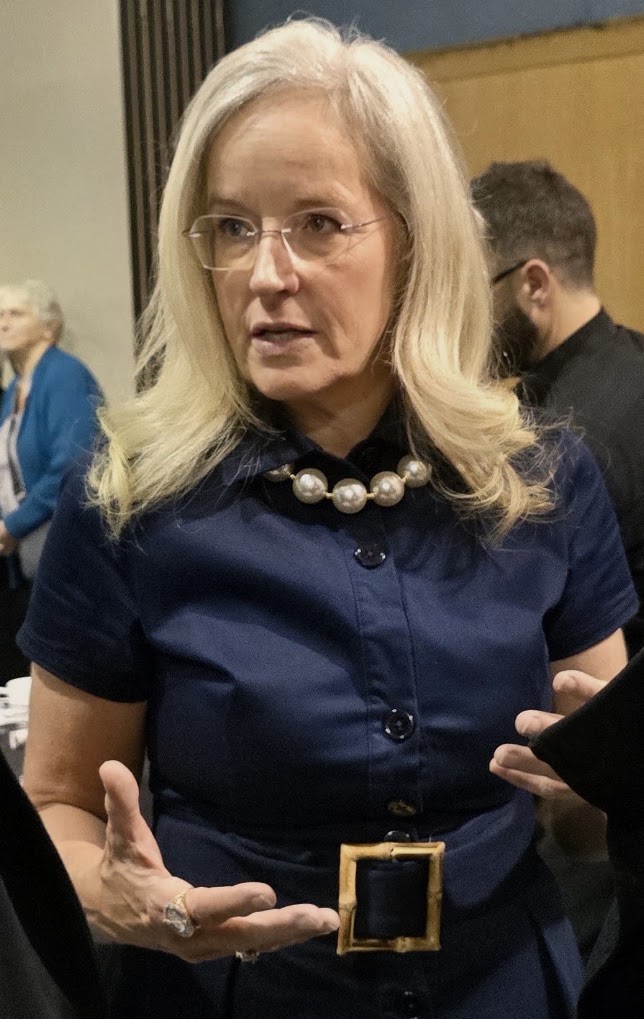
Conservative MP Tamara Jansen, speaking in the Commons Monday, said, “It is absolutely shameful that the Liberal government is shutting down debate on a bill that deals with life and death.”
Bloc Québécois MP Martin Champoux, who has publicly supported advance requests for MAiD, said in French he was “at a loss for words” over the government’s decision to impose time allocation on debate.
Justice Minister Sean Fraser replied that debate will continue as it proceeds through committee study.
The provision in Saskatchewan’s Bill 73 causing the confusion concerns people who lose the capacity to make their own health care decisions.
In its Nov. 9 announcement, the province listed the prohibition on MAiD for people lacking capacity alongside the restrictions involving minors and mental illness.
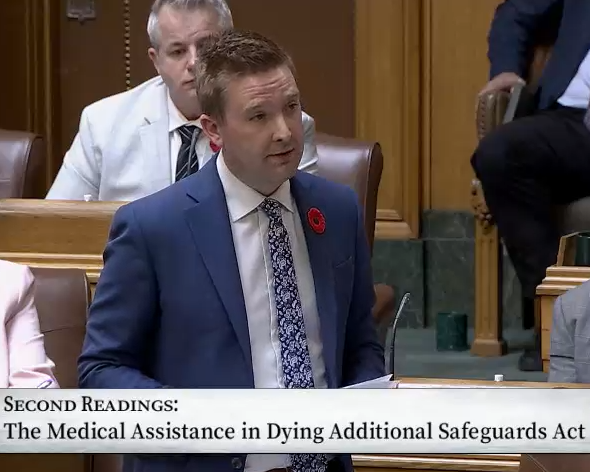
Health Minister Jeremy Cockrill reinforced that position during second-reading debate Nov. 10, telling the Saskatchewan legislature that MAiD would not be available to people who could no longer make their own health care decisions.
The announcement and the legislation initially appeared to some observers to close the door on the broader advance requests proposed by Ottawa.
However, on Nov. 12, the Saskatchewan Health Ministry emailed a clarification to the media, saying the province planned to develop policies to safely implement advance requests.
The statement prompted new reports that Saskatchewan intended to allow advance requests, rather than prohibit them.
Questions immediately arose when the government’s clarification did not explain whether the proposed provincial legislation was intended to accommodate the new federal system.
In a subsequent response to Canadian Catholic News on Nov. 16, the Health Ministry reiterated that Saskatchewan would develop policies to implement advance requests, but said those policies would ensure requests were made before a person lost the capacity to make health care decisions.
In response to a follow-up question from CCN, the ministry repeated its statement that the province would develop policies to safely implement advance requests for MAiD, with provisions ensuring requests are made before an individual loses the capacity to make their own health care decisions.
The response did not clarify whether MAiD could be administered after a person loses capacity under the proposed federal advance-request system, or whether the ministry was referring to arrangements already permitted under federal law.
Saskatchewan’s Bill 73 specifically exempts two situations already permitted under the Criminal Code from its prohibition on providing MAiD to someone who lacks capacity immediately before receiving it. It makes no express provision for the broader advance requests proposed in federal Bill C-41.
The apparent inconsistency has drawn attention from observers on both sides of the advance-request debate.
Groups opposed to expanding MAiD, including ARPA Canada, initially welcomed Saskatchewan’s announcement as a move toward stronger restrictions.
Supporters of advance requests also initially interpreted the legislation as a barrier to their introduction.
The “MAiD in Canada” website, maintained by Paul Magennis and Kim Carlson, originally described Saskatchewan’s legislation as preventing advance requests from being carried out.
After the ministry’s clarification, the website updated its assessment Nov. 13 to reflect Saskatchewan’s stated intention to allow them, noting that Bill 73 would appear to require amendment or additional provincial legislation to accommodate the proposed federal advance requests.
The questions also reached the House of Commons this week, where MPs cited Saskatchewan’s legislation and subsequent statements while debating whether the federal government’s advance-request provisions would be accepted by individual provinces. On Nov. 16, Liberal MP Kevin Lamoureux said Saskatchewan intended to proceed with advance requests, while Conservative MP Kelly Block cited the province’s Nov. 9 announcement restricting MAiD for people lacking decision-making capacity.
Saskatchewan’s proposed legislation remains before the provincial legislature, while the federal bill has cleared second reading in Ottawa and moves to committee.