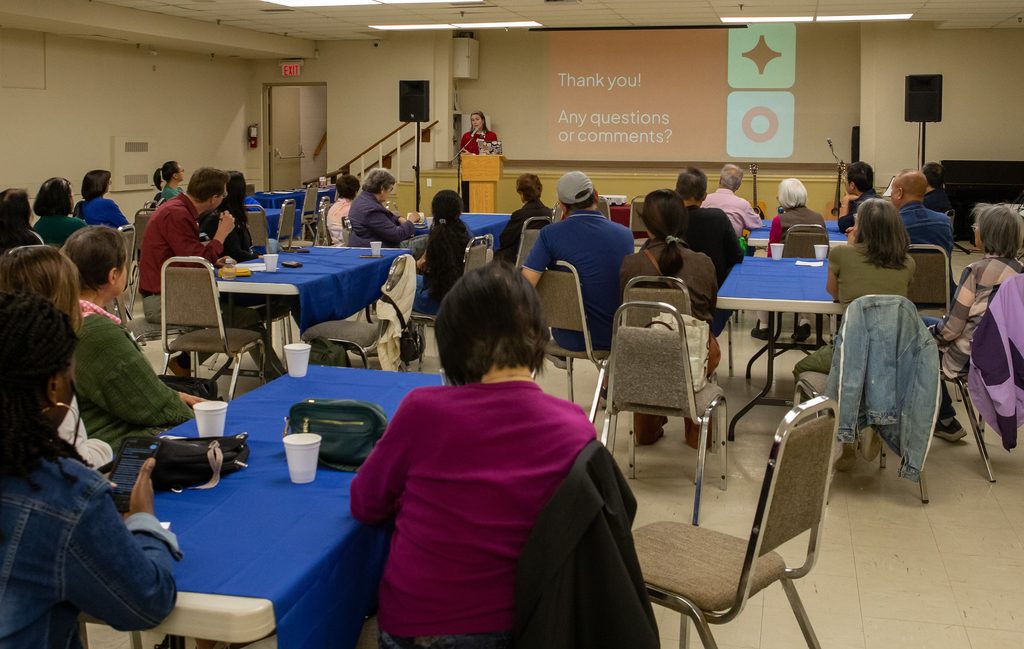
The use of media toward the goal of unity was the primary theme of a daylong workshop of Toronto’s Focolare movement. About 50 members and guests of Toronto’s Focolare community, mirroring the diversity of Canada’s largest city, gathered in the austere basement of St. Charles Borromeo Church Sept. 26.
The day started with an energizer involving new technology, as participants were invited to pull out their smartphones and recall summer experiences. A short introductory video then presented Focolare’s spirituality of unity, retelling origins of the movement in war-torn Italy in the 1940s and bringing out the socio-political and artistic ramifications of its charisma.
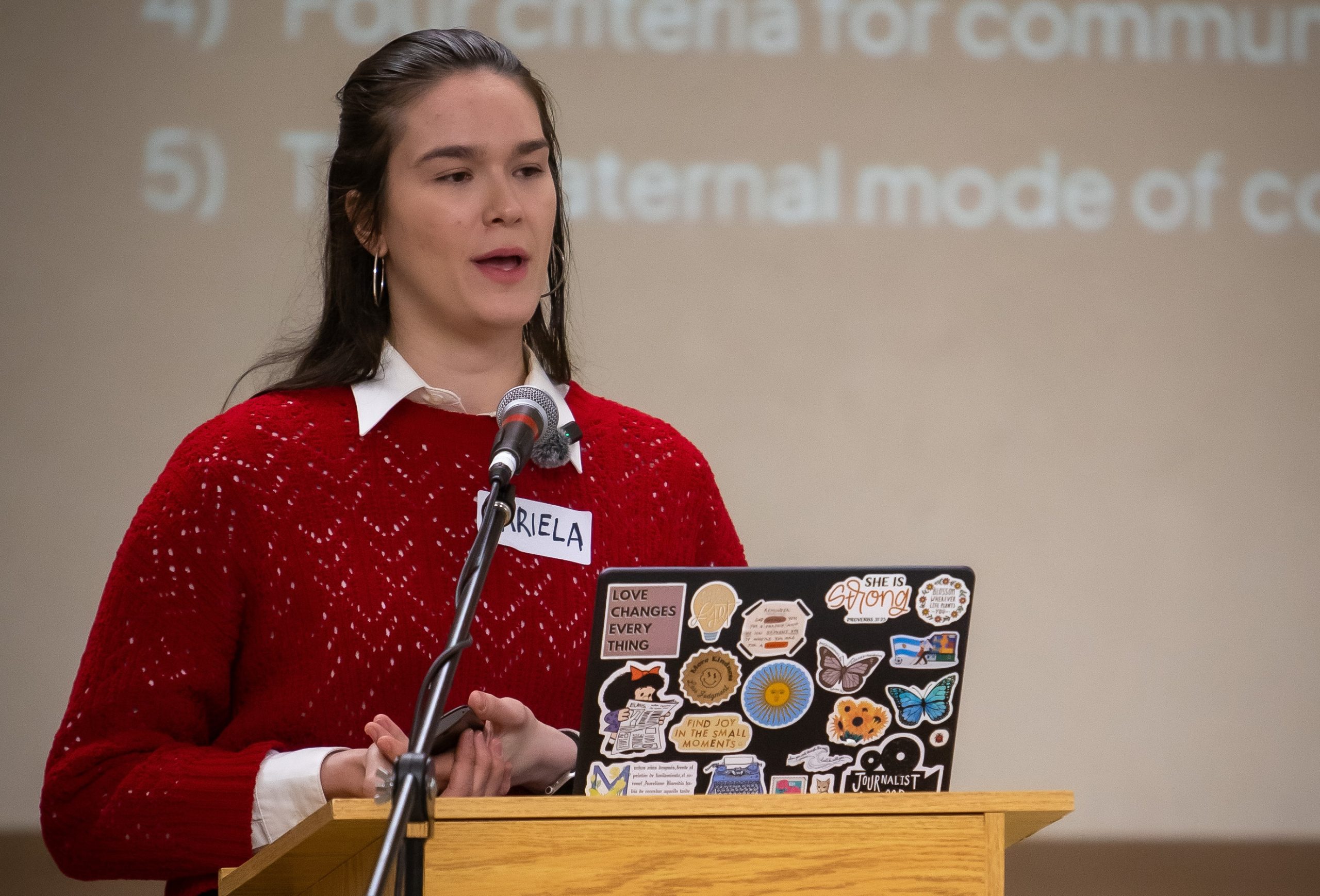
Introducing the day’s topic was Mariela Torroba Hennigen, host of Focolare Media’s monthly “Word of Life” podcast. Hennigen, a freelance journalist for Canadian Catholic News, received the prestigious Gracie Award from the Alliance for Women in Media Foundation for her student podcast at Toronto Metropolitan University on gender-based harassment of female journalists. Hennigen also participated in CCN’s “God in the City” Catholic Journalism Seminar in August.
Hennigen’s presentation, “Engaging with Media through the Charism of Unity,” drew inspiration from a speech Chiara Lubich gave in 2002, some years before social media and smartphones became common. Hennigen showed how the Focolare movement has always proceeded on similar principles: to use every means of communication available; to begin with small steps close to home; and always place the person first.
“Media and the charism of unity share not only a goal, but also a method” to achieve God’s dream — and that dream is unity among all people, she said, echoing Chiara Lubich.
Media and the spirituality of unity that is at the heart of Focolare are also connected by their shared communitarian dimension, building relationships, she added.
“The purpose of using media has not changed, the tools have only modernized,” Hennigen said. So, the question becomes, “What do we want to do with the technology we have now before we pick it up to use it?” she said, admitting to wrestling with this question during her last year of studies.
Hennigen also highlighted how the “God in the City” summer seminar encouraged her on her path as a professional religion journalist and a committed Catholic, as it brought out the urgent need for quality religion journalism and offered her new ways of thinking about her own positionality.
“Our role as journalists is to tell the truth in charity, and to do it well,” she said. During the seminar, she said, “teachers became mentors, fellow students became friends.”
A wide-ranging discussion followed the presentation. One Focolare member shared how new media had helped to bring friends and family members together in mutual support as her son went through a terminal illness. In that tragic situation, the new technology was clearly a blessing. Other participants lamented how it seems everyone is dependent on their smartphone now that they rarely go anywhere without it, and that creative modes of expression, such as letter-writing, have dwindled as a result. One young person indicated that people in her age group find it increasingly difficult to communicate in person.
Hennigen also shared a pre-recorded video interview she had with former Toronto community member Marie Anne Torres, who now works at Focolare’s media center in Italy.
“There were times in which God has definitely been the producer of the story I was trying to tell,” Torres said. “You know, those moments when it’s so clear, not just in terms of the story itself but also in the greater sense.”
Having said this, Torres also admitted that sometimes work in media can be very difficult, such as during disagreements within a team or during a period of spiritual dryness. Another very real — and maybe more human challenge — is burnout, when team members are at their limits and being pushed to give still more.
Torres, Hennigen and others mentioned several more incidents that show the blessings and the pitfalls of working in journalism and media. In some situations, the risks of being caught in a storm on “X” or even being sued are very real. Nevertheless, Catholic media professionals persevere in this work despite the challenges, one story at a time, if need be, through the encouragement of community.