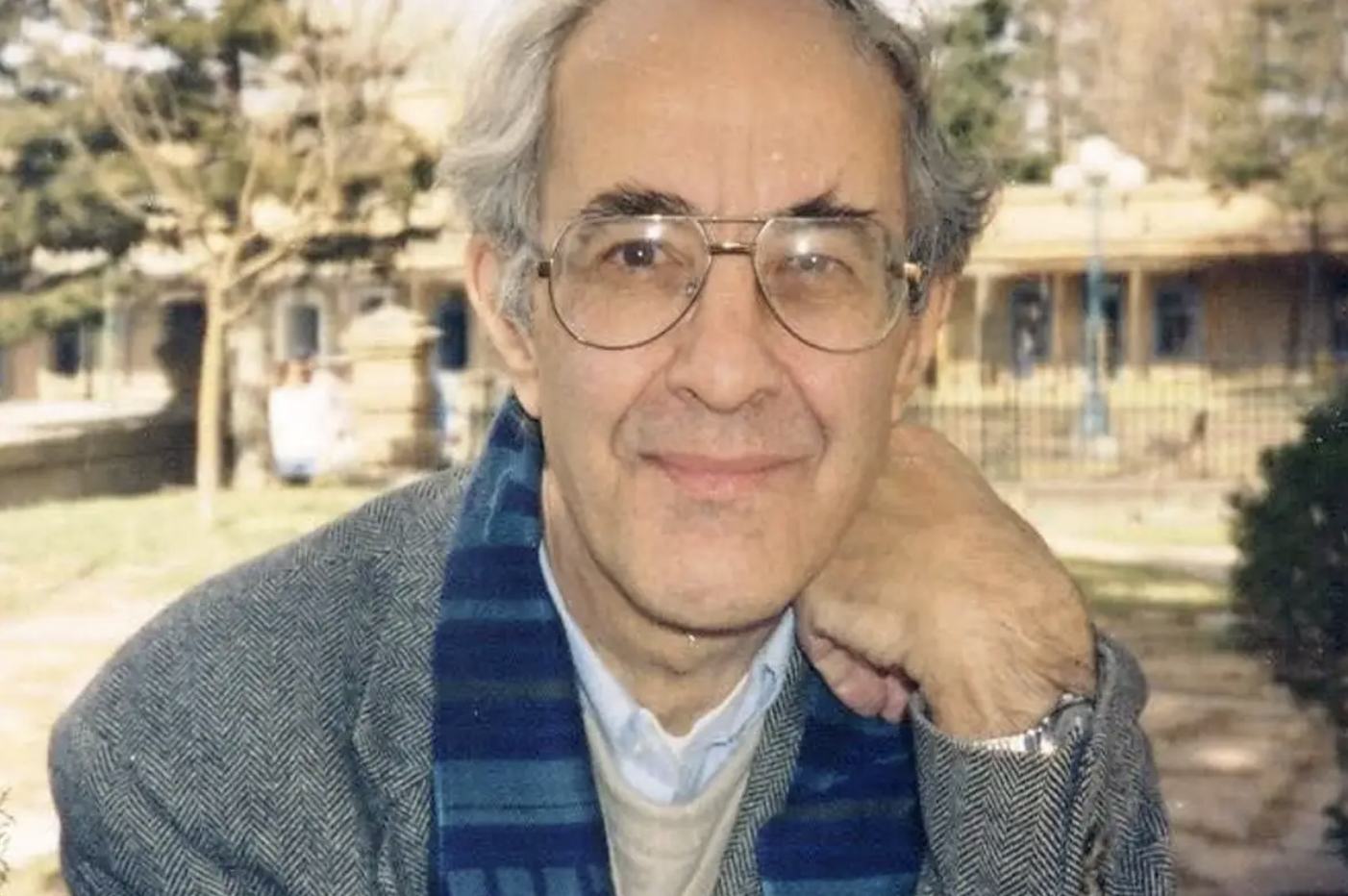
Famed Dutch priest Henri Nouwen, along with his writings and pastoral service, are being feted by the Henri Nouwen Society this month.
For the 30th anniversary of his death, Sept. 21, the Henri Nouwen Society has organized a graveside ecumenical service at St. John’s Anglican Church Cemetery in Richmond Hill, Ontario, at 11 a.m. The service also will be streamed on YouTube.
The professor, theologian and inexhaustible writer, continues to resonate and grow a readership of spiritual seekers 30 years after his death.
Stephen Lazarus, a literary manager overseeing the Catholic priest’s intellectual property through the Henri Nouwen Legacy Trust, said he consistently receives expressions of interest in republishing Nouwen’s work or publishing new work from his archives housed at the University of St. Michael’s College in Toronto, writings that have been translated into nearly 40 languages.
The power of Nouwen’s core message, said Lazarus, “inspires his continuing interest and impact.” The heart of what Nouwen relayed is how “few of us have really begun to realize how deeply God loves us and are God’s beloved children created in the image of God. That has radical implications both for our own lives and ministry, but also for the very broken world that we live in.”
Nouwen expressed his own brokenness, anxiety and loneliness through his texts. He once imparted that “writing is a process in which we discover what lives in us,” and the writer must “embark on a journey whose final destination we do not know.”
His willingness to explore his deepest vulnerabilities was evident in “Wounded Healer” (1972) and more so in “The Inner Voice of Love” (1996), an emotionally raw journal written during the most difficult period of his life.
After nearly 20 years of teaching at esteemed academic institutions, such as the University of Notre Dame, Yale Divinity School and Harvard Divinity School, Nouwen’s vocational journey guided him to serve people with intellectual and developmental disabilities. He was pastor for the L’Arche Daybreak community in Richmond Hill over the last decade of his life.
“He really found a home and profound healing in his own journey, working among those with some severe disabilities who, of course, had no idea he’d written all these books or had spoken all around the world,” said Lazarus.
The dedicated 30th-anniversary webpage on henrinouwen.org also features video testimonials of figures influenced by Nouwen, including many friends and colleagues. There is also a “30<30” video catalogue of young adults aged 29 or younger sharing glowing praise as to how Nouwen shaped them.
Wendy VanderWal Martin, the Henry Nouwen Society’s director of development, guided the cohort of young leaders during an event over the past year. She shed insight on why they discovered a man who passed on from this life before they entered the world.
“What I heard from them is the deep need to connect with a spiritual guide who is accessible and honest and vulnerable, which we know Henry was,” said Martin. “He also (provides) a depth of grounding that pushes past all the trappings of the distractions of screens and AI, and gets to the heart of the matter in an accessible and real way that feels like, ‘Oh, like he must be reading my mail.’
“Henry knew the human heart and what it means to be human with weakness and struggle so well and provided a way of including that in our spiritual journey rather than trying to eradicate that part of ourselves.”
Nouwen devotees are invited to submit their personal reflections about Nouwen’s impact through a form on the website.
Special retrospectives about Nouwen’s legacy were also unveiled during this anniversary year. Lazarus edited “Encountering Henri: The Living Legacy of Henri Nouwen.” Published by Orbis Books, it celebrates Nouwen’s lasting influence through the memories of friends and colleagues and the testimonials of others who have been transformed by his body of work.
As for how Nouwen’s work sustained and transformed him, Lazarus shared how it “was discovering a deep and mature spirituality.” Nouwen’s writings imparted that faith “is not just a system of beliefs, but it’s a profound relationship,” and we are called to express love of God through “our whole self, including our hands.”
Lazarus anticipates that Christians and people who are presently irreligious will continue discovering Nouwen’s work in the years to come. He said though “the confident secularism or materialism worldview is still very dominant, people have a deep hunger in their hearts. We’re beginning to see this real resurgence of faith.”