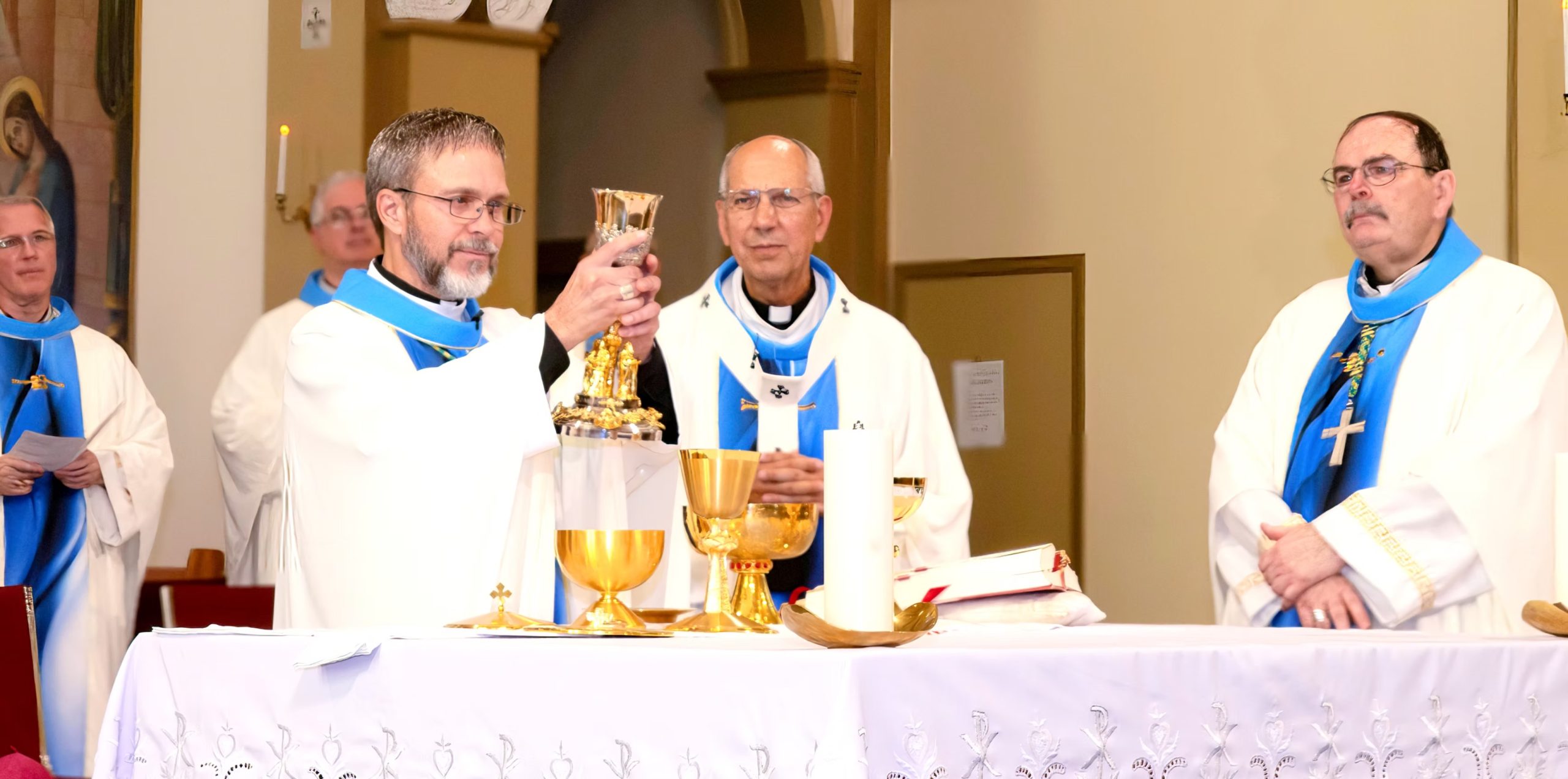
VANCOUVER (CCN) — When Kenneth Thorson was ordained and installed as bishop of Prince Albert on Aug. 22, the ceremony marked more than a new beginning for one Saskatchewan diocese.
His ordination completed a chain of episcopal changes that began with the retirement of Vancouver Archbishop J. Michael Miller last year. Edmonton Archbishop Richard Smith was appointed to Vancouver, leaving Edmonton vacant. Prince Albert Bishop Stephen Hero was then appointed to Edmonton and installed this past January. That left Prince Albert vacant until Thorson was appointed May 28 and ordained and installed Aug. 22.
One retirement therefore led to two transfers and the nomination of a new bishop, all of which involved four bishops and affected three dioceses.
That western chain was only part of several episcopal changes in Canadian dioceses this year. Through Aug. 31, there were six appointments of bishops to permanent office, one automatic coadjutor succession, and the appointment of an apostolic administrator, all affecting 12 Canadian dioceses and eparchies.
A series of three episcopal ceremonies within six days at the end of August made the activity especially visible, but the Canadian Conference of Catholic Bishops (CCCB) cautioned against describing it as unprecedented.
“I would not characterize the recent episcopal appointments in Canada as a new wave or as anything particularly unusual,” said Pomeline Martinoski, the CCCB’s director of communications, in an email.
She described the recent changes as “part of the normal cycle of episcopal succession.” Bishops are reaching age 75, at which they are asked to submit their resignation, eventually leading to the appointment of successors and the transfer of serving bishops from one diocese to another.
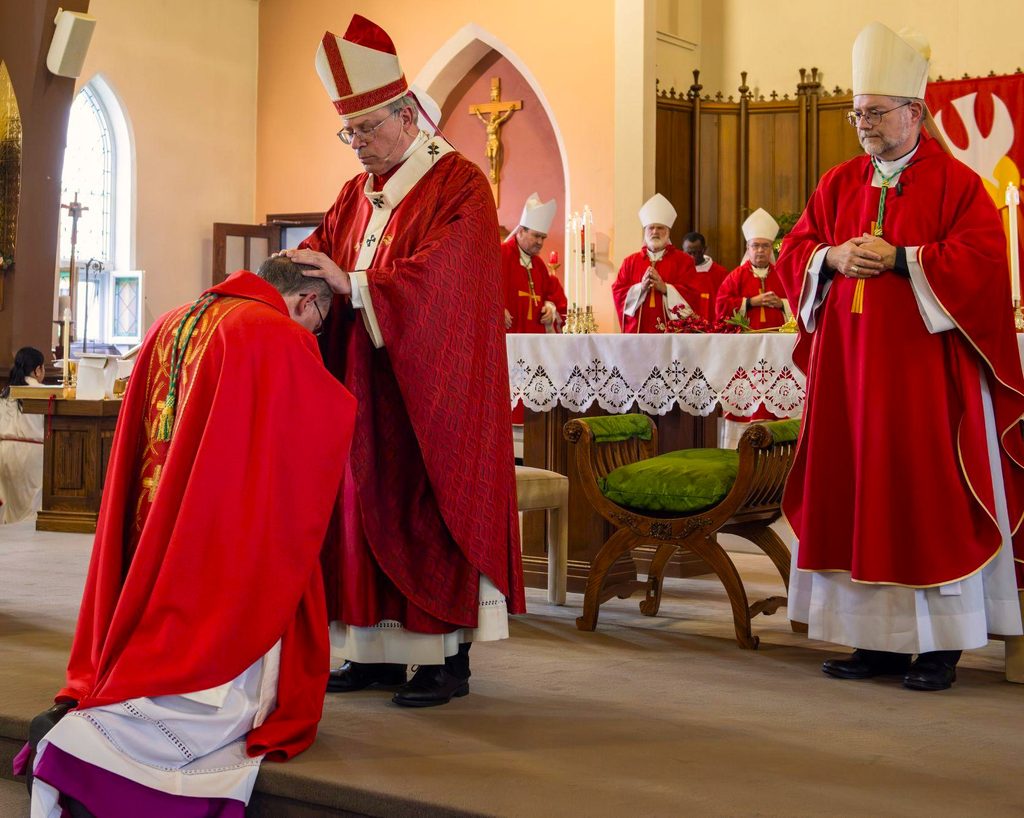
Those moves often do not take place simultaneously, so a bishop’s transfer can leave a prolonged vacancy before a successor takes office. In the meantime, leadership falls to a diocesan administrator or an apostolic administrator.
Witness the example of Bishop Martin Laliberté, who was transferred from Trois-Rivières, Quebec, and appointed coadjutor bishop of Saint-Jean–Longueuil on Feb. 11. His transfer left Trois-Rivières without a diocesan bishop.
When the retirement of Saint-Jean–Longueuil Bishop Claude Hamelin was accepted July 11, Laliberté automatically succeeded him as bishop. The inauguration of his episcopal ministry took place Aug. 27, but as of Sept. 12, Trois-Rivières was still awaiting a permanent successor.
The effect was even greater in northern Quebec, in Amos and Rouyn-Noranda, two dioceses united under a single bishop, Bishop Guy Boulanger. On April 10, Boulanger was transferred to Sherbrooke, filling the vacancy created by the retirement of Archbishop Luc Cyr and leaving Amos and Rouyn-Noranda vacant.
Similarly, London Bishop Ronald Fabbro’s retirement was accepted April 21, and Bishop Daniel Miehm was transferred from Peterborough to London. London gained a bishop, but Peterborough remains vacant.
The same pattern occurred in the Ukrainian Greek Catholic Church.
On July 9, Eparch Michael Kwiatkowski of New Westminster, British Columbia, was appointed metropolitan archbishop of the Ukrainian Catholic Archeparchy of Winnipeg to succeed Archbishop Lawrence Huculak, whose retirement was accepted the same day.
The appointment answered the need in Winnipeg but left the Eparchy of New Westminster awaiting a permanent successor. Kwiatkowski’s installation in Winnipeg is scheduled for Nov. 8.
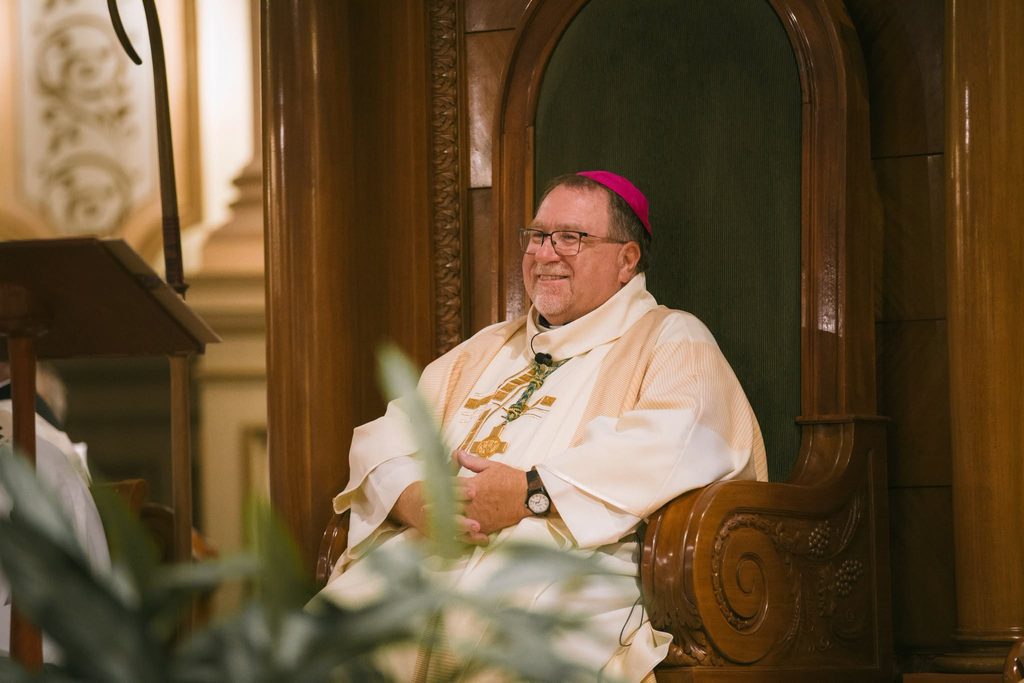
Not every appointment sets more dominoes in motion.
When Bishop Roch Martin was appointed to Timmins on May 1, succeeding retiring Bishop Serge Poitras, he was serving as vicar general and moderator of the curia in the Diocese of Sault Ste. Marie. Martin was ordained and installed as bishop of Timmins on Aug. 24. Because he was not a bishop serving in another diocese, his appointment did not create an episcopal vacancy.
A different situation arose in Edmundston, New Brunswick, where Bishop Claude Champagne’s retirement was accepted Aug. 15. Bishop Michel Proulx of Bathurst was named apostolic administrator of Edmundston, continuing as bishop of Bathurst pending the appointment of a permanent successor.
Currently six Roman Catholic dioceses are without a diocesan bishop: Amos, Charlottetown, Edmundston, Peterborough, Rouyn-Noranda, and Trois-Rivières, Martinoski said.
“In the Eastern Catholic churches, the Ukrainian Catholic Eparchy of New Westminster and the Exarchate of Saints Cyril and Methodius of Toronto are also vacant.”
The current round of appointments, retirements and successions is not unprecedented, but the number of jurisdictions affected through Aug. 31 is well above the average of about seven, as a CCN analysis of episcopal changes since 1990 found.
Archbishop Richard Gagnon, whose retirement as archbishop of Winnipeg was accepted Dec. 30, 2024, has experienced the domino effect personally. His retirement brought Archbishop Murray Chatlain from Keewatin–Le Pas to the Archdiocese of Winnipeg, leaving Keewatin–Le Pas vacant until Father Susai Jesu was ordained and installed as archbishop more than a year later on Jan. 26, 2026, after his appointment last November.
Gagnon, who was ordained to the priesthood for the Archdiocese of Vancouver and is now retired in the Fraser Valley, sees the recent increase as notable, but not exceptional.
“It is a sudden increase, but it isn’t something you would call unusual,” he said in an interview.
More important in his view is what comes next as “the bishops are getting older.”
Among Canada’s Latin-rite diocesan bishops and archbishops, eight have already reached 75 or will reach the canonical resignation age by the end of 2030.
“Under Church law, reaching the age of 75 does not mean that a bishop automatically retires. At that age, bishops are asked to submit their resignation to the Holy Father, and they continue to serve unless and until the Holy Father accepts it,” Martinoski said.
Bishop René Guay of Chicoutimi turned 76 on Sept. 4 and remains diocesan bishop. Archbishop Christian Lépine of Montreal turns 75 on Sept. 18. Archbishop Albert LeGatt of Saint-Boniface turns 75 in May 2028; Archbishop Paul-André Durocher of Gatineau, Archbishop Denis Grondin of Rimouski, and Bishop Stephen Jensen of Prince George reach 75 in 2029; and Archbishop Brian Dunn of Halifax–Yarmouth and Bishop Michael Brehl of Pembroke reach 75 in 2030.
Another nine Latin-rite ordinaries reach 75 in 2031 and 2032, including the archbishops of Moncton, St. John’s, and Quebec, and the bishops of Calgary, Victoria, and Kamloops.
Gagnon sees two things happening: An aging episcopate means more vacancies are coming, while an increasingly international Canadian priesthood is changing the pool from which their successors will be drawn.
“I think the episcopacy is going to reflect the Catholic Church in Canada more and more in terms of ethnicity, both in English-speaking Canada and French-speaking Canada.”
He expects more Canadian bishops to be men originally from other countries who have become Canadian citizens.
“The pool of priests from which bishops may be chosen also reflects the increasingly international character of the Church and of priestly ministry in Canada, so that diversity of background may naturally be visible in future appointments as well,” Martinoski said.
For Gagnon, there’s no doubt about it. “You’ll be seeing more ethnic diversity in the episcopacy in Canada, for sure.”