TORONTO (CCN) — Throughout his decades-long career, retired CBC journalist Brian Stewart saw war, famine and death in areas of conflict across the world. Such a prolonged exposure to suffering inflicted him with what psychologists call a “moral injury.”
“It’s not mental. It’s spiritual. It hits those who witness things: soldiers, aid workers, journalists, religious workers, people in the field, missionaries,” Stewart said. “No matter what they do, they don’t live up to what they regard as their high moral standard. You’re going to be left feeling you could have done more.”
Stewart describes this experience in his book, “On the Ground: My Life as a Foreign Correspondent,” published last year.
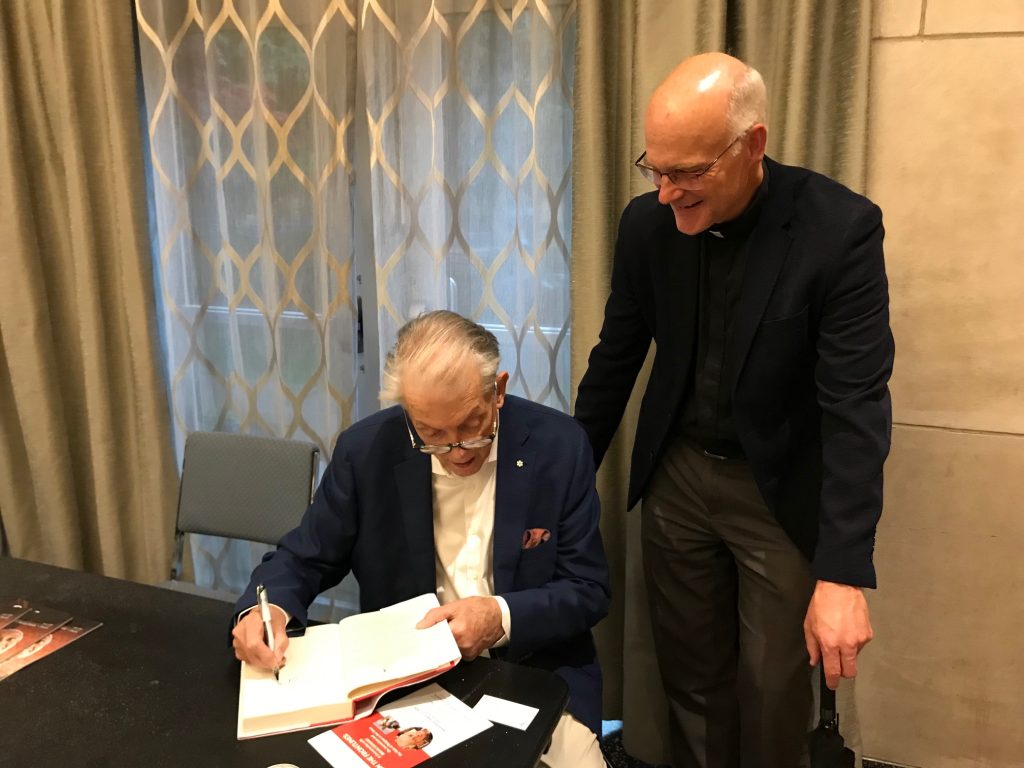
A Montreal native, Stewart rose to international fame for his foreign coverage for CBC’s The National and The Journal. His contributions to Canadian journalism earned him the rank of officer in the Order of Canada, which honours exceptional Canadians in all fields.
Today, Stewart says his moral injury does not bother him as much as before, as he has learned to manage it effectively. His groundbreaking reporting, however, is still relevant to the world of journalism, with religion playing a role.
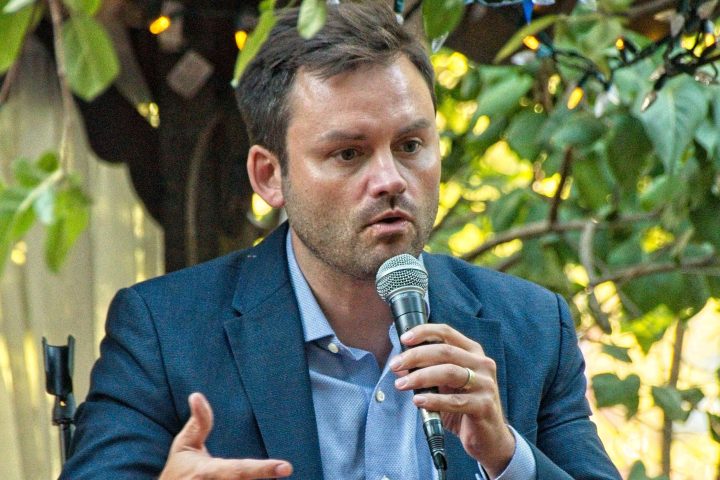
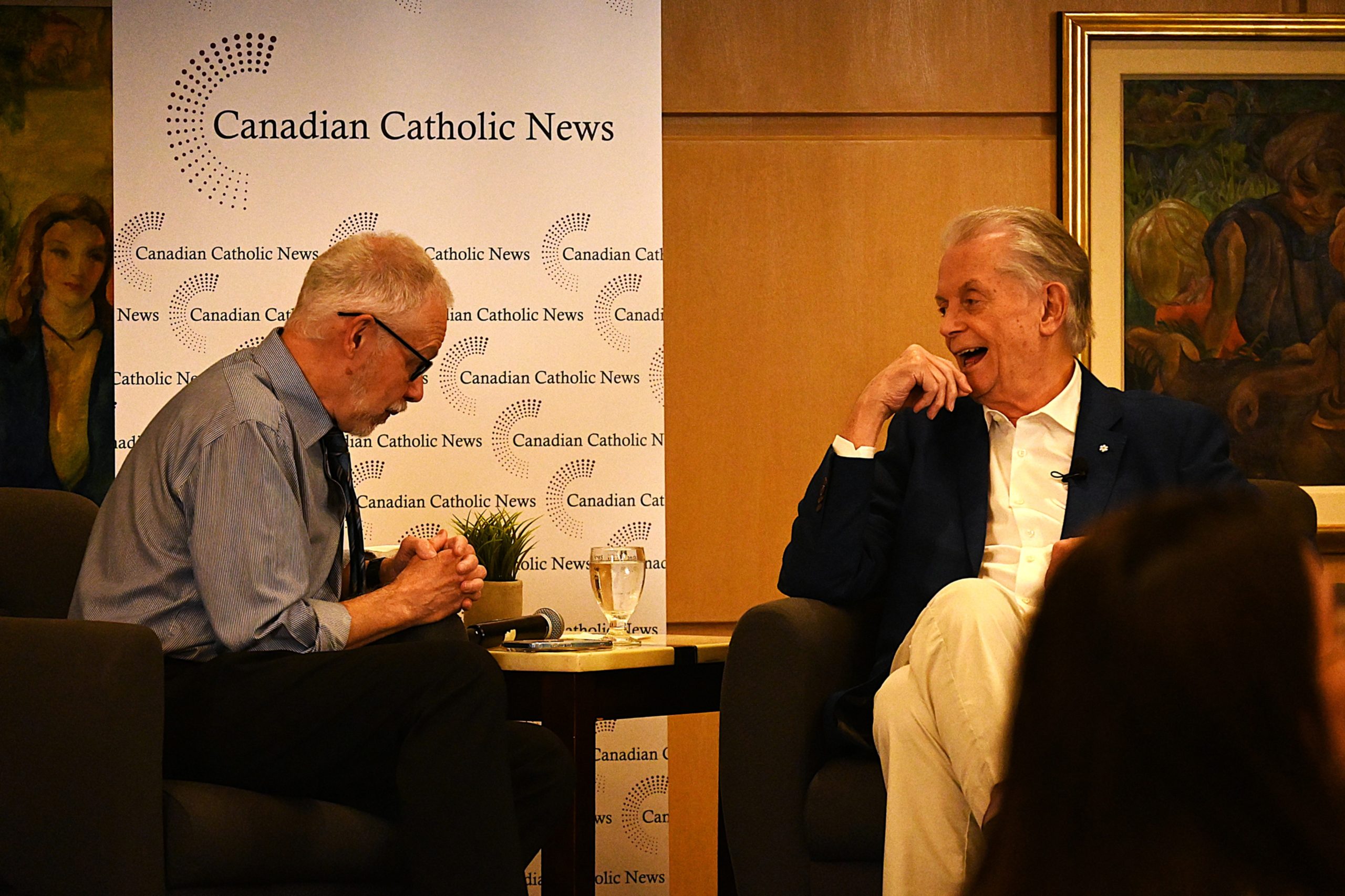
Stewart participated in the public discussion, “On the Frontlines: A Conversation with Brian Stewart on Journalism & the Role of Religion in the News.” The event, held at the University of St. Michael’s College in Toronto Aug. 12, was presented by Canadian Catholic News (CCN) and the Metropolitan Andrey Sheptytsky Institute. More than 50 people attended.
The event drew a mix of aspiring and experienced journalists, history enthusiasts, academics and students of CCN’s “God in the City” Catholic Journalism Seminar, and members of the general public.
Winnipeg-based religion journalist John Longhurst, also a member of the Order of Canada, guided the discussion.
Longhurst said Stewart “wasn’t a religion reporter, but he indicated that wherever he went, he kept bumping into religion. Since I’m always alert to the religion angle, I thought ‘Brian, let’s peel it, let’s find out.’”
The discussion covered topics from across Stewart’s career, including his experiences growing up in the aftermath of World War II and his award-winning reporting from 10 war zones. It also explored Stewart’s complicated relationship with Christianity.
Stewart describes himself as a “Christian agnostic,” which he describes as a middle ground between a practicing Christian and an outside observer. He likened his position to a sports reporter who follows and supports a particular team but is not a member.
“I was a Christian who loved the Christian message, loved the Christian theologies, loved the Christian ceremonies and the churches and the practices, loved the work they were doing,” Stewart told CCN after the talk.
“I was kind of a Christian wannabe who couldn’t quite make it into the fold. I kept getting closer. I was in, and then I was out,” he added.
During the public discussion, Stewart said this unique relationship with his faith allowed him to report on religious matters in an objective way. He said it allowed him to see, acknowledge and report on the flaws in the system, while acknowledging the positive impact religion and faith groups have on the world.
Stewart also described how, throughout his career, he was inspired by the bravery and selflessness of charities and aid groups, many of which were Christian. He credited religious and secular aid groups with being among the first people on the ground in many of the disaster areas he covered, including the 1984-85 Ethiopian famine. The actions of these aid groups helped draw Stewart closer to the Christian faith and informed his later reporting on religion.
“I wondered what kept them there — I mean this unbelievably horrible place, dangerous place. Some of them there 25 years, slaving away. And I just began to feel there was something in this religious thing, this Christian thing,” he said.
In his final comments, Stewart described his concern about the current state of journalistic reporting and institutional disaster response. Large media networks, he said, are reluctant to cover religion and have withdrawn from covering global issues of inequality, migration and conflict, choosing instead to focus on domestic political division. Even world leaders and governments have reduced their focus on global affairs in favour of domestic issues.
“The United States cuts its aid budget by – what is it, three, four, five billion dollars? Canada cuts its aid budget, Britain does, Europe does. There are a huge amount of inequality and migration problems, and there aren’t central authorities coming to say, ‘Listen, folks, this is what we got to rally behind,’” he said.
“And there are really few organizations with the power and heft of the Roman Catholic Church to step into areas where the world’s going to be looking for it,” he added.
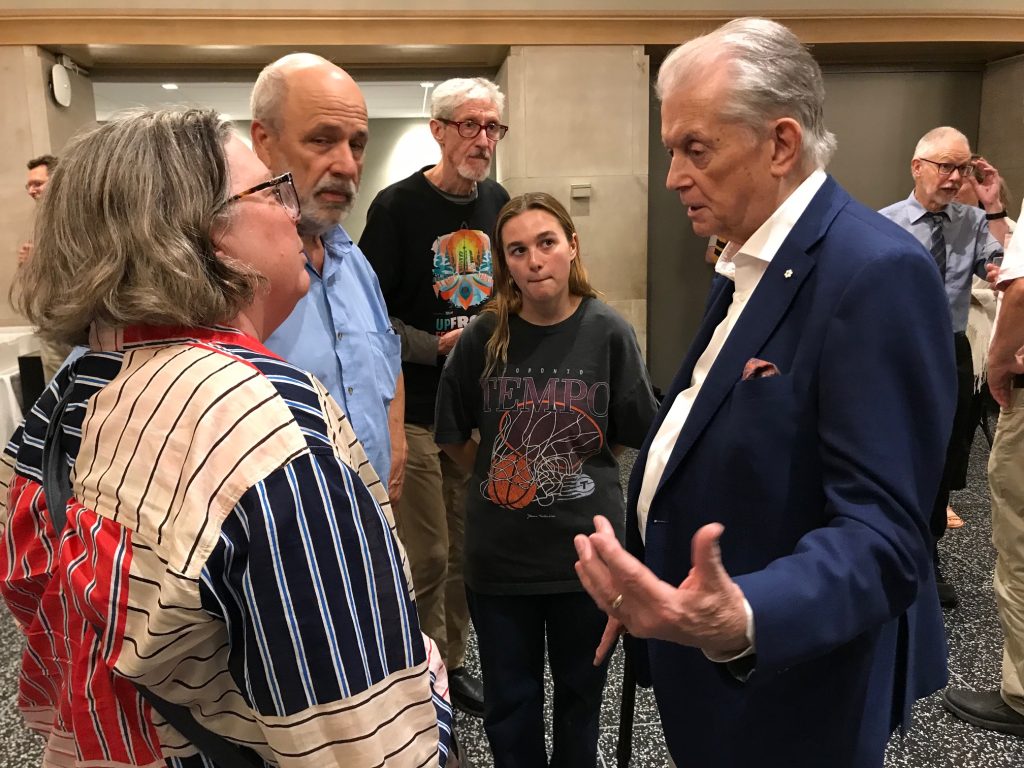
Several attendees expressed appreciation for Stewart’s experiences.
“When he was talking about how it wasn’t only just PTSD that people go through, but moral injury, that was just something that resonated with me,” said Ebosetale Oyamienlen, a recent psychology graduate who lives in Mississauga. She said she would read more about it.
Jill Conroy, also of Mississauga, said she grew up listening to Stewart on the nightly news.
“It was really nice to hear him talk about himself as being affected on a human level — that moral injury that he spoke about,” she said. “I’d never heard that term before, and I think that it’s probably very true that anyone who works in those situations is very affected.”
Christian Towalski is freelance journalist and technical writer based in Central Minnesota. He has written for St. Cloud Live, Today’s Catholic and Central Minnesota Catholic.
This report was produced during CCN’s God in the City Catholic Journalism Seminar, Aug. 9-15, 2026.