The major Christian feasts of Christmas and Easter have, in many respects, been gently hollowed out in mainstream culture. Christmas now arrives escorted by a man in a red suit, Easter by a chocolate-delivering rabbit. Neither figure is especially threatening, but both are telling. They allow for rituals, gatherings, and even a sense of seasonal rhythm — without requiring any clear reference to Christ Himself. What was once holy can now pass as merely familiar.
There is, however, one notable exception in Canada.
Good Friday remains a statutory holiday. Businesses close. Schools pause. The rhythm of ordinary life is interrupted. And yet, unlike Christmas or even Easter, Good Friday has largely resisted commercialization. There are no mascots, no sales cycles, no cultural substitutes for its central claim. It remains, in an important sense, an unassimilated day.
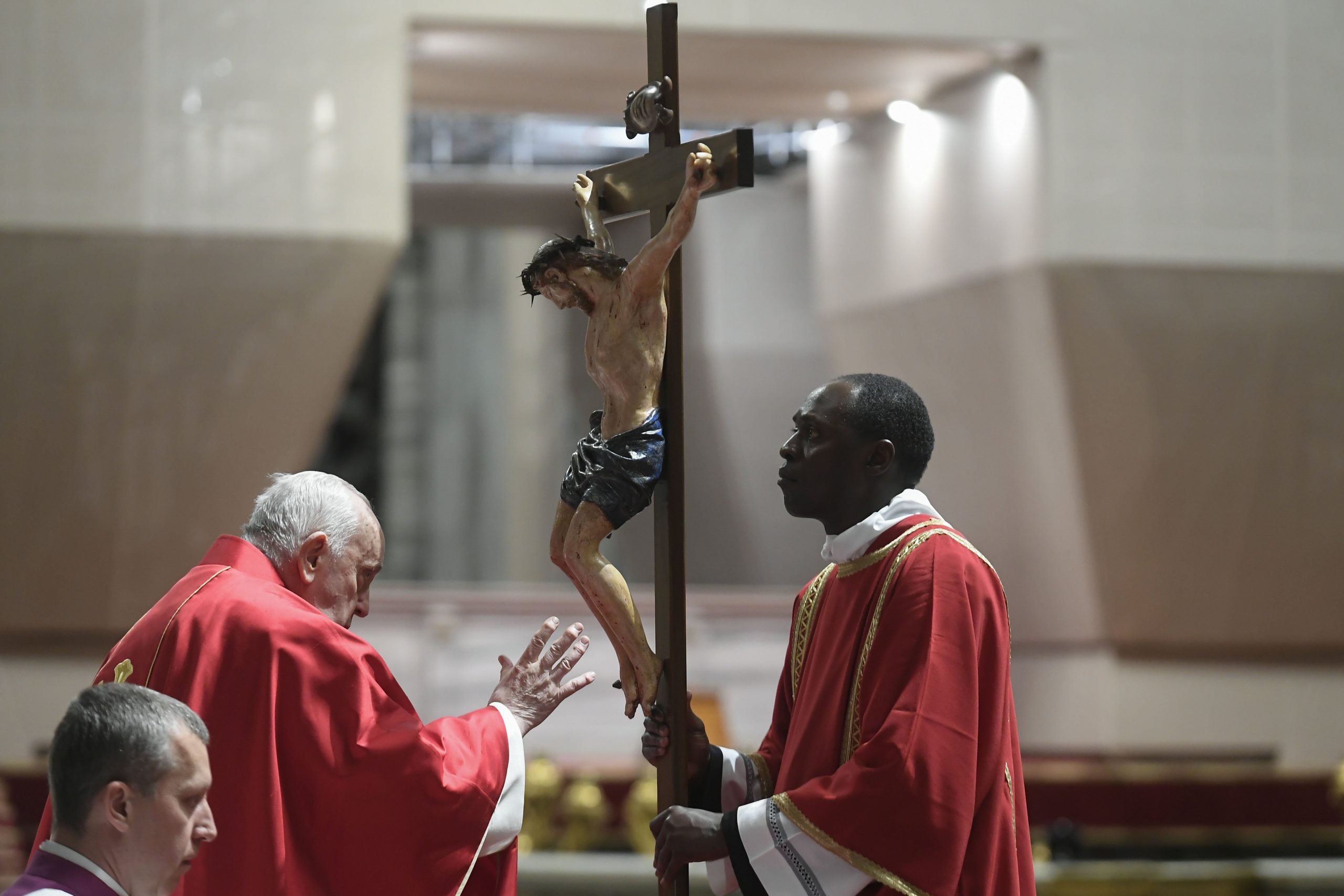
This is not accidental. Good Friday commemorates the crucifixion — the suffering and death of Jesus Christ. It is not a feast but a fast; not a celebration but a solemn remembrance. Even within the life of the Church, it is marked by austerity and silence. There is little here that lends itself easily to consumer culture. One cannot sentimentalize the Cross without first refusing to see it.
And this is precisely why Good Friday is so difficult for us.
Canada continues to observe a day of rest whose meaning many no longer accept — and, more strikingly, often prefer not even to consider. We stop, but we do not ask why. Or worse, we avoid the question altogether.
But the question does not disappear simply because we decline to answer it. If anything, the persistence of Good Friday sharpens it: What exactly are we doing when we stop on this day?
If the Cross is nothing more than a relic of a discarded belief system, then this holiday is an empty gesture — an inherited habit without justification. Why should an entire society pause for something it no longer believes? Why should businesses close or schools suspend for an event regarded as, at best, a private religious claim?
These are not hostile questions. They are honest ones, and they admit of only two coherent responses: Either Good Friday no longer makes sense —and we should have the courage to say so, and act accordingly — or it does make sense — and we have not yet taken seriously what it asks of us.
The Christian claim is not modest. It is not that a good man died unjustly, nor even that a powerful moral example was given. It is that in the crucifixion, God Himself entered into human suffering and transformed it from within. The Cross is not merely an object of reflection; it is a claim about reality itself.
That claim must not be reduced to a long weekend.
For those who do not believe it, Good Friday presents a challenge that cannot be indefinitely postponed. A society cannot indefinitely sustain practices whose meaning it refuses to examine. At some point, either the practice is abandoned or its meaning is rediscovered.
But the sharper challenge may be for Christians themselves.
It is possible — even easy — to treat Good Friday as a quiet, private observance, safely contained within the walls of the church. But if Good Friday is true — if the Cross is what Christians say it is — then its meaning cannot remain private.
The Cross is not an inward sentiment. It is a public claim about the world.
And so the question Good Friday poses is not only to be asked internally, but one to be spoken aloud to friends, to colleagues, to neighbours, not as a demand, but as an invitation that refuses indifference.
What are we doing today? Why does everything stop?
These questions are not to be avoided for the sake of politeness. They are, in fact, among the few genuinely important questions that still present themselves in our shared public life.