Indigenous Catholics from around the world are discovering that in a universal Church, the challenges they face — and the hope that sustains them — are often shared.
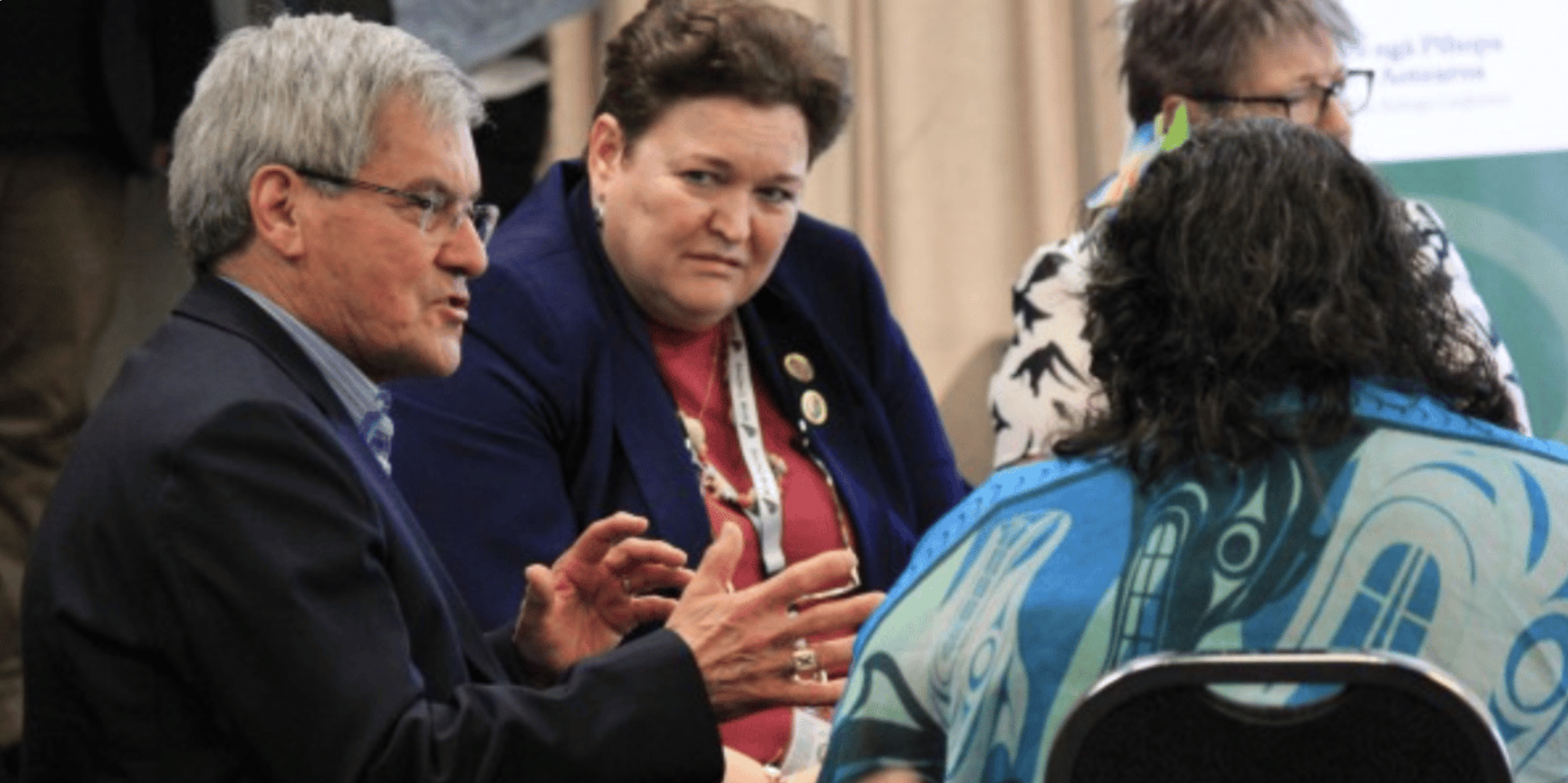
Graydon Nicholas, a member of the Tobique First Nation in New Brunswick and a former lieutenant-governor of the province, said the International Conference on Catholic Indigenous Ministry in Auckland, New Zealand, has revealed striking similarities among Indigenous Catholics from different countries.
“Even though we’re all Indigenous people from different parts of the world, there are a lot of common experiences, but there is also a lot of common good that is present,” Nicholas said.
Nicholas, a Wolastoquey elder and member of the Canadian Conference of Catholic Bishops’ Indigenous advisory body known as the Our Lady of Guadalupe Circle, is part of a Canadian delegation attending the second gathering of the international conference. The meeting brings together about 50 delegates from Canada, the United States, Australia, and New Zealand, along with representatives of the Vatican.
The conference follows an inaugural gathering in Washington, D.C., in 2023 that was organized after Pope Francis’s penitential pilgrimage to Canada in 2022. The initiative aims to foster dialogue and collaboration between bishops and Indigenous Catholic leaders as they seek to strengthen ministry among Indigenous communities.
Nicholas, who also attended the first meeting in Washington, said the Auckland gathering has taken the conversations “to another level.”
“This is another stage in the journey that we as Indigenous Catholics are on to become more fully involved with our Catholic faith,” he said, describing the effort as a “spiritual quest.”
One of the highlights of the conference for Nicholas has been the celebration of Mass incorporating elements of Indigenous culture and spirituality.
The Canadian delegation includes Vancouver Archbishop Richard Smith, Bishop Pierre-Olivier Tremblay of Hearst-Moosonee, Ont., Indigenous leader Angelina Stiglich of the Archdiocese of Vancouver, and Canadian Conference of Catholic Bishops Indigenous Affairs Advisor Tracy Blain.
Archbishop Smith told The B.C. Catholic before departing that Canada has “much to share with other countries” in the area of reconciliation and ministry with Indigenous peoples.
“The relation between the Church and local Indigenous populations is, after all, a global phenomenon, and we need continuously to be learning from one another so that the journey will move forward in a good way,” he said.
The gathering reflects lessons learned in Canada in recent years as the Church has worked to respond to the legacy of residential schools and strengthen relationships with Indigenous communities.
The conference, being held through March 6 in Auckland, opened with a traditional pōwhiri welcome ceremony at the Tūtahi Tonu marae sacred meeting space of Auckland University, where delegates were welcomed onto the land of Ngāti Whātua, the traditional guardians of the land where Auckland now stands.
The gathering is co-hosted by Bishop Stephen Lowe of Auckland, president of the New Zealand Catholic Bishops Conference, and Māori Catholic leader Loraine Elliott.
Elliott said the opening day set the stage for a week of dialogue and exchange among participants.
“Our Catholic faith is what binds us, and you could hear that in the kaupapa — the values — that came through,” she said. “Indigenous people are a very spiritual people, and we could see that being woven in the stories they shared.”
Each of the participating countries has been given a day to lead the programme, allowing Indigenous leaders and bishops to reflect on their particular circumstances and pastoral priorities.
Bishop Tremblay said the focus on listening and dialogue is especially important at a time when societies are often marked by division.
“It seems that at this moment in time, there is a lot of fragmentation and polarisation,” he said. “More and more, we need concrete signs and experiences of coming together, of listening – really listening – of opening ourselves up to others.
“We, as a Church, can be a humble but significant sign that we can work together in this path towards unity and communion.”
Other participants have also emphasized the strong connections emerging among Indigenous Catholics across the participating countries.
Manuel Beazley, who chairs Te Rōpū Māori, an advisory group to the New Zealand bishops’ conference, said he was struck by how similar the experiences of Indigenous peoples have been.
He said one lesson from the gathering is the importance of a consistent national approach to supporting Indigenous Catholics.
Doreen Flanders, deputy chair of Australia’s National Aboriginal and Torres Strait Islander Catholic Council, described the traditional welcome ceremony as one of the highlights of the week.
“The welcome to country was absolutely amazing,” she said. “To be welcomed in the traditional way – I was looking forward to that, because it is such an important part of Aboriginal and Torres Strait Islander culture.”
Participants also acknowledged the painful histories faced by Indigenous peoples in many countries, including the loss of culture and the displacement of communities. Yet many speakers pointed to the resilience of Indigenous Catholics and the ways in which faith has been embraced within their communities.
“The thing that’s pricked my ears up, and I have thoroughly enjoyed, is how those communities and individual people, how they have incorporated and embraced Catholic identity, Catholic faith to themselves and their communities,” Flanders said.
Bishop John Folda of Fargo, North Dakota, said questions of identity — both as Indigenous peoples and as Catholics — have been a strong thread throughout the conference.
“All are seeking recognition as not only part of society but also as integral members of the Church,” he said.
The conference concludes March 6 with a closing Mass at the Cathedral of St. Patrick and St. Joseph in Auckland. Canada is expected to host the third gathering of the conference at a future date.