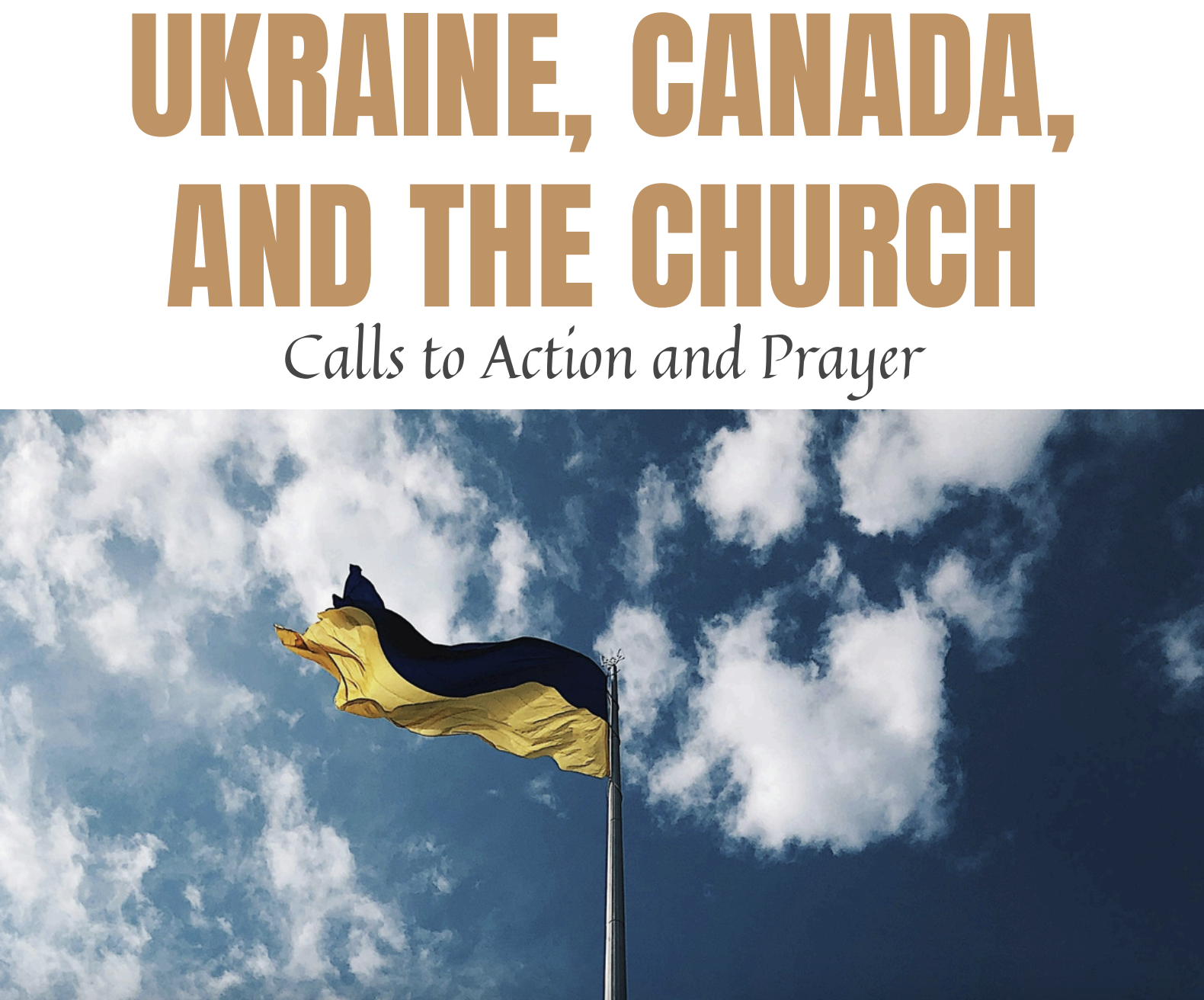
The Canadian Council of Churches (CCC) issued a statement of solidarity and a call to action and prayer ahead of the fourth anniversary of Russia’s full-scale invasion of Ukraine, Feb. 24, and the 12th anniversary of Russia’s illegal occupation of Crimea and parts of eastern Ukraine.
As of this month, the U.N. Human Rights Monitoring Mission in Ukraine verified 15,168 Ukrainian civilian deaths and more than 41,500 civilians injured in the past four years. Whereas the Centre for Strategic and International studies last month estimated that 325,000 Russian troops and 140,000 Ukrainian troops have been killed since the beginning of the war, the highest number of fatalities for any nation since the World War II.
In its statement, the CCC says it stands with Christian leaders in Ukraine and the rest of the world in rejecting narratives that distort the Gospel to justify the war. Ukrainians should not have to live in fear and should be provided with the ability to flourish in a society rooted in respect, rule of law, international order and dignity, the statement says.
The CCC calls on Canadian Christians to help by commemorating the anniversary of the war through prayer and worship, sustaining care for Ukrainians in Canada, engaging government to advocate for justice, settlement and reconstruction, and holding hope of reconciliation.
In the area of prayer and worship, the CCC calls for Christians to pray regularly for Ukraine in the face of the people’s ongoing suffering. The council also asks that people care for Ukrainians in Canada by assisting with their integration into Canadian communities, moving past the “welcome” phase, with events such as shared meals and English conversation circles.
The letter invites Christians to build cooperative and intentional relationships with Ukrainian and Slavic Christian congregations by sharing prayer and worship services, meals and learning events, in addition to other efforts.
The council also urges governments to become engaged in justice, settlement and reconstruction by advocating for solutions on specific issues such as fair pathways to permanent residency status.
Finally, the statement asks Canadians to hold onto the hope of reconciliation by continuing to learn and teach about the history of the war, so “the past, present, and hoped-for future are understood, not through propaganda and isolation, but with humility and in light of the Gospel of Christ.”
The statement concludes with a prayer for peace.
The Canadian Council of Churches, founded in 1944, is an ecumenical body representing 26-member churches, including the Anglican, Catholic, Evangelical, Free Church, Orthodox and Historic Protestant traditions.