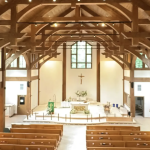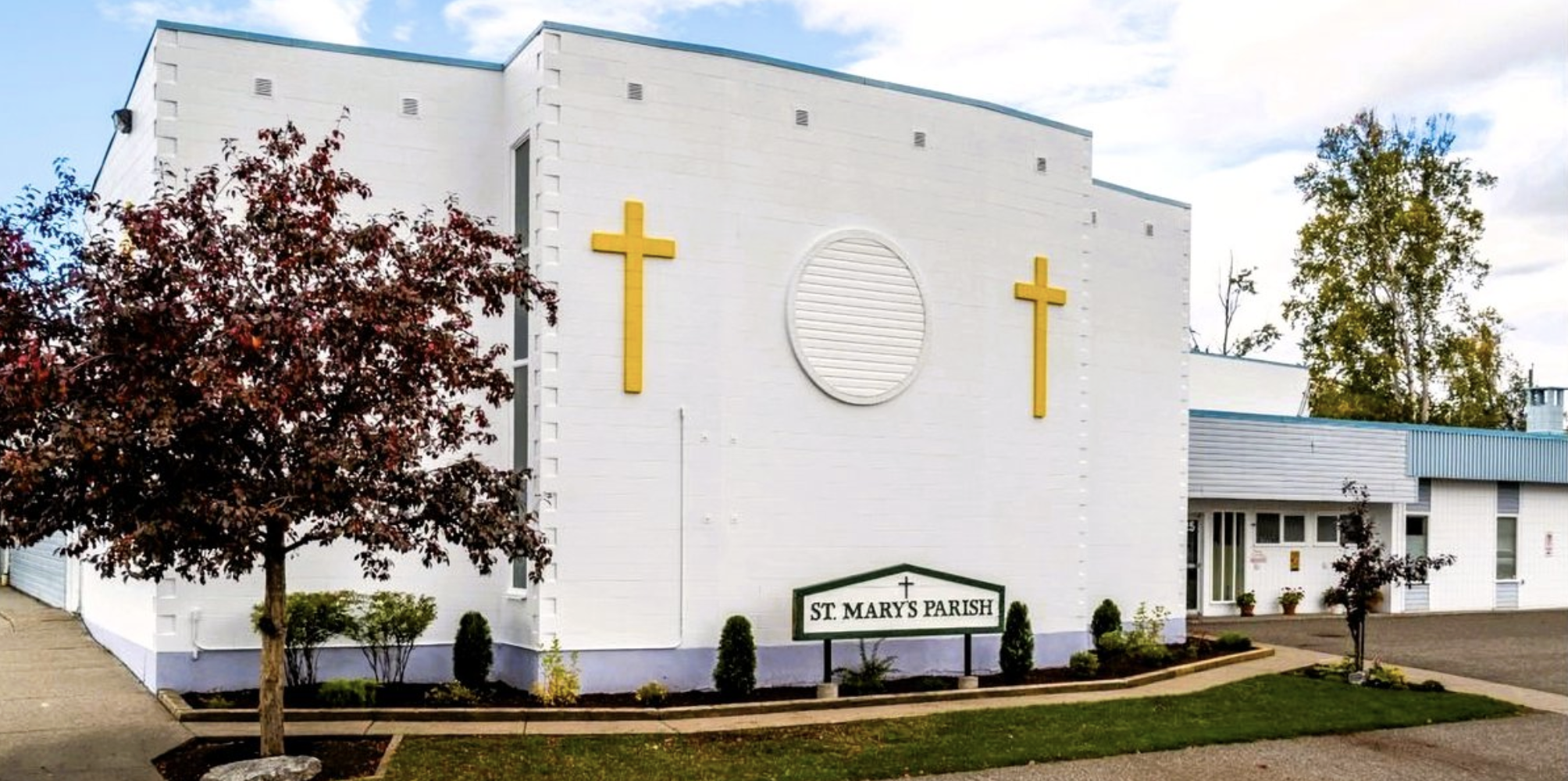
VANCOUVER (CCN) — More than 65 years after it was established to serve a growing Catholic population in Prince George’s urban core, St. Mary’s Parish will close July 26, as the Diocese of Prince George cites declining Mass attendance, financial pressures and long-term demographic trends that it says no longer support maintaining four parishes in the city, which has a population of 100,000.
In a decree issued in January, Bishop Stephen Jensen ordered the total division and incorporation of St. Mary’s Parish into Sacred Heart Cathedral parish and Christ Our Saviour Parish. The parish’s juridic personality will be suppressed, and its assets will be distributed between the two successor parishes according to canonical norms.
The decree also provides for the “relegation to profane but not sordid use” of the church building. In canonical terms, this means the building will no longer be used for sacred worship but must be reserved for a respectful, non-religious purpose.
Background documents accompanying the decree state that Sunday Mass attendance in Prince George has declined by approximately 50 per cent over the past 40 years. Collections, adjusted for inflation, also have dropped significantly. Despite those trends, the city has continued to operate four parishes.
“The Catholic population of the city can be well-served by three parishes,” the diocese states in its background explanation, adding that consolidation will allow for better stewardship of resources while maintaining reasonable access to the sacraments.
St. Mary’s Elementary School will remain open. The decree specifies that the school will continue to operate under the CISPG Constitution and Bylaws, and a priest will be appointed as delegate to the school council and serve as chaplain.
The diocese also addressed speculation regarding legal matters, stating in its background materials that while outstanding lawsuits are “a significant and growing concern,” they are not a material part of the decision to suppress the parish.
Bishop Jensen told The B.C. Catholic that he met with St. Mary’s pastoral, finance, and school councils several days before the public announcement.
“Some people were briefed, but not everyone liked the decision,” he said.
A parish meeting was held Feb. 7 at St. Mary’s School gym. The bishop described the gathering as emotional.
“I had said I would come to answer questions about the material, but from the reaction, it seemed many hadn’t even looked at the documents,” he said.
In the days after the announcement, parishioners expressed concern publicly, including on the parish’s Facebook page and in comments reported by local media. Some questioned the consultation process and encouraged others to consider filing a canonical appeal. Others reflected on their long attachment to St. Mary’s as a spiritual home closely connected to the parish school and to decades of family sacramental life.
Under canon law, parishioners who believe they are aggrieved by a decree may submit a formal appeal within 15 useful days of notification.
The bishop confirmed that some appeals have already been submitted.
“When that happens, I respond,” the bishop said. “I either determine there’s reason to amend the decree or state that there is no reason to change it. After that, they have another opportunity for recourse to the higher authority.”
He clarified that, in Church law, a parishioner is a Catholic who resides within the parish territory, meaning an appeal must come from someone with canonical standing.
Asked how long such processes typically take, he said parish closures and amalgamations in Canada and the United States are generally handled “relatively expeditiously.”
“When recourse is reviewed, authorities look at whether the rationale is sound and whether the proper procedures were followed,” he said. “If those are in order, there is generally no basis to overturn it.”
Jensen stressed that the decision was rooted in pastoral considerations rather than preference.
“The rationale, as outlined in the decree, is to ensure reasonable access to the sacraments for the Catholic population of the city,” he said. Closing a parish on the far perimeter of the city, rather than St. Mary’s, “would reduce that access. That was a key consideration.”
According to the decree, sacramental records from St. Mary’s will be transferred to Sacred Heart Cathedral parish for safekeeping, and assets — financial and otherwise — will be divided between the two successor parishes based on parishioner residence within newly established territorial boundaries.
The decree states that the goal of consolidation is to strengthen the Catholic community in Prince George and to make it more resilient in the face of continuing demographic and financial challenges.
For many parishioners, however, the closure marks the end of a spiritual home that has witnessed baptisms, confirmations, weddings, funerals and decades of Sunday worship in the heart of the city.