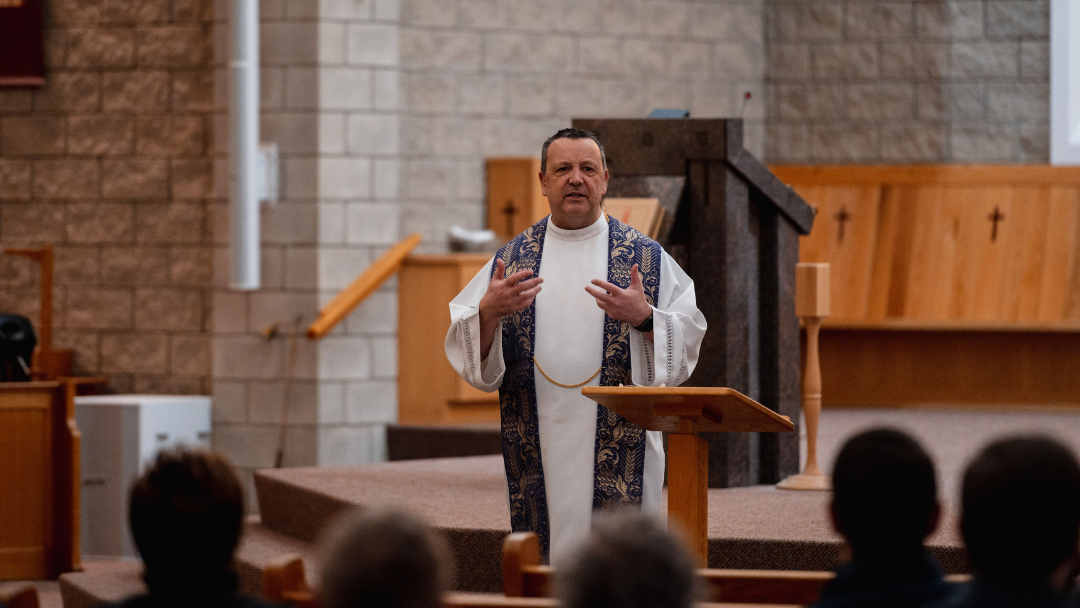
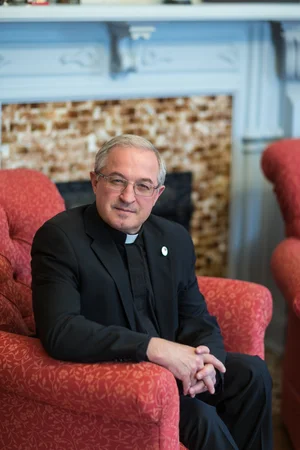
VANCOUVER (CCN) — A national initiative is urgently needed to address the “real problem” of Catholics accessing medical assistance in dying (MAiD), said Father Thomas Lynch, president of Priests for Life Canada.
Lynch, who serves in the Diocese of Peterborough, Ontario, said the majority of priests with whom he has spoken “have experience with (Catholic) people being killed — I refuse to say, ‘dying by MAiD.’”
“This is a real problem,” Lynch told CCN in an interview. “I can say this, categorically, because I’ve presented at a large number of priest study days, speaking on this specifically, and if you ask priests if they’ve had any first-hand experience (with the problem), the majority put up their hands.”
Lynch said the church “needs to be far clearer” about promoting life. “It can’t just be diocese by diocese” or a letter from the Canadian Conference of Catholic Bishops (CCCB), he said.
Because the federal MAiD reporting system does not track the religious affiliation of those who die by euthanasia, there is no way to determine how many of the 16,499 Canadians who received MAiD in 2024 were practising or lapsed Catholics.
However, the acceptance of MAiD among Catholics is sufficiently significant that Deacon Laurence Worthen, executive director of the Christian Medical and Dental Association of Canada, agrees that much more needs to be done to educate the laity about the moral peril posed by MAiD.
“Yes, it is a huge problem,” Worthen said in an interview. “We need information sheets passed out at the parishes, we need our priests preaching about it. We need a full-court press.”
Worthen, who lives in Dartmouth, Nova Scotia, travelled throughout Canada for two weeks November, giving talks about the issue to 15 groups.
His association offers a three-part program, called “Dying with Christ – Living with Hope.” Emphasizing human dignity, it presents a Christian view of dying rooted in the belief that life is a gift from God and must be cared for, not intentionally ended.
The CCCB’s strong opposition to legalized euthanasia was evident well before Parliament passed MAiD legislation in 2016, and has continued over the past decade with formal statements, briefs, letters to government and pastoral messages.
In an emailed response to questions from CCN, a spokesperson for the communications office of the CCCB said the organization continues to publicly voice its strong objection to MAID.
“In addition, the CCCB does offer the free resource, ‘Horizons of Hope: A Toolkit for Catholic Parishes on Palliative Care,’” the spokesperson said. “This resource seeks to empower and educate the faithful by addressing questions surrounding palliative care, dying, death, suffering, accompaniment, and bereavement in a holistic fashion.”
As well, the CCCB formed the Joint Ad hoc Committee on Palliative Care with a variety of partners and experts to address the increasing complexities regarding end-of-life issues in Canada, the spokesperson said. Committee members included representatives from Pallium Canada, Dominican University College, Canadian Catholic Bioethics Institute, Catholic Health Alliance of Canada, and the Congregation of the Sisters of Saint Joseph.
In a statement issued in June on the 10th anniversary of Canada’s legalization of MAiD, the CCCB said euthanasia and assisted dying “can never be morally acceptable, for they are gravely contrary to the dignity of the human person and to the respect due to God, the Creator and Lord of Life.”
Despite such moral injunctions, a June 2023 Ipsos poll, commissioned by the pro-MAiD group Dying with Dignity, found that support for MAiD among Canadian Catholics for patients whose natural death is reasonably foreseeable was almost identical to the national rate — 83 per cent compared with 84 per cent overall.
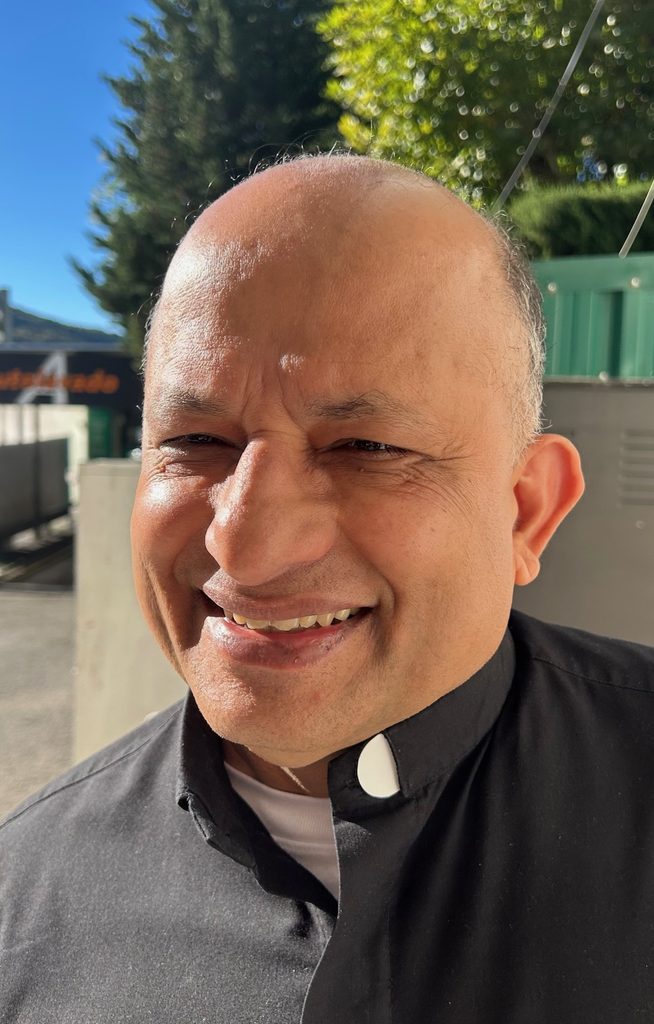
Support among Catholics for MAiD is more than just philosophical. In Vancouver, Father Joseph D’Souza, pastor of St. Mary Parish, told CCN he was greatly troubled two years ago when he learned that an elderly, ailing religious sister living in his parish was planning to access MAiD to precipitate her death.
D’Souza said he refused the sister’s request for the sacrament of the Anointing of the Sick and then, after checking with the chancery, also refused to celebrate a funeral mass when the sister followed through on her MAiD death.
Church doctrine clearly supports his actions, he said. “But as a gesture of good will, we can go to the cemetery and bless the grave, which I did,” he said.
D’Souza said he used the graveside blessing “as an opportunity to make (the mourners) aware that the Church is against MAiD … because the Church values life and life is created by God and he alone has the right to take it away. So when I made that, in my homily, very clear, all the friends understood the fact.”
At Holy Trinity Catholic Church in Spruce Grove, Alberta, Father Paul Moret devoted a homily last March to Catholic teaching about the sanctity of life in response to persistent rumours that two parishioners had died by MAiD, he told CCN.
He said the families of these two parishioners — a longtime member of the Knights of Columbus and a member of the Catholic Women’s League — had allegedly kept secret the fact the two had accessed MAiD, so that they could have funeral Masses.
“I just wanted to make it very clear to people what the Church believes in this regard, so that when they are making end-of-life decisions, they don’t make that decision, to go for MAiD,” Moret told CCN.
He said he believes the lingering negative influence of the Canadian bishops’ pronouncements about personal conscience is partly to blame for the support for MAiD among some Catholics.
Moret referred directly to the 1968 “Winnipeg Statement” issued by the Canadian bishops in response to “Humanae Vitae,” the encyclical of Pope Paul VI that banned the use of artificial contraception.
He said the bishops’ statement created the faulty impression that a person acting in good conscience could choose not to adhere to official Church teaching.
Nevertheless, Moret said pastoral issues surrounding MAiD are not always clear-cut. He said when MAiD was first legalized, his pastoral response was clear: It’s wrong in all circumstances.
Now, however, his response is being influenced by news reports that some Canadians are being pressured to choose MAiD and that some are turning to assisted death because of inadequate health care.
“People are being pushed into it,” Moret said. “People are being pushed over the cliff either by the medical profession itself, or by family members, or by whatever happens to be. So I don’t think it’s possible for us to make the assumption that the person has chosen freely.”
He likened such changed circumstances to the Church’s shift in the understanding of suicide. It used to be that the Church presumed all those who committed suicide did so with the full knowledge of the moral consequence of their action — that it was a grave sin in direct violation of the fifth commandment and the dignity of human life.
Today, however, the Catechism of the Catholic Church maintains: “Grave psychological disturbances, anguish, or grave fear of hardship, suffering, or torture can diminish the responsibility of the one committing suicide.”
Moret said he would appreciate some clarification on whether circumstances surrounding a person’s euthanasia death can likewise help shape his pastoral response.