VANCOUVER (CCN) — Catholic Conscience has published its B.C. voters guide a week before the provincial election, and it arrives amid a surge of democratic activity in British Columbia and across the country.
In B.C. municipalities, voters are going to the polls Oct. 17 to choose mayors, city councillors, and school trustees.
Seven days from now, British Columbians will elect a provincial government. Advance voting for the Oct. 24 provincial election is already underway and runs through Oct. 21, overlapping with local elections.
There are also indications of heightened political interest at both the local and provincial levels. In social conversation and in public settings, the question of who to vote for is on many British Columbians’ lips.
It is complicated by the fact that two elections are underway at the same time, so the first question people need to resolve is which election is being talked about. Premier David Eby has been criticized for calling a provincial election whose advance voting overlaps with the local elections.
B.C. is not the only place with votes approaching. Ontario’s municipal elections are Oct. 26, Manitoba’s are Oct. 28, and Prince Edward Island’s are Nov. 2. Alberta’s Oct. 19 referendum includes a question about whether to begin the legal process toward a later, binding referendum on separation from Canada.
The advance-voting figures in some cities are remarkable. Surrey’s advance voting is up 47 per cent over 2022. Richmond reports a 141-per-cent increase. In Vancouver, more than 103,000 people voted over four advance-voting days, compared with 65,127 in 2022.
Toronto may be the most remarkable example: 222,550 people voted in advance, versus 115,911 in the 2022 municipal election. That is an increase of about 92 per cent and substantially above Toronto’s previous advance-voting record of 161,147 in 2014.
The increases extend beyond those cities. Mississauga recorded more than 44,000 advance voters, up 57 per cent from 2022. In Kitchener, 5,347 people voted in the first three advance-voting days, up about 35 per cent from the same period in 2022. In Saanich, advance ballots rose from 6,528 to 10,031. It is worth asking if something is happening.
Of course, more advance voting does not necessarily mean higher turnout overall. The final figures will show whether that is the case.
The reasons have yet to be determined. Local issues such as affordability, policing, taxes, housing, transportation, and services may be drawing people to the polls. Access could also have something to do with it.
Vancouver expanded advance voting from 22 locations in 2022 to 60 this year. Surrey increased advance locations from six to 10.
Given the low turnout that some local elections draw, the early interest is encouraging. Vancouver’s turnout in 2022 was 36.3 per cent.
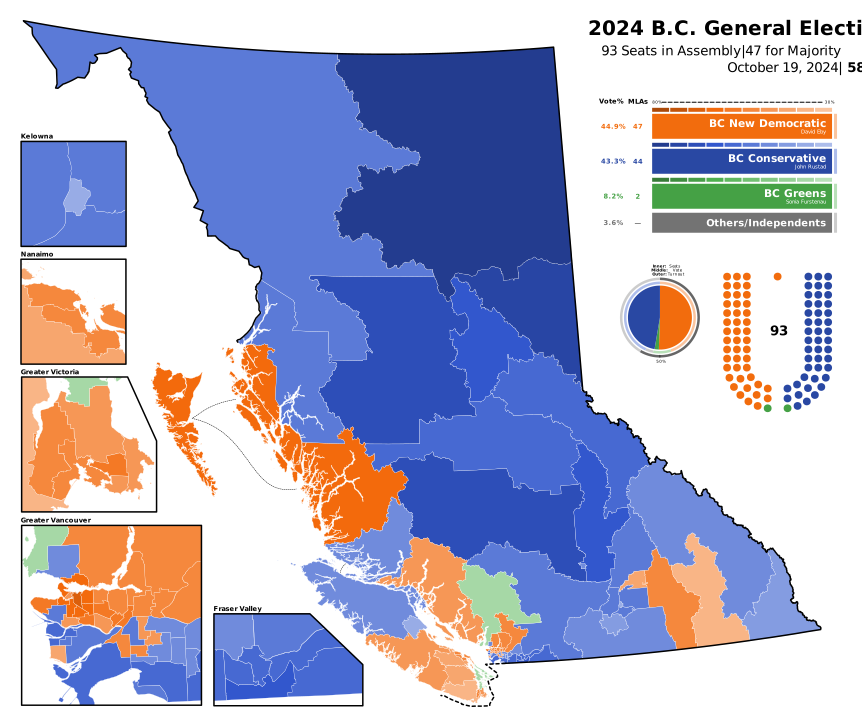
Small numbers of votes can determine the makeup of a school board or city council, or even a provincial riding. In the 2024 provincial election, the B.C. riding of Surrey-Guildford was decided by 22 votes after a judicial recount, giving the NDP its majority.
It is a positive development anytime political responsibility is taken seriously, particularly when issues at the local level are among the most important and relevant in daily life, from local policing to property taxes.
There is a Catholic social teaching principle, subsidiarity, that says decisions should be made at the lowest level capable of handling them responsibly. Higher levels should support smaller communities when needed, rather than take over their proper functions. If it were applied more often in everyday situations, the benefits of Catholic social teaching would soon become apparent.
In a paper published by Cardus this year, constitutional lawyer Howard Anglin said federalism allows for “respectful difference” through something like the Catholic principle of subsidiarity.
“Self-government is a never-ending process of decision, debate, reflection, revision, rejection, and new decisions,” he wrote. It is the “process that constitutes the act of making and being a society.”
Regardless of the level of interest, determining whom to cast a ballot for can be hard work. Perhaps that’s one reason so few do it.
Could it be that more discernment takes place at the municipal level than at the provincial and national levels? Is it possible that people weigh individual policies and attitudes more locally, while at higher levels there is more of a tendency to vote for the party one has always supported?
Voting in municipal elections across British Columbia and Canada can require a bit more legwork than casting a ballot in federal or provincial races. Because local governments handle their own elections, voting information and procedures can vary. Some mail voter information cards or guides; others rely on different arrangements. To find out when and where to vote, check a municipality or district’s official election website, or call city hall for voting dates, locations, and candidate details.
A municipality’s election website will have the official list of candidates, and often links to their websites or social media accounts.
Local newspapers and other local news sites can also help. They may profile candidates, ask them the same questions, or report on the issues being debated in a community. That kind of coverage can make it easier to compare candidates and see what they are proposing.
Candidates’ own websites and social media pages are another source. They can tell you what candidates say they want to do, but you may need to look beyond slogans and ask how their proposals would work.
For school board elections, look at the issues facing your local district and the responsibilities trustees actually have, including decisions about budgets, facilities, and support for students.
The issues and resources vary from city to city. For example, students at Eric Hamber Secondary in Vancouver put out a useful resource for Vancouver voters. The Griffins’ Nest’s school trustee questionnaires publish responding candidates’ own words. Week 1 asks why they are running and their priorities, while the second questionnaire addresses artificial intelligence in schools.
For Catholics, a useful starting point is to consider candidates and their proposals in light of Catholic social teaching: respect for human life and dignity, the common good, care for vulnerable people, religious freedom, and the responsibilities of families and communities.
Ask your neighbours and your fellow parishioners. One candidate suggested checking who is endorsing whom. If an individual or organization you don’t see eye to eye with is recommending a particular slate of candidates, that can be as informative as an endorsement from those you’re more in agreement with.
At the provincial level, a useful resource is the B.C. election guide put together by Catholic Conscience.
B.C. election resources
For the Oct. 24 B.C. election, advance voting runs through Oct. 21. On Final Voting Day, polls are open from 8 a.m. to 8 p.m. Pacific time.
- Elections BC: The Where to Vote tool finds your voting place by address. The official candidate list identifies candidates in each riding. There are 355 candidates in total.
- VoteMate: Its provincial election guide lets you select your riding to see its candidates and, where available, their profiles. It also offers a party-platform comparison. VoteMate describes itself as non-partisan.
- Leaders’ debate: The televised debate was held Oct. 14, with David Eby, Lorne Doerkson, and Emily Lowan. CPAC has the debate and CityNews has coverage.
Community newspapers often ask every candidate in a riding the same questions and publish their answers side by side. The Abbotsford News questionnaire, for example, covers candidates running in the five ridings that include parts of the city. Check local papers’ election coverage for similar guides.
Catholic resources
- Archbishop Richard Smith’s message: Published in The B.C. Catholic, it encourages Catholics to vote prayerfully and with a well-formed conscience. It points to health care, education, housing, and public safety as issues to weigh in light of the faith.
- Catholic Conscience: Its 2026 B.C. election guide considers election issues through Catholic social teaching.
Local election resources
Here are some resources put together by municipalities, business groups, community media, and independent organizers. Equivalent resources may be available in other provinces too. Check your own local media as well.
- Across B.C.: The Tyee’s civic-election guide links to candidate lists and local election websites for municipalities, regional districts, and school boards, and shows how many representatives each is electing. CivicInfo BC provides past local election results. VoteMate offers candidate profiles and a shortlist tool for many B.C. municipalities.
- Greater Victoria: Victoria Buzz’s regional guide points readers to information on local candidates.
- Nanaimo: NanaimoNewsNOW has published biographies from 36 of the 44 mayor and council candidates. Its Know Your Vote tool helps voters find candidates who match their views on key issues.
- Abbotsford: The city’s election page lists candidates and contact information. The Patrika has an election hub with candidate profiles, websites, and campaign announcements. The Abbotsford News gathers its election coverage in one section. Vote Abbotsford offers an online candidate guide.
- Chilliwack: The Chilliwack Chamber of Commerce election hub lists candidates for mayor, council, school board, and the Cultus Lake Park Board. It also has forum details and candidates’ unedited answers to forum questions, and it covers the provincial vote.
- Okanagan, Kamloops, and the Kootenays: The City of Kelowna has candidate profiles. Castanet’s candidate database covers nearly 30 municipalities and regional districts across the Southern Interior. In the North Okanagan, Vital Vote, from the Community Foundation North Okanagan, puts the same questions to every candidate and publishes their answers side by side.
- Burnaby, New Westminster, and the Tri-Cities: Freshet News collects its civic election coverage under an election tab.