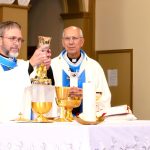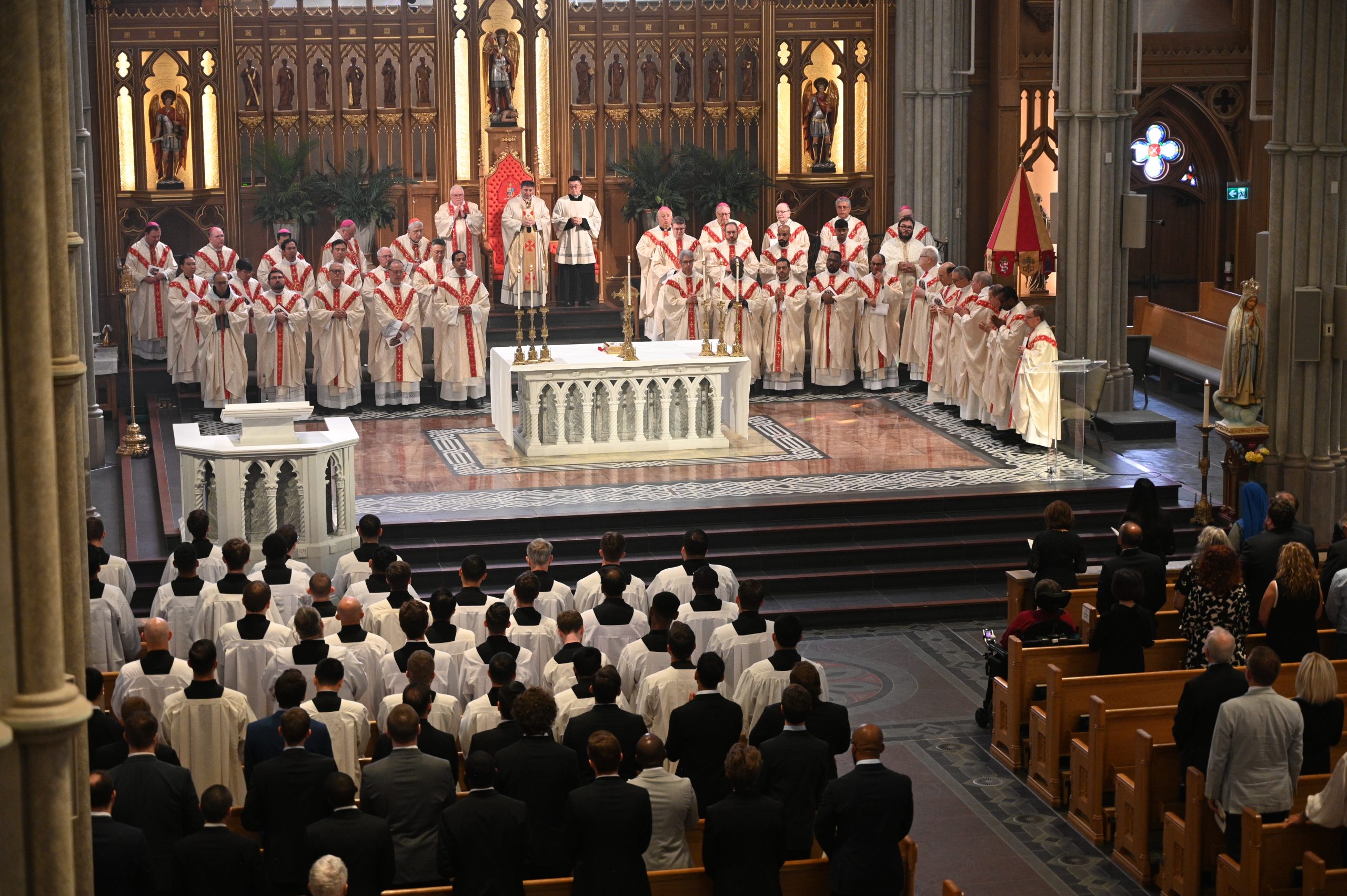
TORONTO (CCN) — The seminary of the Archdiocese of Toronto marked the establishment of its ecclesiastical faculty of theology with a Mass at St. Michael’s Cathedral Aug. 28. Cardinal Francis Leo, archbishop of Toronto, presided.
With this designation, St. Augustine’s Seminary added a new ecclesiastical degree — the licentiate in theology and patristic studies (STL) — in addition to its bachelor of sacred theology (STB).
The Vatican conferred the designation of ecclesiastical faculty in 2022. However, the celebration was deferred to a date when a representative of the Vatican’s Dicastery for Culture and Education could be present. Archbishop Carlo Maria Polvani, secretary of the dicastery, was in attendance.
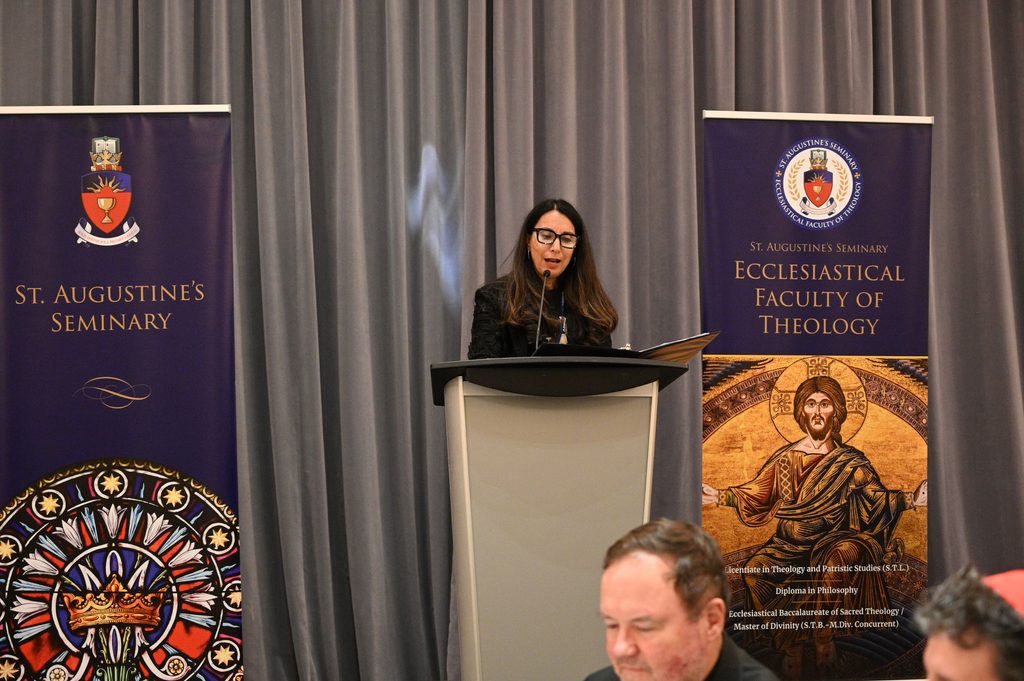
The Mass, celebrated on the feast of St. Augustine, was preceded with a conference at the seminary Aug. 27. Three patristics scholars participated in a panel discussion on the value of patristic studies for contemporary theology.
After the panel discussion, Cardinal Leo presided vespers in the seminary chapel and Archbishop Polvani preached the homily. Cardinal Leo blessed a new icon of Mary and a plaque commemorating the establishment of the ecclesiastical faculty. A banquet concluded the evening.
Other Canadian institutions with ecclesiastical faculties include Regis-St. Michael’s College at the Toronto School of Theology and St. Paul University in Ottawa. However, St. Augustine’s is the only Catholic ecclesiastical faculty in Canada and the United States to offer a licentiate in patristic theology.
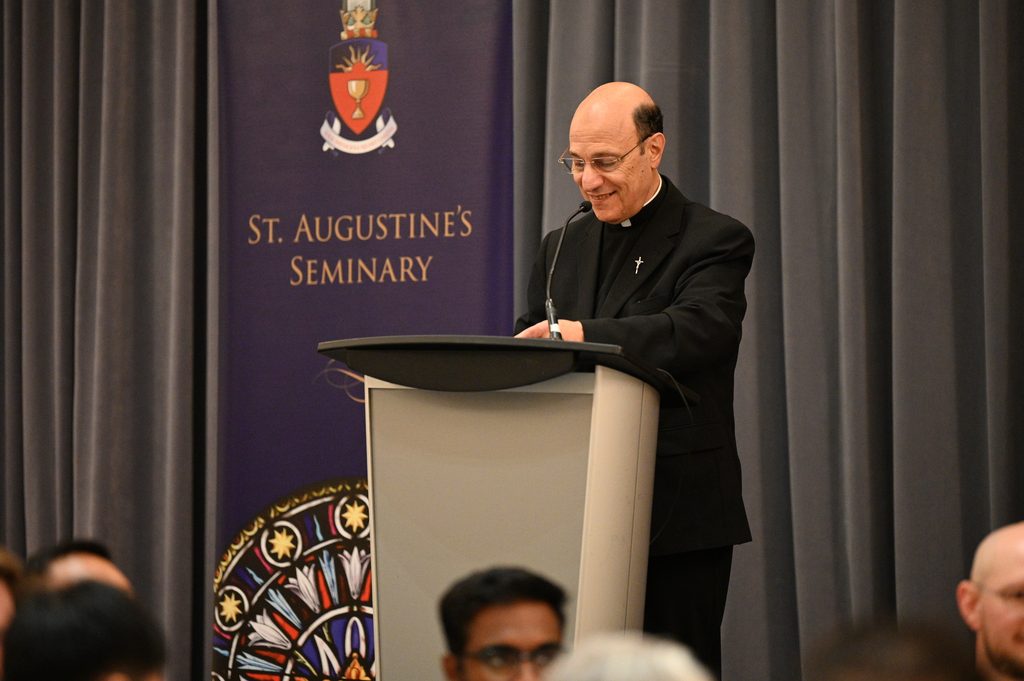
“Our ecclesiastical faculty now fills an important need,” Msgr. Anthony Nusca, president of St. Augustine’s Seminary, told Canadian Catholic News in an email.
“In addition to their theological perspective, the Church Fathers offer us rich, pastoral and spiritual insights that can help to guide us in our complex world today,” he added. “Our ecclesiastical faculty of theology makes this wisdom available to all who may be interested.”
He said this designation means theology students in Canada can go to Toronto to earn a licentiate in patristic studies rather than going to Rome.
“Looking to the future, the plan is for us to be able to offer a doctorate in sacred theology,” Msgr. Nusca told CCN.
Josephine Lombardi, the seminary’s academic dean, said the instructors in the licentiate program “are known internationally for their research and contributions to patristic studies.”
“The licentiate in theology and patristic studies is a jewel of a program because the focus is on early Christian writers and how they handed on the living memory of our faith,” she said.
Patristics students are required to know Latin, she said. To write a thesis about an Eastern Christian Church Father, they must know Greek, she added.
The ecclesiastical faculty is distinct and separate from the seminary, which is a house of priestly formation preparing candidates for ordination.
Ecclesiastical degrees are Church-sanctioned academic credentials offered by a Church-recognized faculty. These credentials often serve a canonical purpose, qualifying graduates of a licentiate program to teach in post-secondary Catholic institutions and pursue doctoral studies within an ecclesiastical faculty.
The timeline leading to the seminary’s new ecclesiastical faculty dates to 1996, when the Holy See first authorized St. Augustine’s Seminary to confer the STB.
According to the seminary website, Cardinal Thomas Collins, then-archbishop of Toronto and seminary chancellor, applied for ecclesiastical status in 2020. The Dicastery for Culture and Education granted this status in 2022, allowing the institution to establish its ecclesiastical faculty of theology.
The faculty began offering licentiate courses in theology and patristic studies in September 2023. One student graduated last November; another student is expected to graduate this fall.
“We celebrate and give thanks to God that we have grown from a basic degree-granting institution into a centre for higher learning in theological studies,” Msgr. Nusca said.