Every 24 hours, at least 15 Canadians die from a drug overdose.
The problem is especially acute in British Columbia, where the chief coroner declared it a “public health emergency” more than 10 years ago, on April 14, 2016.
In response, the B.C. provincial government has implemented a patchwork of strategies, from harm-reduction-oriented drug decriminalization to public-safety-motivated involuntary care, but toxic drugs still continue to kill addicts, with more than 1,800 deaths recorded in 2025.
That number is 20 percent fewer than in the previous year, but it is still a catastrophically high number.
The problem, writes St. Paul’s Hospital emergency physician Quentin Genuis, is that authorities do not recognize either the complicated nature of addiction or the multi-faceted approach that is needed to help addicts find a way to reverse addiction’s dead-end journey.

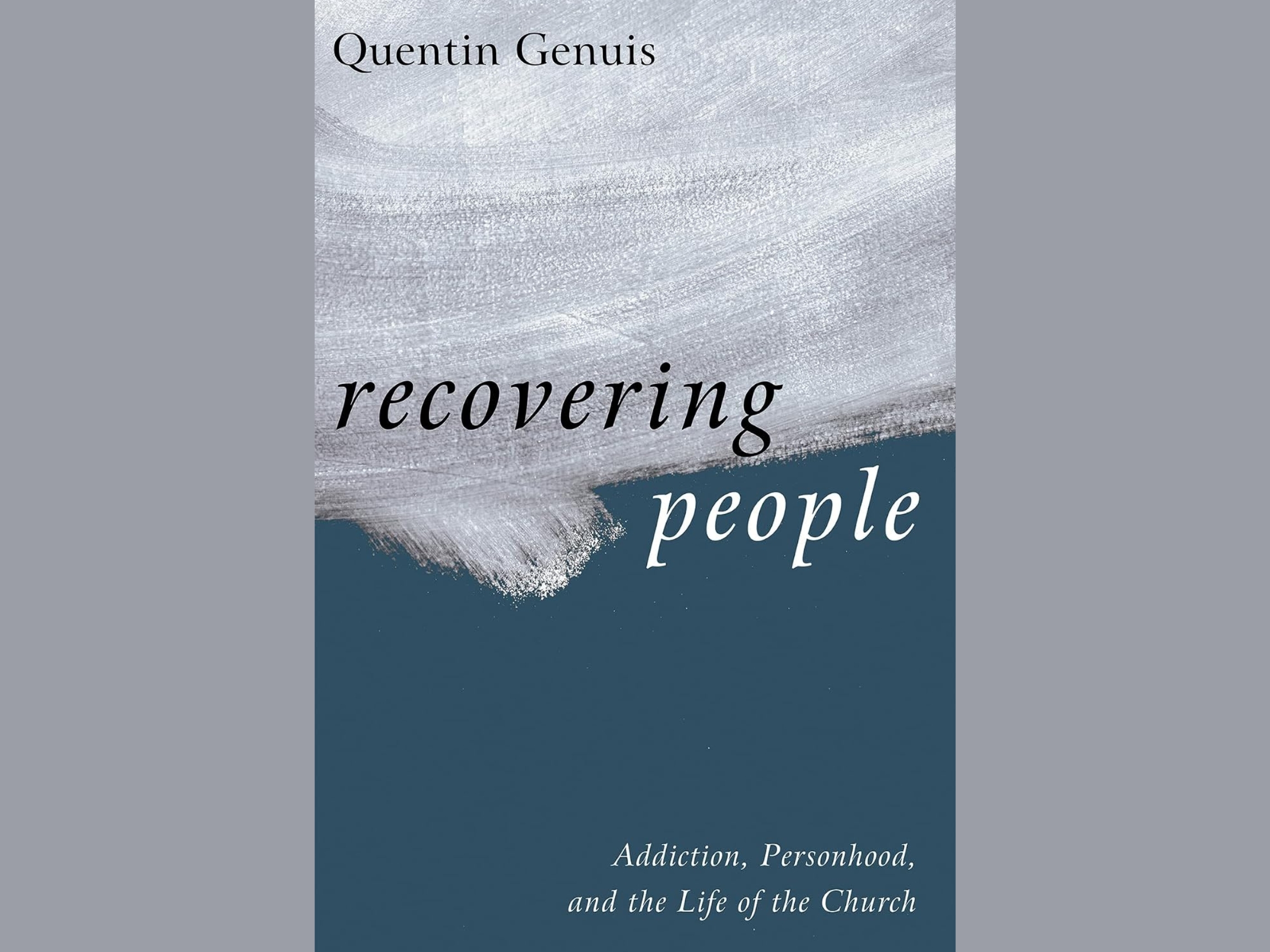
A key to this recovery, Genuis writes in his book, “Recovering People: Addiction, Personhood, and the Life of the Church,” is an addict’s spiritual renewal, which he says Christian faith communities can facilitate during an addict’s recovery.
Genuis has compiled an impressive resume as an expert on the issue. An emergency physician at both St. Paul’s and Mount St. Joseph hospitals, he is also Providence Health Care’s physician-ethicist, a sessional faculty member and professional in residence at the University of British Columbia’s Regent College, and the site director of the B.C. College of Family Physicians’ emergency-medicine certificate program at UBC.
Genuis, a brother of Alberta MP Garnet Genuis, has packed much into his highly readable 140-page book that, while diagnosing the causes of addiction and prescribing a multi-faceted “whole-person” remedy, is also an ode to the compassionate care provided at St. Paul’s Hospital of Vancouver, which is operated by Providence Health Care, a Catholic agency.
In an interview, he said while he intentionally wrote “Recovering People” as “an act of affection and loyalty towards my friends and patients with addiction,” it was only after finishing and re-reading his manuscript that he discovered he was also driven by his “affection and loyalty for St. Paul’s.”
Genuis said he finds it difficult to put his finger on what makes St. Paul’s such a special place. “When we are at our best, St. Paul’s feels like much more than a centre of medical management,” he said. “It retains the virtues of hospitality, generosity and justice that are foundational to good health care and are so often lost in an era where medicine so often succumbs to the temptation of seeing persons as burdens and bodies as machines.”
Raised in an Evangelical family and attending a Mennonite Brethren church with his wife and four children, he said he believes that St. Paul’s rootedness in Catholic identity gives rise to many of these virtues.
“St. Paul’s is a place where persons who are very different can often recognize our shared humanity and be drawn into relationships of mutual respect and learning,” Genuis said.
All health care spaces can do this, he said, but the way care is framed at Providence helps practitioners enter health care spaces “not just as givers, but also as potential receivers of grace. This is especially important in our interactions with our neighbours from the downtown east side of Vancouver.”
Those “neighbours,” as Genuis calls them, form the core of the addicts who he treats. Their experiences have both touched him spiritually and assisted in his discerning the best way to help them recover. His book is brought to life through several stories — some endearing, some tragic — from his service at St. Paul’s.
He believes that neither the “addiction-as-disease” nor the “personal-choice” models of addiction properly explain the complicated reality of addiction, and neither do they chart an effective road to recovery.
Genuis writes that addiction is not simply an arbitrary response to pain, but is a way a person’s brokenness can cause them “to look for the right things in the wrong places.”
Whether it is drugs, alcohol or pornography, no addiction can satiate the addicted person, “because we were made to be satiated by nothing other than the infinite beauty of God.”
The word “disorder” comes up often in “Recovering People” in reference not only to physical and mental states, but also to an addict’s moral and spiritual condition.
Genuis believes recovery from addiction cannot be sustained without the sort of return to physical, moral and spiritual order that particularly rich 12-step recovery programs can offer, for example, and to which Christian communities can also contribute.
For example, Christian communities should promote an addicted person’s “individual agency” by providing opportunities for them to serve, lead, build and create.
Genuis believes Christians should respond to the addiction crisis in the same way as the Church should respond to all crises of all times, “by being the church.”
This means, “we are confessing our sins, welcoming strangers into our homes, making friends, receiving communion, practising uncalculated giving and graceful receiving, enjoying the beautiful, worshipping together, and co-suffering with our suffering neighbours,” he writes.
These practices are not abstractly spiritual, he says, but are pragmatic ways of promoting reorder and recovery.
His book gives readers a powerful tool to understand the complexities of addiction. More importantly, it gives Christians a way to understand that addiction cannot be overcome simply by labelling it as sinful activity, but by understanding that “severe addictions can be displaced through the power of a cooperative effort between the agency of the person, the love of gracious communities, and the virtue-infusing work of the Holy Spirit.”
If a reader takes this as a challenge, then so much the better.