Despite the calls of several Conservative Members of Parliament, including Andrew Lawton, new military personnel instructions from the current Liberal government are not novel attacks on religious freedom.
They do, however, point to a deep ambiguity about the present practices of “secular” states.
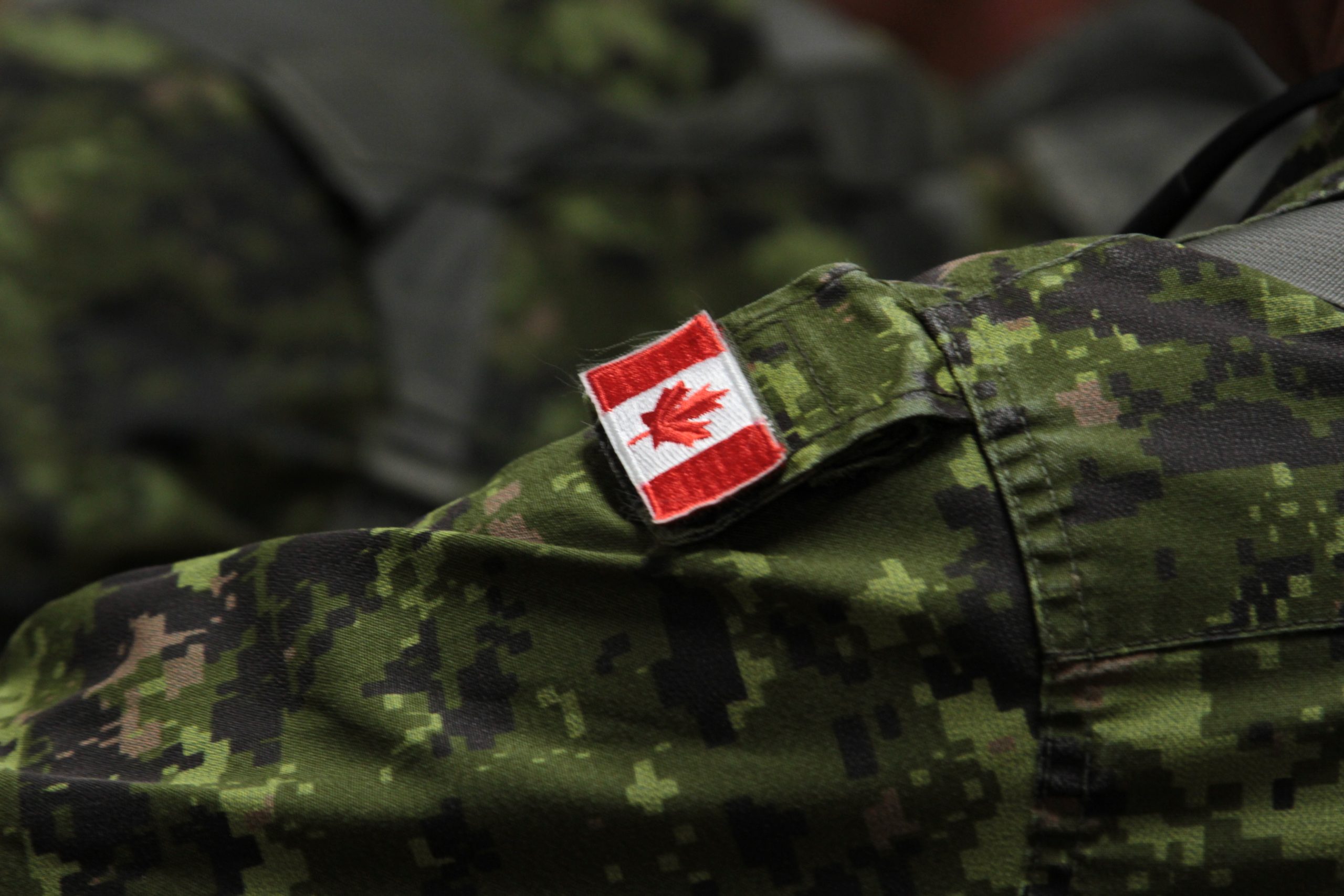
On July 29, the Canadian Armed Forces (CAF) received a new instruction from the current government: “In military settings…spiritual reflections do not use religious specific language, including references to God…grounded in a respect for freedom of conscience and religious expression.”
This needs to be understood for what it really is: not an attack on the individual CAF member from ever using specific religious language or maintaining his own beliefs, but a limit on the “inclusive public addresses” that may occur in military settings. In other words, an individual acting on behalf of the government via the military cannot espouse any particular religious worldview—a norm of government since at least the 1980s.
Not irrelevant here is that Prime Minister Mark Carney is a perpetual proponent of religious freedom. The day after these military instructions were made effective, the prime minister was rightly lamenting a shooting at a mosque in Winnipeg. He made clear that Islamophobia has “no place in Canada,” intimating that Muslims should have the ability to practice their faith freely in the country.
Likewise, the Carney government has acted to protect Jews across Canada — the most (in)famous instance being Bill C-9 that just received Royal Assent in June. To accuse this government of wanting to destroy religious freedom is simply unfair to their record — even if their supposed policies and rhetoric may leave much to be desired.
The way to make this government’s action on religious freedom coherent is to understand that no person acting on behalf of the government should even suggest a religious affiliation — the public must remain agnostic. On the other hand, the private lives of Canadians should be as free as possible: In this way, they should be free to practice whatever religions they please just so long that it never infringes on the rights of other Canadians.
To riff on the language of Canadian philosopher Charles Taylor, there can only be an open secularism among private Canadians if there is a closed secularism among those acting in governmental positions. Private belief only avoids threat if government refuses to take a religious position.
Suggesting that these norms are a new, brazen attack on religious freedom — norms of over 40 years — must be called out for what it is: lazy politicking.
Nothing about this clarification, however, suggests that Canadian secularism is coherent.
Insofar as the government cannot explicitly claim adherence to any given worldview, religious or otherwise, its capacity to justify its activity becomes incoherent. This complex claim requires unpacking.
A longer quotation from the aforementioned military instructions clarifies the issue:
“Spiritual reflections do not use religious specific language, including references to God, etc. They reflect upon lessons learned, beliefs, values, and experiences to inspire gratitude, remembrance, hope, and integrity. These principles are grounded in a respect for freedom of conscience and religious expression, while upholding the dignity and value of diverse spiritual traditions.”
Notice what is happening here: The military member is not invited to speak from within any particular tradition. Instead, he is asked to invoke general values — hope, gratitude, integrity — which all listeners are then expected to interpret through their own “diverse spiritual traditions.”
The representative of the government is expected to speak only in terms presumed to be universally accessible, leaving the moral substance of those terms unexamined. There is, at least in theory, no dogmatic content to come from whoever is speaking or acting on behalf of government.
This is the true issue with secularism: It imagines that government can articulate a moral vision in a language detached from any particular moral tradition, religious or otherwise. The worldview may be inchoate, it may be merely implicit, and it may not espouse any known religious tradition — but it is a belief system nonetheless. If there is no grounding belief system, the very claim that every person has a right to religious freedom becomes baseless.
The problem with secularism and the ejection of religious language is that it pretends that any person, acting on behalf of a government or not, can use a “neutral” language that is without a sustaining moral perspective. This is impossible. When a government says that it is doing the impossible, suspicion and incredulity are legitimate responses.
A government may refrain from establishing a religion. What it cannot do is refrain from embodying a moral vision. The real question is not whether Canada has a public philosophy, but whether we are honest enough to acknowledge what it is.