SASKATOON, Sask. (CCN) — The next session of a diocesan online program established in response to the Truth and Reconciliation Commission Calls to Action will begin April 14 in the Roman Catholic Diocese of Saskatoon.
The Indigenous Pastoral and Lay Leader Ministry Education (IPL) course will take place 7 p.m. to 8:30 p.m. Tuesdays, with the goal of helping participants grow in understanding the “Indigenous-Settler Relationship” as it was “motivated by land access, trade, martial alliances, kinship, and religious conversations,” describes Cristin Dorgan Lee, one of the presenters for the upcoming course, which continues until June 9.
Currently serving as principal of St. Volodymyr Catholic School in Saskatoon, Dorgan Lee is an educator with strong ties to her Catholic Métis roots.
Another speaker for the next course is Cort Dogneiz, a Métis man born and raised in Saskatoon who worked in the education field for 41 years as a classroom teacher and administrator.
Now retired, Dogneiz is an oral storyteller and enjoys sharing stories from his kohkom, Clara Delorme. He is also the author of Road to La Prairie Ronde, a children’s book published by Gabriel Dumont Institute in 2020 that received two nominations from the Saskatchewan Book Awards.
The diocesan IPL online education program was initiated in 2019, and originally consisted of a four-course certificate program, later expanded by four more courses, with those completing all eight courses earning a diploma. No prerequisites are required for any of the courses, which can also be taken individually and in any order.
Each course focuses on building dialogue between Indigenous and Christian worldviews while examining the historical relationship between Indigenous Peoples and the Catholic Church.
Métis educator MaryAnne Morrison and academic Dr. Adrienne Castellon are among those who developed the online course at the behest of Saskatoon Bishop Mark Hagemoen, aiming to extend learning beyond classrooms and schools, and to facilitate a deeper understanding of truth and reconciliation among clergy, ministry leaders, and lay people.
Dr. Adrienne Castellon began developing educational resources in response to the TRC’s Calls to Action that would eventually shape the IPL program. The diocesan initiative is designed to foster reconciliation through formation, dialogue, and accountability within the Catholic Church.
Castellon’s involvement began through conversations with Bishop Mark Hagemoen. Both recognized that pastoral ministers and lay leaders must do their share in improving Indigenous-Church relations, but also that pastoral ministers and lay leaders needed structured, meaningful opportunities to engage with the history and ongoing realities of Indigenous-Church relations.
What started as an effort to supplement teacher education evolved into a comprehensive ministry formation program grounded on TRC’s Calls to Action 59 (Educating Congregation) and 60 (Training Clergy).
“As I began developing educational resources for teachers, it became clear there was also a significant need for deeper formation and learning among pastoral ministers and lay leaders within the Church. Conversations with Bishop Mark about these gaps helped shape what eventually became the program,” says Castellon.
“I have seen important signs of movement. There is a willingness to listen, to acknowledge harm, and to learn from Indigenous voices. Reconciliation is an ongoing relationship that requires humility and trust.”
The IPL’s mandate is to ensure that Church leaders understand the legacy of residential schools, the Church’s role in colonization, and the importance of respecting Indigenous spirituality.
Castellon played a central role in shaping that vision into reality, with the curriculum spanning development, program coordination, and the creation of learning spaces where difficult truths can be addressed with honesty and care, from organizing speakers and facilitating discussions to building the program’s online platform.
In developing the IPL program, Métis educator MaryAnne Morrison brought more than five decades of experience working to ensure Indigenous history, voices and experiences are understood within Saskatoon’s Catholic community.
She says that her commitment to Indigenous education within the Church began long before reconciliation became a national conversation. Over the years, she has worked with several bishops in the Roman Catholic Diocese of Saskatoon — including Bishop James Mahoney, Bishop Donald Bolen and current Bishop Hagemoen — encouraging greater awareness of Indigenous history and culture in Catholic schools and parish communities.
Morrison says that a major turning point came during the national hearings of the Truth and Reconciliation Commission – including the one held in Saskatoon in June 2012 – where survivors of residential schools shared their experiences. Hearing those stories had a profound impact on many people in the Church. It helped spark a deeper commitment to reconciliation within the diocese that saw introductory courses on First Nations and Métis history and Morrison occasionally contributing to other classes.
“I have been encouraging education about Indigenous people in schools and parish communities for about 50 years. That work has always been about helping people understand the experiences of Indigenous families and the importance of reconciliation. That experience made it very personal for me. It reminded me how many families carry this history and why education is so important,” says Morrison, who volunteered during TRC events in Saskatoon.
She helped residential school survivors search for archival photographs of family members who had attended the institutions. In the process, she discovered that some of her own relatives, including her grandmother, had also attended residential school. Today Morrison is one of the teachers in the IPL program, which offers courses designed to help clergy, pastoral ministers and lay leaders understand Indigenous history, spirituality and the legacy of residential schools.
In the IPL program, Castellon, Morrison, and other leaders have established a structure that balances academic rigour with pastoral sensitivity.
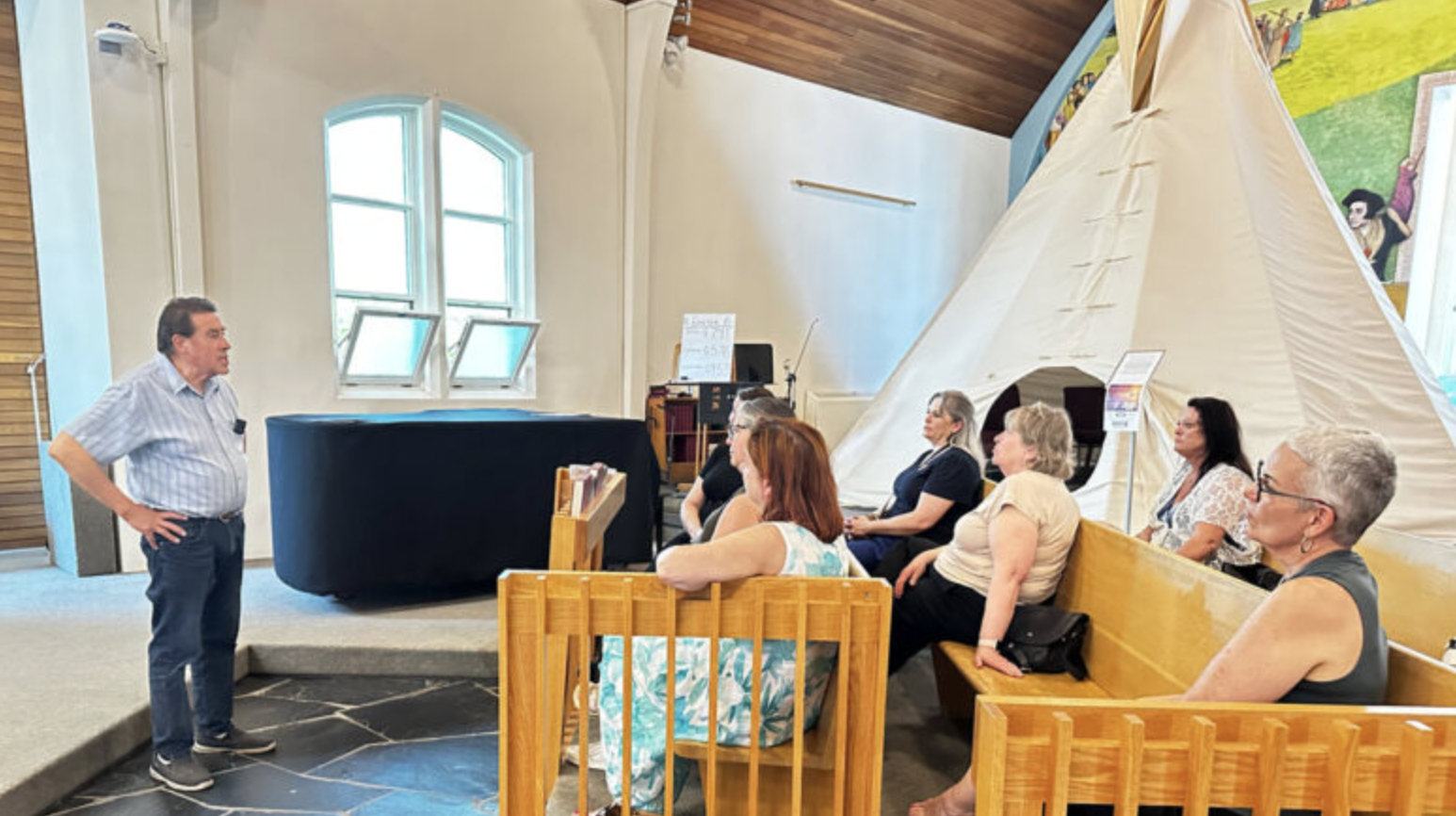
The IPL program unfolds over the eight courses, primarily online, with one experiential component, covering topics such as Indigenous histories in Saskatchewan, the legacy of Church-Indigenous relations, and the dialogue between Indigenous and Christian worldviews. More than an academic exercise, it is designed as a relational journey, Castellon explains.
The first cohort completed a four-course certificate in November 2021. A second cohort followed in 2023, and by May 2025, participants from both groups had completed the full eight-course diploma program.
At its core, the IPL initiative strives to be about more than education – the goal is transformation, with Castellon emphasizing that reconciliation is not a finite goal but an ongoing process rooted in trust, humility, and sustained commitment.
Castellon concedes that progress within the Church has been uneven, but also points to meaningful signs of change, including a growing willingness to listen, acknowledge harm, and engage with Indigenous voices in more accountable ways. She adds that programs like IPL are critical to that shift. By forming leaders who understand reconciliation as a lived, relational practice, the Church can begin to move beyond symbolic gestures toward bigger, systemic change.
Castellon stresses that there is still much work to do, with healing depending on a genuine partnership that centres on Indigenous perspectives and shared learning without defensiveness. She highlights the need for ongoing education, practical pastoral resources, and long-term commitments; translating principles such as dignity and solidarity into everyday ministry, in the belief that reconciliation calls for humility and requires a willingness to listen, to be changed by the stories of others, and to walk together with hope.
Both Morrison and Castellon say education and relationship remain central to the healing process. Through continued dialogue, shared learning, and Indigenous leadership in programs like IPL, they believe Church communities can continue to move toward meaningful reconciliation and stronger relationships in the years ahead.