OTTAWA (CCN) — Canadian Catholics must persevere in the vision “of Indigenous and non-Indigenous people walking together in prayerful and respectful ways towards a stronger, shared future,” says the Canadian Catholic Indigenous Council in its annual message for the National Day of Prayer in Solidarity with Indigenous Peoples, Dec. 12.
Six days earlier, representatives of Canada’s Indigenous community and the Canadian bishops were present at Montreal’s Trudeau Airport Dec. 6 to receive more than 60 artifacts, which the Vatican returned to the Canada’s Indigenous community.
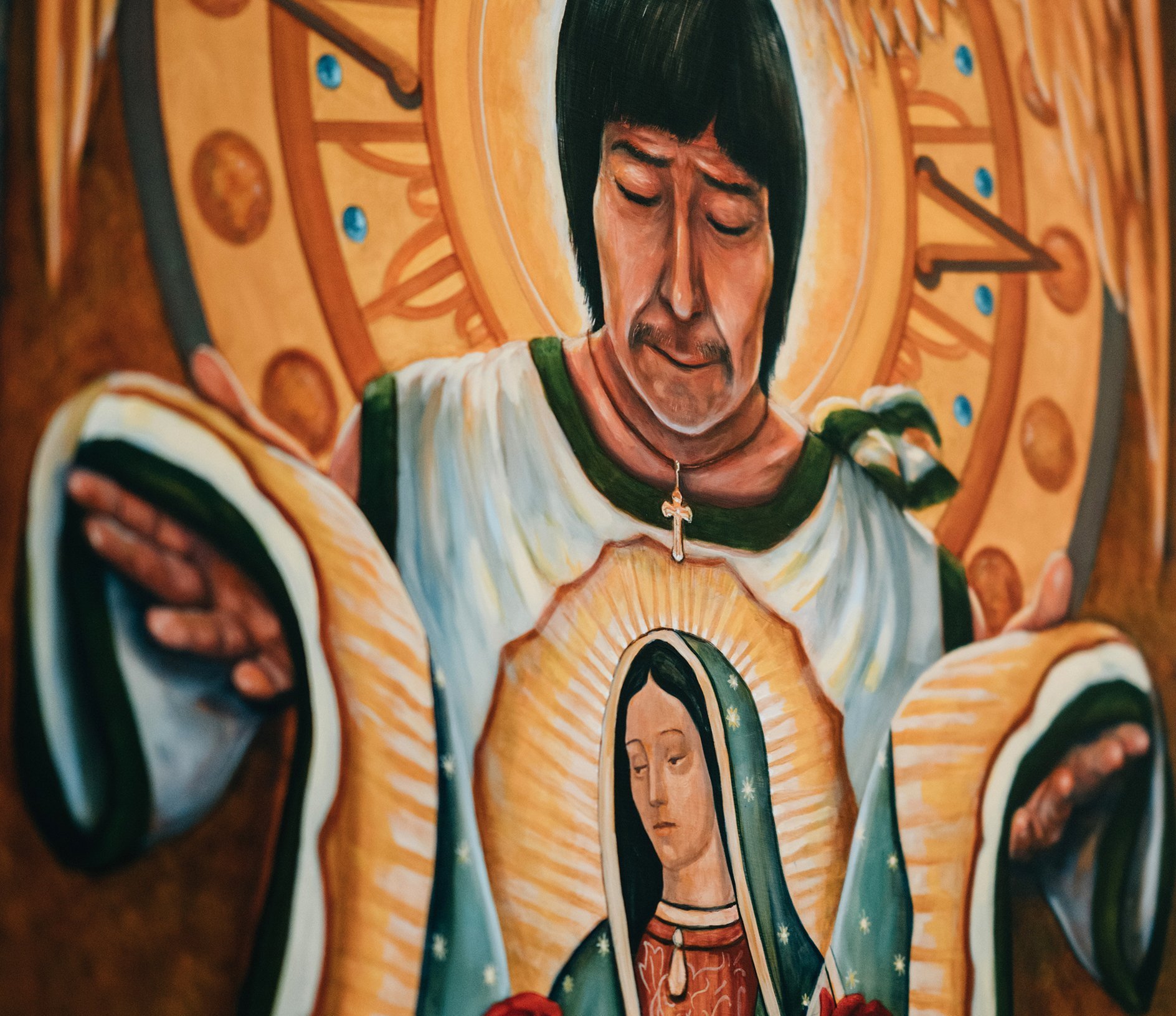
The National Day of Prayer in Solidarity with Indigenous Peoples is observed each year on Dec. 12, the feast day of Our Lady of Guadalupe, patroness of the Americas, who appeared to a humble native peasant, Juan Diego, in Mexico in 1531. The annual message honours Aboriginal people who were inspired by their Catholic faith, according to the Canadian bishops’ website.
“As Catholics, we continue to reflect on the life and legacy of Pope Francis, remembering his call to be ‘pilgrims of hope’ in this year of Jubilee. It has been a time for reconciliation, pilgrimage and ‘coming home,’” the message reads. “For Christians, this ‘reconciliation’ is the accomplishment of Jesus Christ, whose death and resurrection reconciles humanity to God”
“Responding to the Lord’s call to be reconciled to one another in love, Catholic Canadians have set on a journey towards reconciliation with First Nations, Metis, and Inuit Peoples, one born out of a painful and difficult history,” the message continues.
“That history included the Indian residential schools, administered by Catholic and Christian churches alike. Accounts of prejudice, discrimination, and abuse came out of the Truth and Reconciliation Commission, which concluded 10 years ago. For many people impacted by this history, healing may well require generations to realize,” it reads
The message notes that the healing journey began in with the apology of Pope Francis during his penitential pilgrimage to Canada in 2022, and the financial commitment of $30 million from 73 Canadian Catholic dioceses to the Indigenous Reconciliation Fund to promote “healing, cultural and language revitalization, and other Indigenous-led projects.”
“These efforts complement work happening at diocesan and parish levels, as well. But much remains to be done, and there might be setbacks and disappointments as we continue the journey together with the First Peoples of this land,” the message reads.
The council has called for Indigenous and non-Indigenous to learn about their “shared history, [to] define lessons learned, and take steps to promote equity, opportunity, and fairness.”
Each person “has an important role to play in reconciliation,” the message says. “This is both a Church endeavour and a personal one.”
“Today we pray with our ancestors who brought us where we are today. They took care of our lives and embraced Christian faith in our camps and communities,” the message concludes. “We pray that our families will continue to be strong in their faith and that the elders and the young will work closely together to create a better future.”
The council, which began in 1998, is an advisory body of the Canadian Conference of Catholic Bishops. Through research, writing and community engagement, the council provides the bishops with information and recommendations on understanding and appreciating Indigenous needs and furthering relationships and healing with Indigenous Peoples.