CALGARY (CCN) — Canadian Christian aid agencies are raising concerns that the $2.7-billion reduction to overseas development assistance (ODA) in the federal budget over the next four years will contradict the churches’ moral commitments and have serious consequences for vulnerable communities and Canada’s international reputation.
The budget offers little clarity. Global Affairs Canada receives just one page in the nearly 500-page document, noting a 15 per cent decrease beginning in 2026. What is clear is that much of the reduction will come from “development funding to global health programming” and contributions to international financial institutions, defence spending is slated to increase.
For many Christian organizations, this shift away from peacebuilding and global health represents not just a broken campaign promise by the Liberal Party but a deeper moral and political turning point.
Even before these cuts, many donors, including heavyweight USAID, had retreated from international development, forcing organizations to abandon entire sectors. Peter Noteboom, general secretary of the Canadian Council of Churches, says this leaves Canadian agencies alone in places where health and humanitarian services have already become precarious.
“For decades, Canada made a deep commitment to growing development assistance rather than defence. ‘Food not bombs’ was more than a slogan; it was a moral choice,” he said. “Today, defence spending aims for 5 per cent while ODA is being cratered. What does that say about the moral choices we’re making with our tax dollars?”
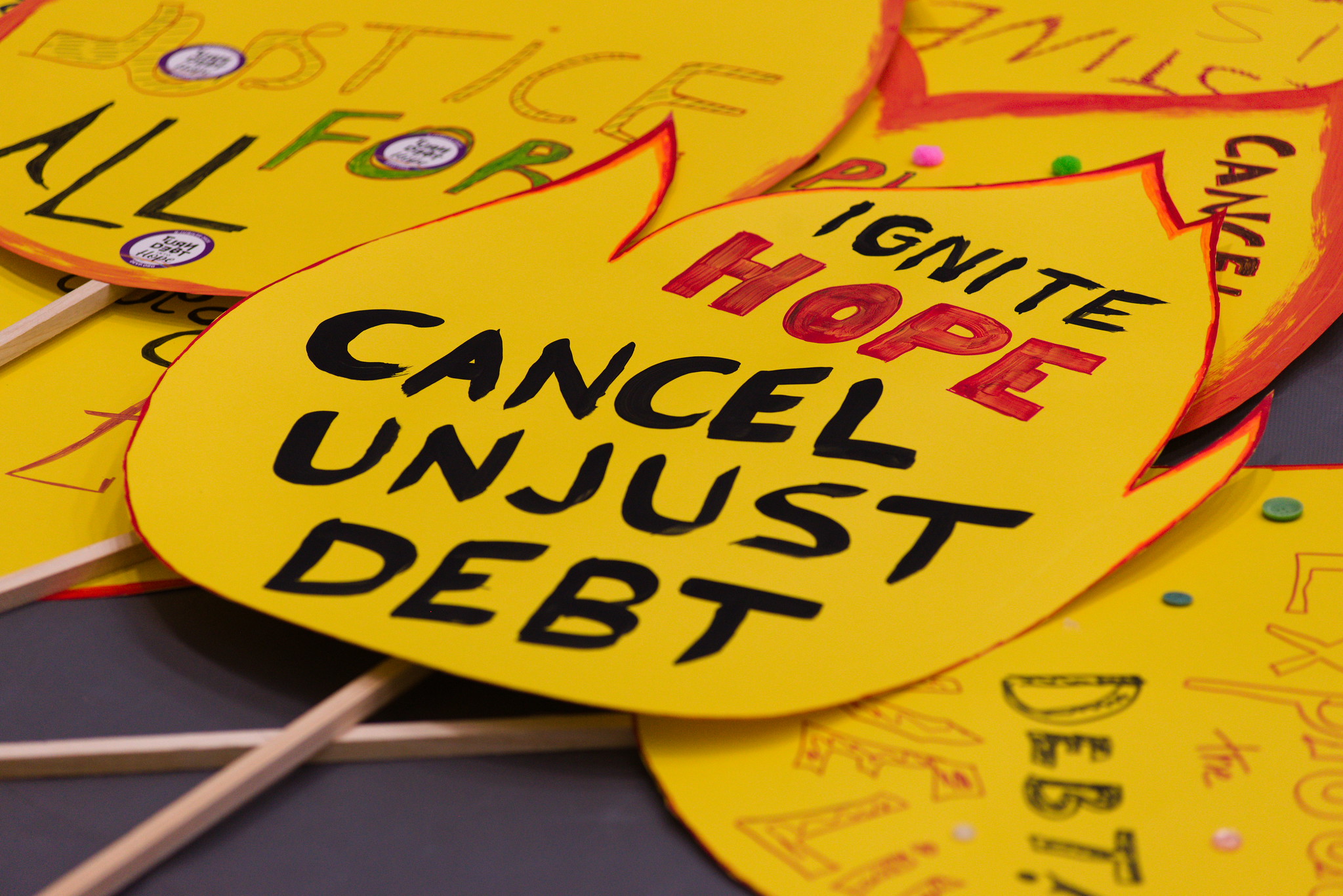
Church organizations mobilized earlier this year to urge the government to safeguard aid. In April, 29 Christian groups, including Catholic agencies, issued a public letter reminding federal leaders of the Gospel call to protect “the least of these.” They also relaunched a national campaign for international debt reduction, called “Turn Debt Into Hope” — an echo of the successful Jubilee 2000 effort, when more than 100,000 Canadian signatures helped persuade governments to cancel over $100 billion in debts of the world’s poorest nations. The current campaign notes that debt burdens are again rising sharply: more than three billion people now live in countries that spend more on debt servicing than on health care or education. Agencies fear that new ODA cuts will deepen this crisis.
Stéphane Vinhas, director of international programs for Development & Peace – Caritas Canada, said the full impact of cuts to international aid has not affected his organization’s programs yet. However, he warns that internationally, development cuts have been “drastic, sudden and simultaneous,” leaving Caritas partners in Africa, the Middle East and Asia facing collapsing budgets.
Will Postma, executive director of Alongside Hope, the Anglican Church in Canada’s international aid agency, says reductions to global health funding jeopardize hard-won progress against diseases such as HIV, malaria and polio.
“These are areas where Canada has made a significant difference. Any cuts are going to affect lives,” he said.
Alongside Hope, which supports local food security and women’s programs — including at Al-Ahli Hospital in Gaza — has urged the government to increase humanitarian access and to tighten controls on arms transfers connected to the region.
With global military spending reaching US$2.7 trillion, Postma is troubled that ODA reductions appear tied to rising defence expenditures. “This means the world is no longer preparing or funding peace but preparing for war,” he said.
“So much money in defence and weaponry has made so much damage and has not brought about peace,” Postma said. At 0.3 per cent of national income, he added, Canada’s aid levels are already modest. “Cutting what’s already small sends shivers down my spine.”
Rachel Warden, global partnership manager at KAIROS, says the budget’s emphasis on militarization runs counter to on-the-ground experience. “The idea that security comes from militarization tramples on a lot of the work that partners are doing,” she said.
She fears Canada is retreating from its respected foreign assistance framework, especially that which supports women-led peace initiatives.
Across Christian organizations, a common message emerges: Canada’s retreat from development assistance risks lives, undermines peace and weakens the country’s moral standing. The concern is not only about budgets, but about the kind of neighbour Canada chooses to be in a world marked by rising inequality and conflict.