Sooner or later, every human life encounters suffering that refuses to be explained.
A loss arrives without warning. A decision made years earlier suddenly reveals its consequences. A quiet regret lingers long after the moment that caused it has passed.
When these things happen, we instinctively ask the same question: Why?
Why this pain? Why now? Why must life unfold in ways we did not foresee?
The Christian faith does not pretend that this question is easy to answer. In fact, the Gospel narratives of Christ’s Passion move in a different direction altogether. They do not offer a tidy explanation for suffering. Instead, they show us something more demanding: how suffering is lived.
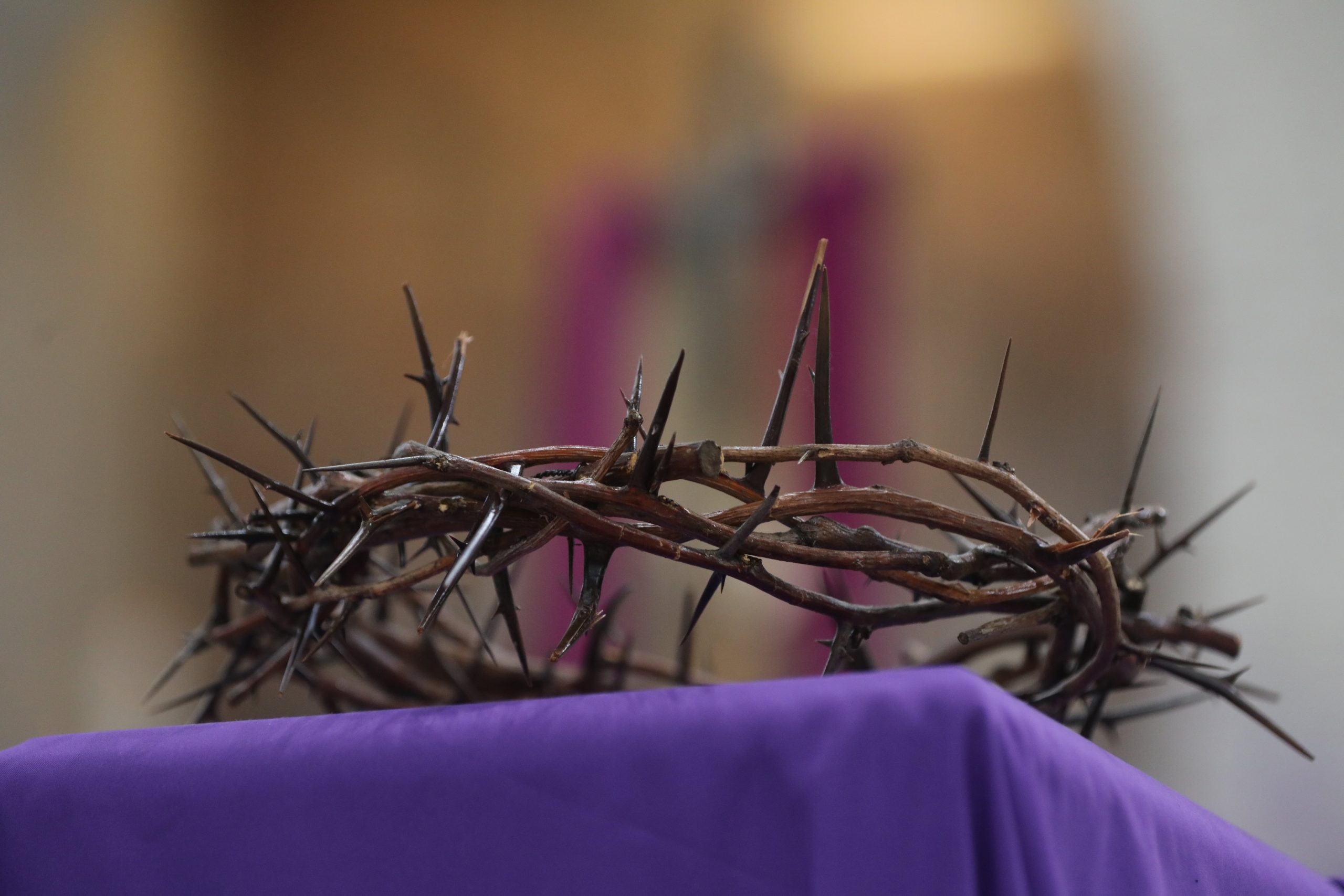
Christ does not avoid suffering or explain it away. He enters fully into the human condition, accepting vulnerability and remaining faithful even within pain and humiliation. In doing so, he reveals something unsettling but deeply hopeful: Suffering can become a place of encounter with God.
One of St. Paul’s most puzzling statements hints at this mystery. Writing to the Colossians, Paul says that in his own sufferings, he “fills up what is lacking in the afflictions of Christ.”
At first hearing, the words sound almost scandalous. Surely nothing could be lacking in Christ’s sacrifice.
Yet Paul is not speaking about insufficiency. He is speaking about participation.
Christ’s suffering did not end on Calvary. It continues, mysteriously, in the lives of those who follow him, and in the Sacrament left with us. The Christian does not simply observe the Passion from a distance; he enters into it, it enters into him.
That idea can make us uneasy. Perhaps, in our well-intentioned reverence, we have sometimes avoided asking the deeper questions of faith — questions that feel almost unthinkable.
Have we quietly assumed that suffering should have no place in a meaningful life? Have we come to believe that faith should somehow shield us from disappointment, failure or loss?
Modern culture certainly encourages such expectations. We are promised progress, comfort, and control. If suffering appears, it is treated as an interruption — a problem to be eliminated as quickly as possible.
Yet the Christian tradition proposes something far more demanding.
Suffering, when united with Christ, can become a place of transformation.
That realization rarely arrives through theory alone. More often it emerges slowly, through experience.
Looking back across the years, I can see moments when suffering forced me to confront truths I might otherwise have avoided. There were decisions I handled poorly, responsibilities I postponed too long, opportunities I misunderstood or allowed to slip away.
At the time those moments felt like failure.
Yet they also stripped away illusions.
Without them I might have lived comfortably within a flattering story about myself — a story in which I was always wiser, stronger and more virtuous than reality allowed.
Pain has a way of dissolving such illusions.
What remains afterward is something quieter but more honest: the recognition that life continues to unfold as gift, even through our imperfections.
This is one reason the season of Lent still matters.
The traditional disciplines of prayer, fasting, and almsgiving can sometimes appear outdated in a restless modern world. Yet these practices are not relics of a bygone age. They are invitations to rediscover the truth about ourselves.
Prayer confronts us with God. Fasting confronts us with our appetites. Almsgiving confronts us with the needs of others.
Together they draw us into a deeper humility — not the harsh self-judgment that paralyzes the spirit, but the kind of honesty that allows grace to work within us.
At the center of the Christian faith stands a mystery both profound and unsettling: God did not remain distant from human suffering. The transcendent Creator entered creation itself. In Jesus Christ, God took on flesh, embraced vulnerability, and accepted the suffering of the cross.
To the eyes of the world, the cross appears as defeat. Faith sees something else unfolding there — not mere restoration, but renewal.
Through the Passion, God’s will for humanity breaks through the tangled history of our pride and rebellion. What appears to human eyes as suffering becomes, in the light of faith, the place where redemption begins.
And slowly, sometimes only after many years, we begin to see something we could not understand before.
Gospel accounts of Jesus’ suffering do not explain why we suffer. They teach us how to suffer.